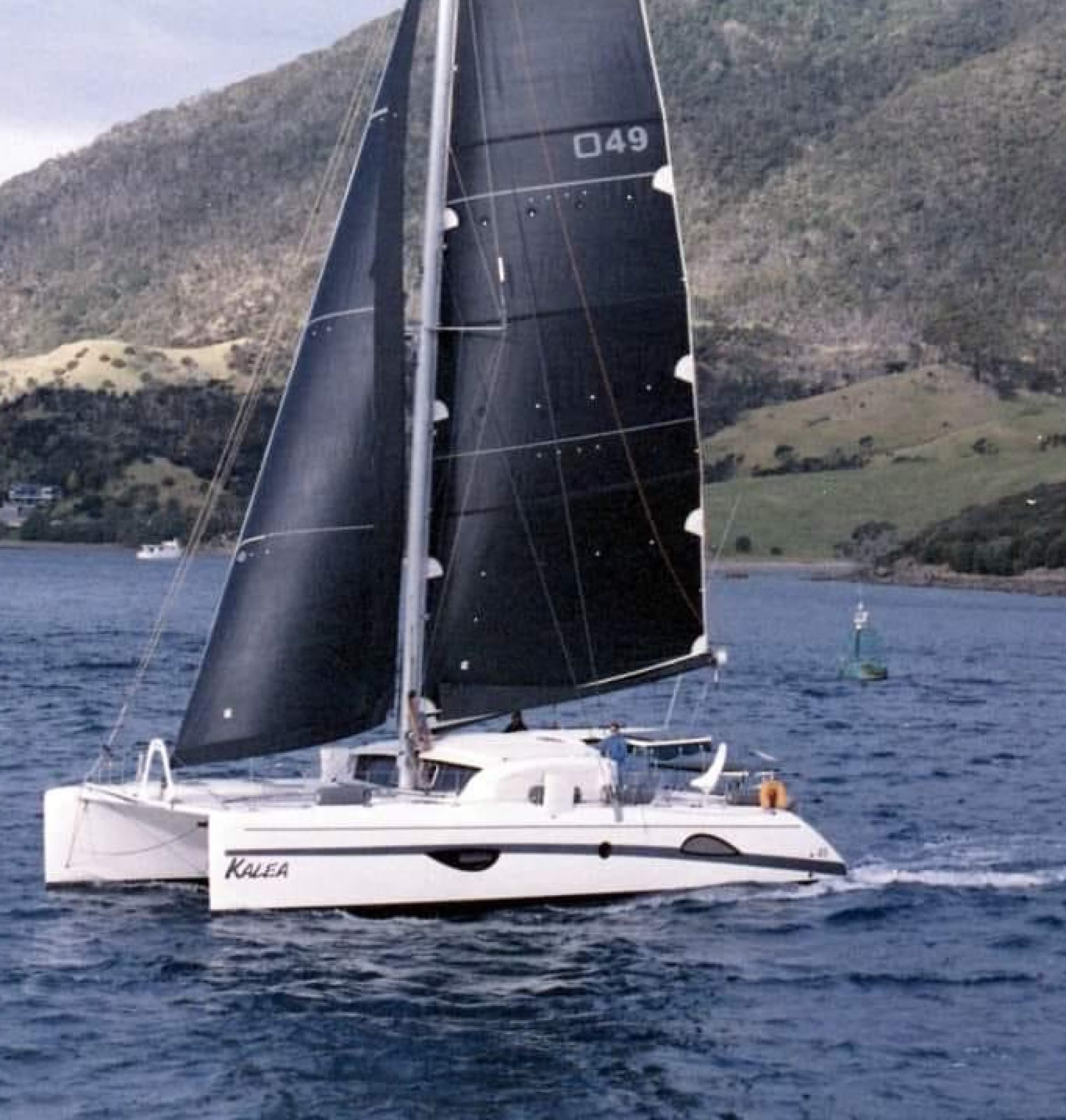
Sailing to the outer islands of Fiji, we experience an entirely different way of life. The simple life. We get to participate in the Sevusevu experience with the village chief and spokesman. Typically, as we first anchor down our Catamaran in their lovely atoll bay, we pull the dingy up the beach to look around. In these outer barely populated islands, we are greeted by a village spokesperson. He reminds us of the proper clothing attire (Sulu skirt, no hats or sunglasses, and women are dressed covering to the elbows and knees. (We later learned that Christianity introduced this) 😊
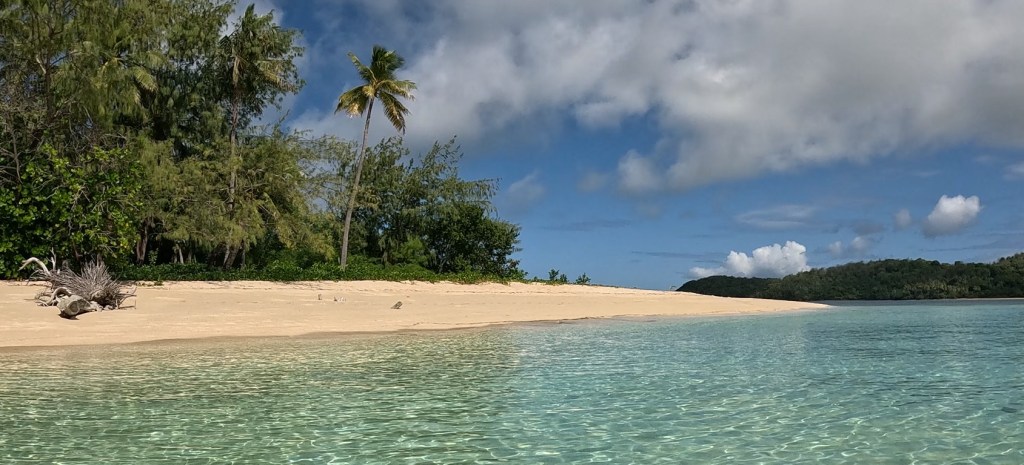
Here in Faluga, we are directly escorted to the chiefs home. This is usually a simple hut, with tin sides, a woven coconut frond mat on the floor for sitting, open air windows, and a twin bed in the room. Kitchens and bathrooms are outdoors and often a shared area. We go inside, barefooted to see the Chief sitting cross legged on the floor. We show respect with an introduction. We give him a bundle of Kava root and the chief then gives us a blessing to stay in the bay as long as we wish and be part of the village. We all clap three times, I guess to seal the deal. We may also give some small items like reading glasses, a few clothes, or a simple sturdy toy for the children. He invites us to share ideas, local news and stories while we sit in a circle on the floor. We learn some facts about their village culture and history. We get to fish his waters, take coconuts, walk his beaches and explore the rain forest. 😊
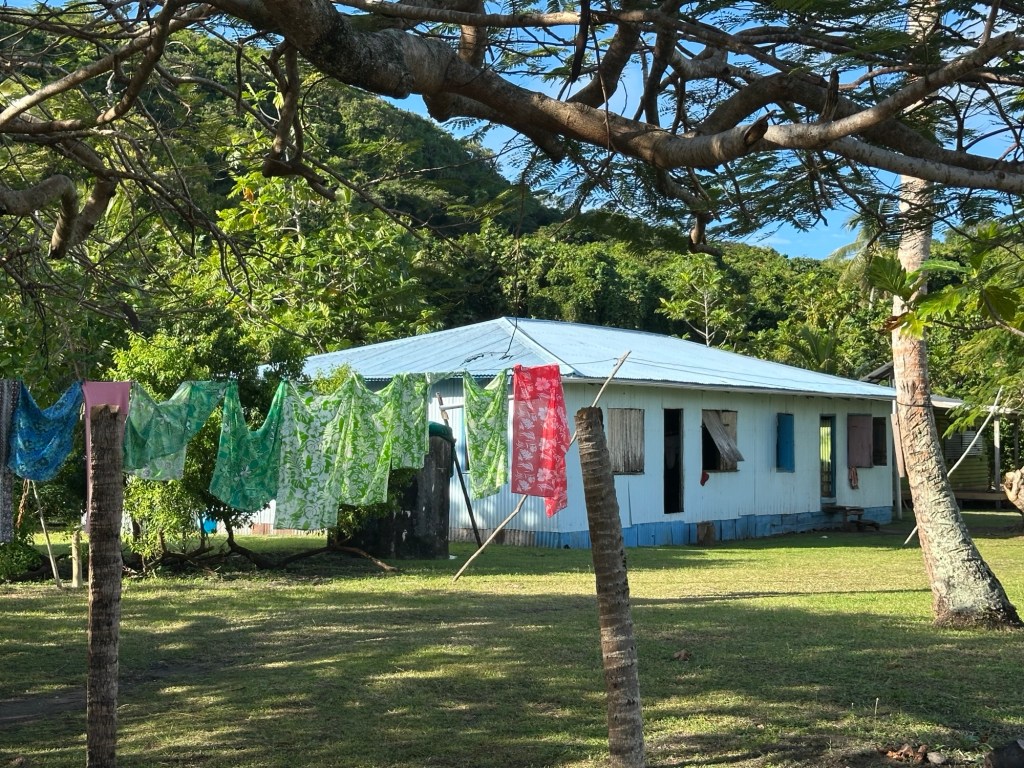
Since Fijians are so friendly, we chat with everyone in Faluga that walks by. Everyone is barefooted and casually busy with their chore of the week which is usually assigned by the chief. Afterschool, the children are eager to play and goof around with us. I give a little girl a lollipop and a deck of cards. It’s amazing to experience the innocence of their casual and simple lifestyle. REFRESHING. Only simple paths connect the tin open air houses, the one church is framed with stucco siding as a safe place for all to gather during a cyclone. There are no roads, since there are no vehicles. Sand paths connect all the homes and gardens. There aren’t any refrigerators or freezers, or washing machines. There are 2 generators for all to share or rent. Gas for their few longboats and food staples are delivered once a month for all to buy into. Villagers either pay a few dollars or trade with their personal goods (fish, lobster, clams, beans, kassava…)
Faluga is a unique island, as the chief decided to assign each sailboat to a host family for the entirety of the stay. We are treated as family and often share meals (called Lovo, served on the floor, no utensils, drinks or napkins). We exchange ideas, laugh at our commonalities, talk about each others history or politics. This special time is so endearing and educational for both parties. Together we hike, collect coconuts, weave mats, and search the beach for clams.
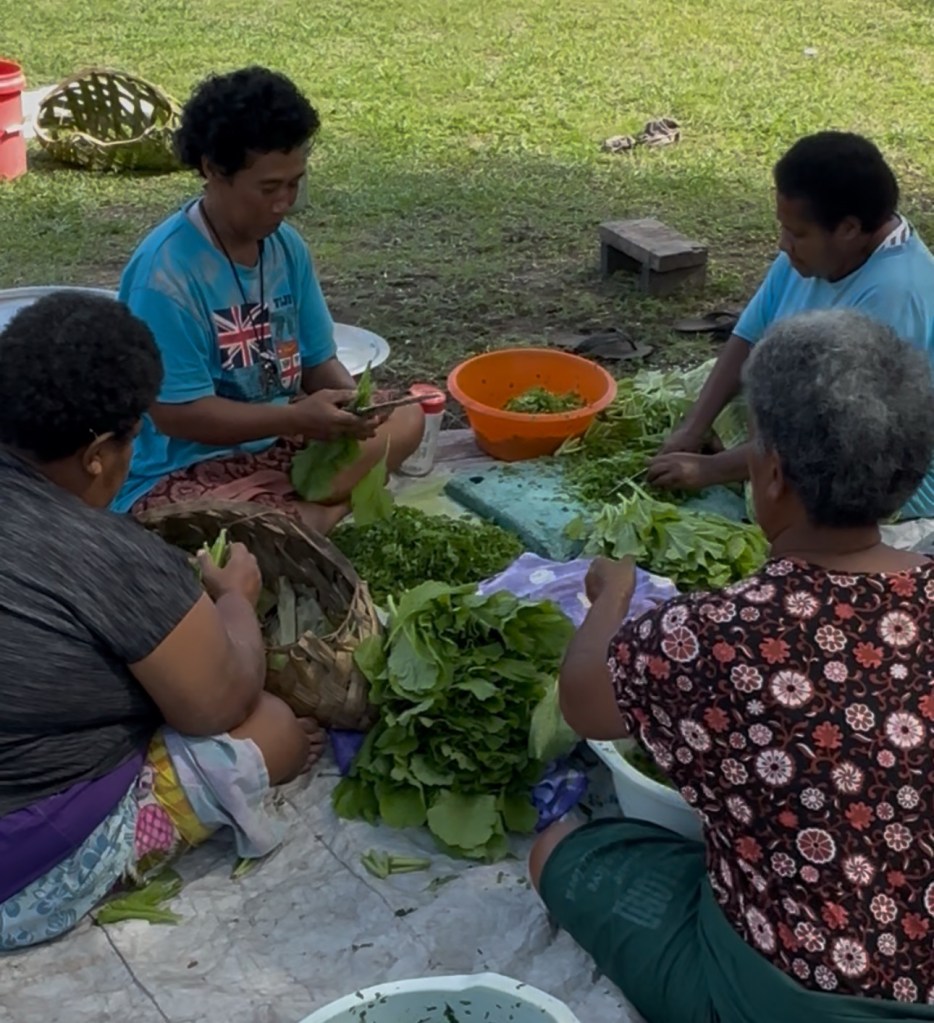
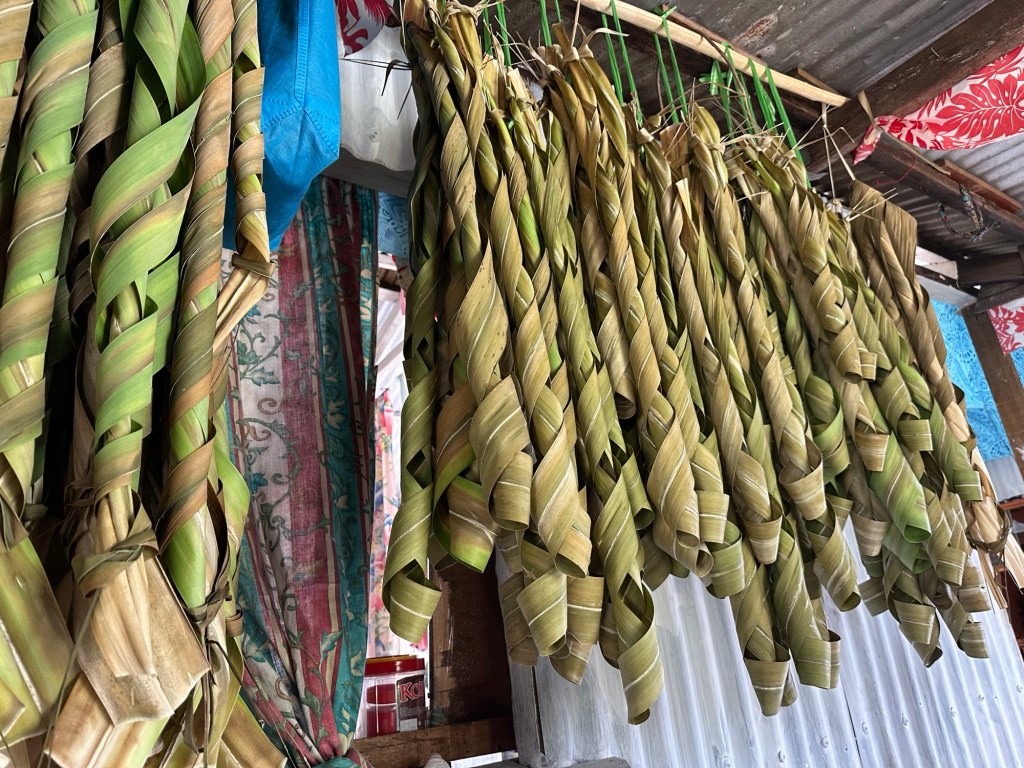
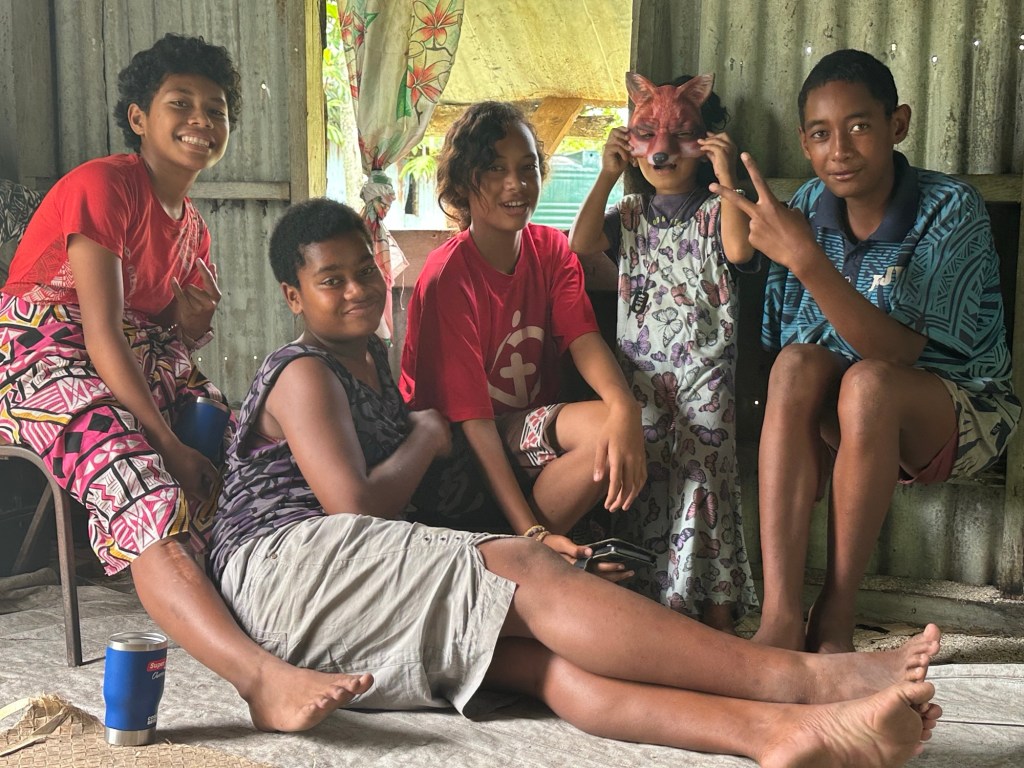
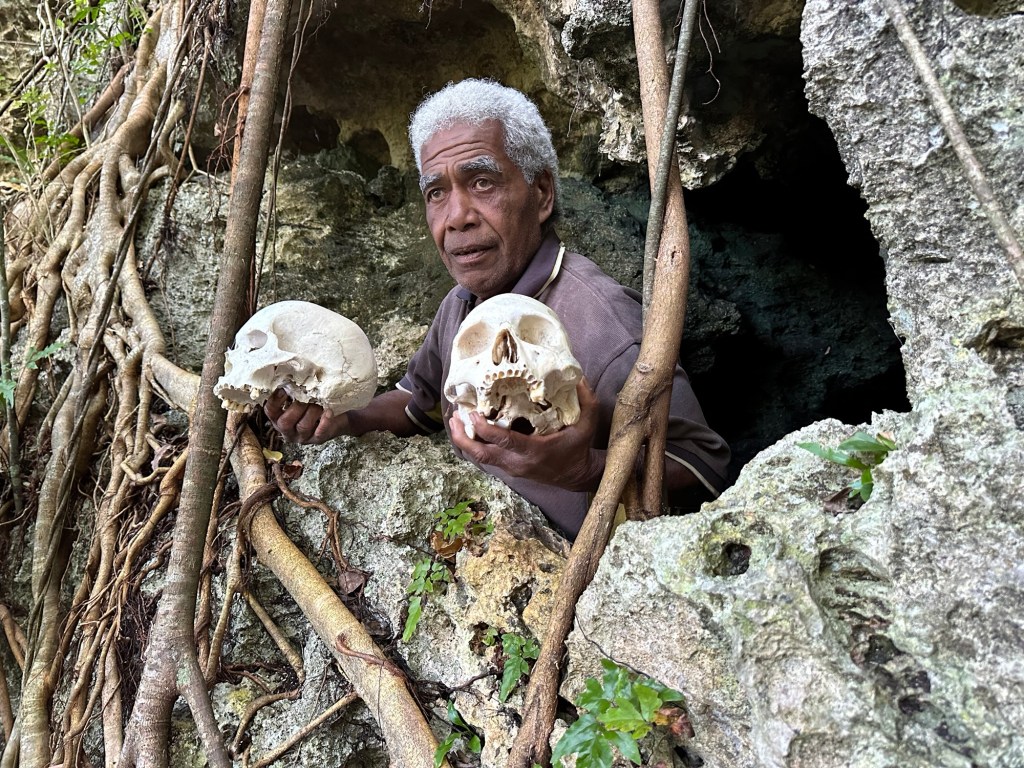
Tie is our host, we walk to gardens and we pick cabbage, kassava and beans. We later explore the trails, school, church, and any historical area of the cave of bones, high in the hill. Tie has also arranged for us to go out on a spearfishing adventure with his cousins. A kava night has been arranged. We see some his brothers canoe at a sailboat selling fish and fruit. Tie takes us to the ladies’ handicrafts for us to admire, purchase or trade. I have bought baskets, jewelry, and special shells.
Thank you for reading this review of a Fiji village, in October we say goodbye to Fiji and head west to Vanuatu.
 Our World Adventure