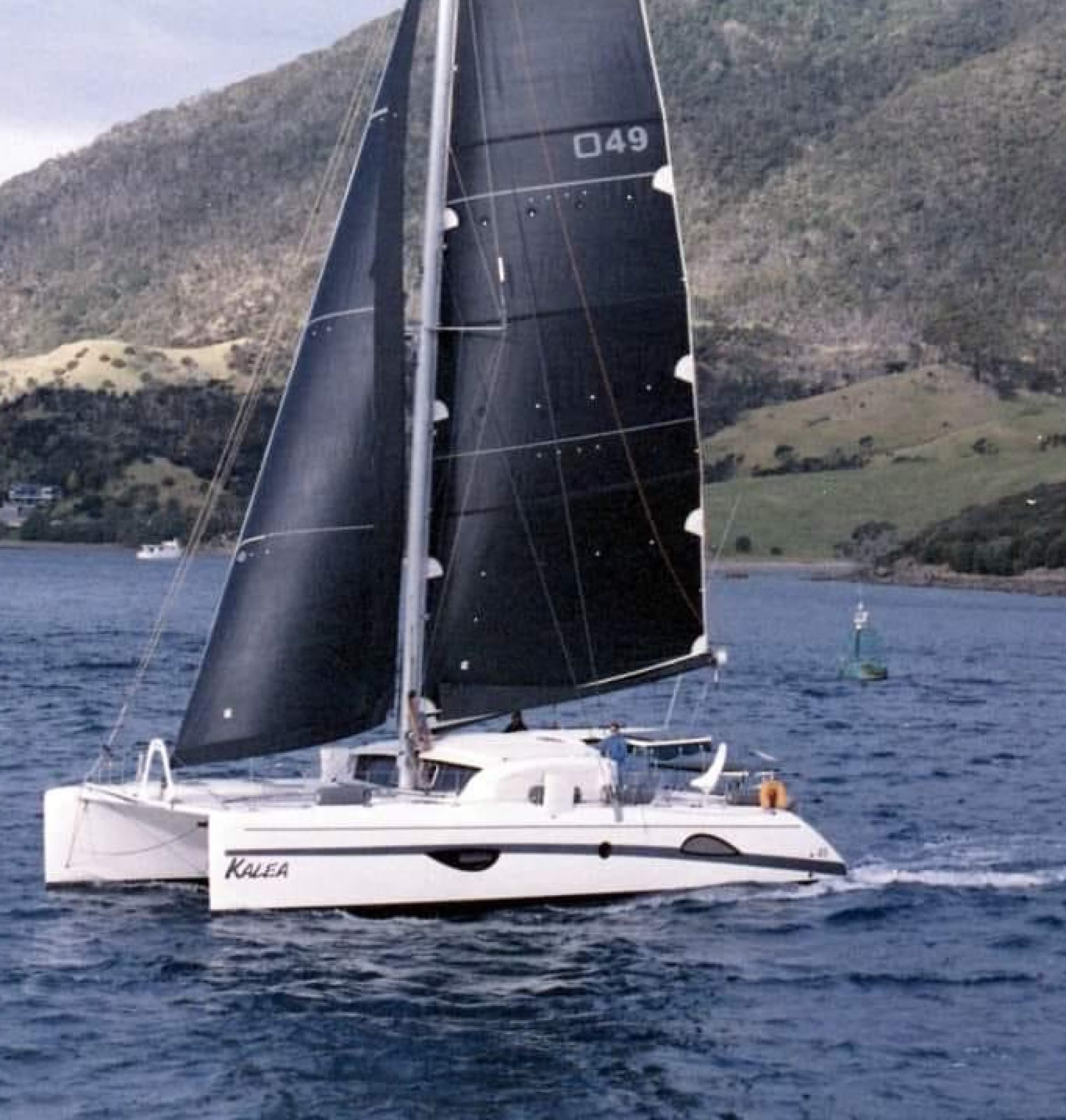
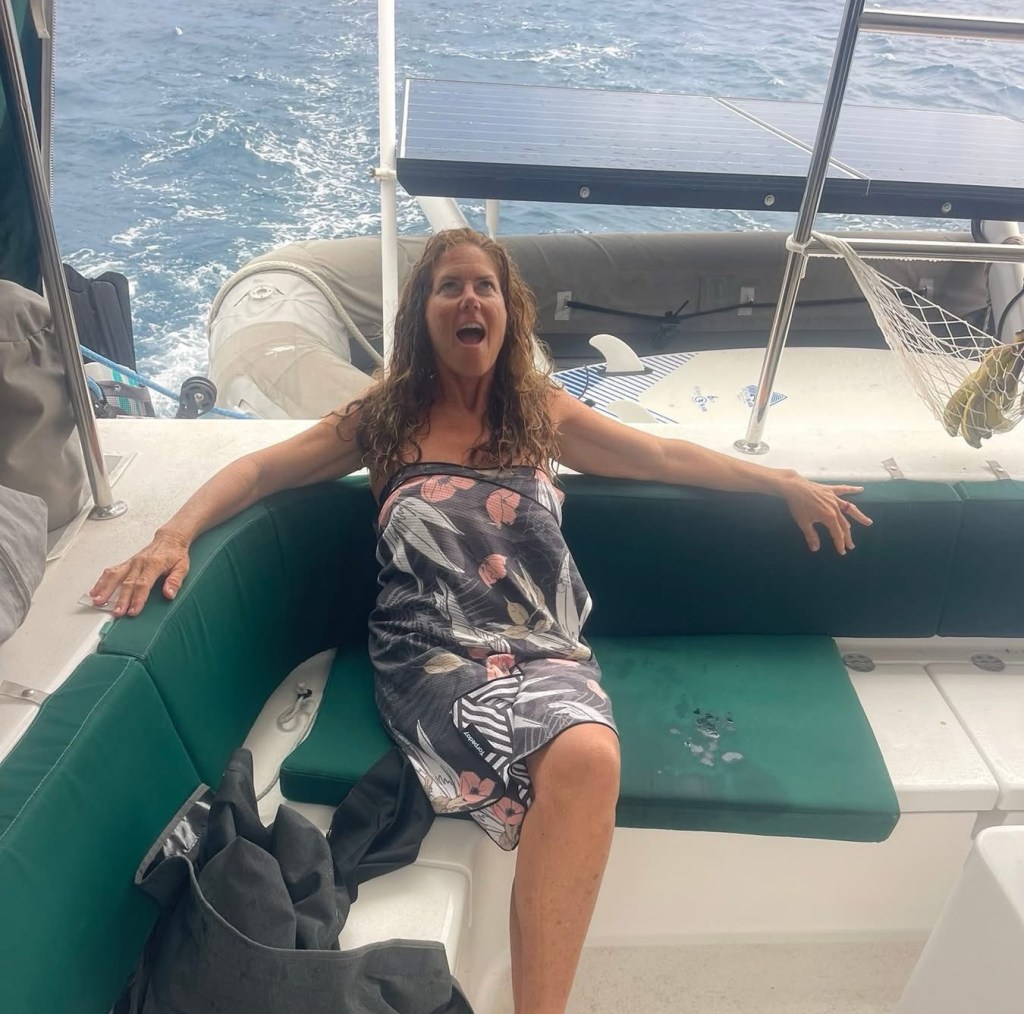
Here’s to my bad ass wife that saves the day! We had anchored Kalea in a small bay in Fiji, only for the protection it would give us for a windy night. After this little storm (still blowing), the anchor was fouled up on rocks and we tried everything to get it free. Driving to the right then to the left and again. With the next weather heading in soon, coming from the opposite direction, we needed to move. Kathy donned the wetsuit and scuba gear and headed to the dark bottom below us (50’). She directs me at the helm to the proper locations to unwind the boat as she clears the 10mm chain that was wrapped three times around a rock. She is a good swimmer and reported that she always kept one eye up on the boat and props. I’m so happy to have a true partner out here. She is as capable and brave as they come. -Scott ❤️
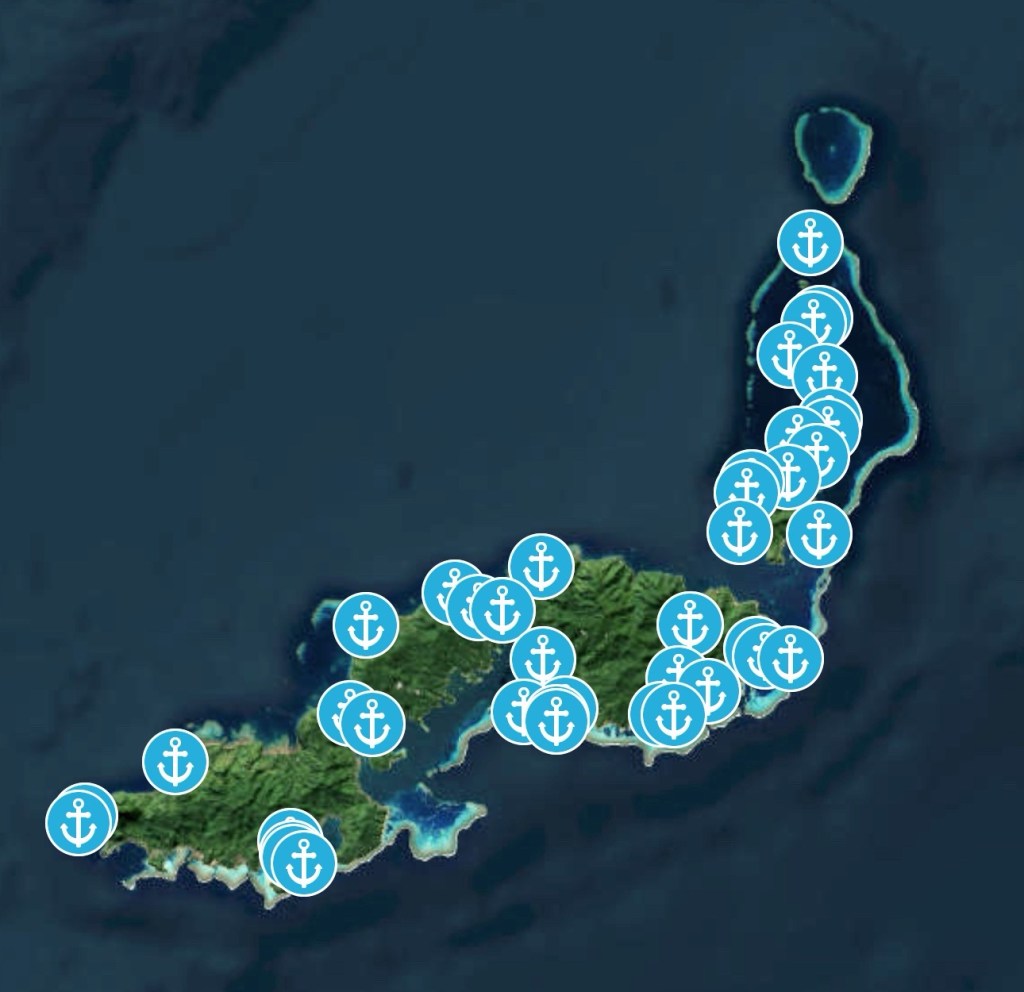
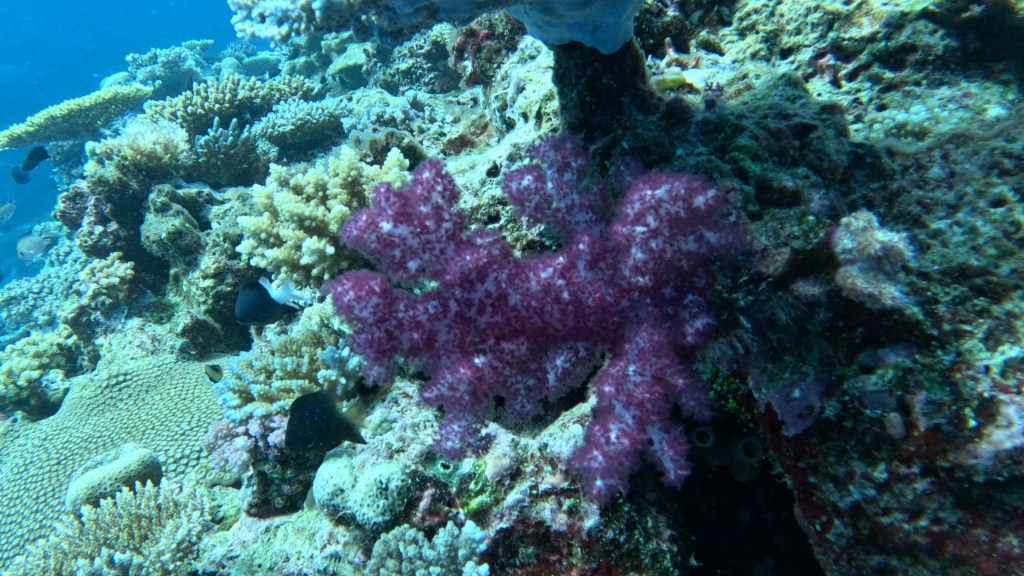
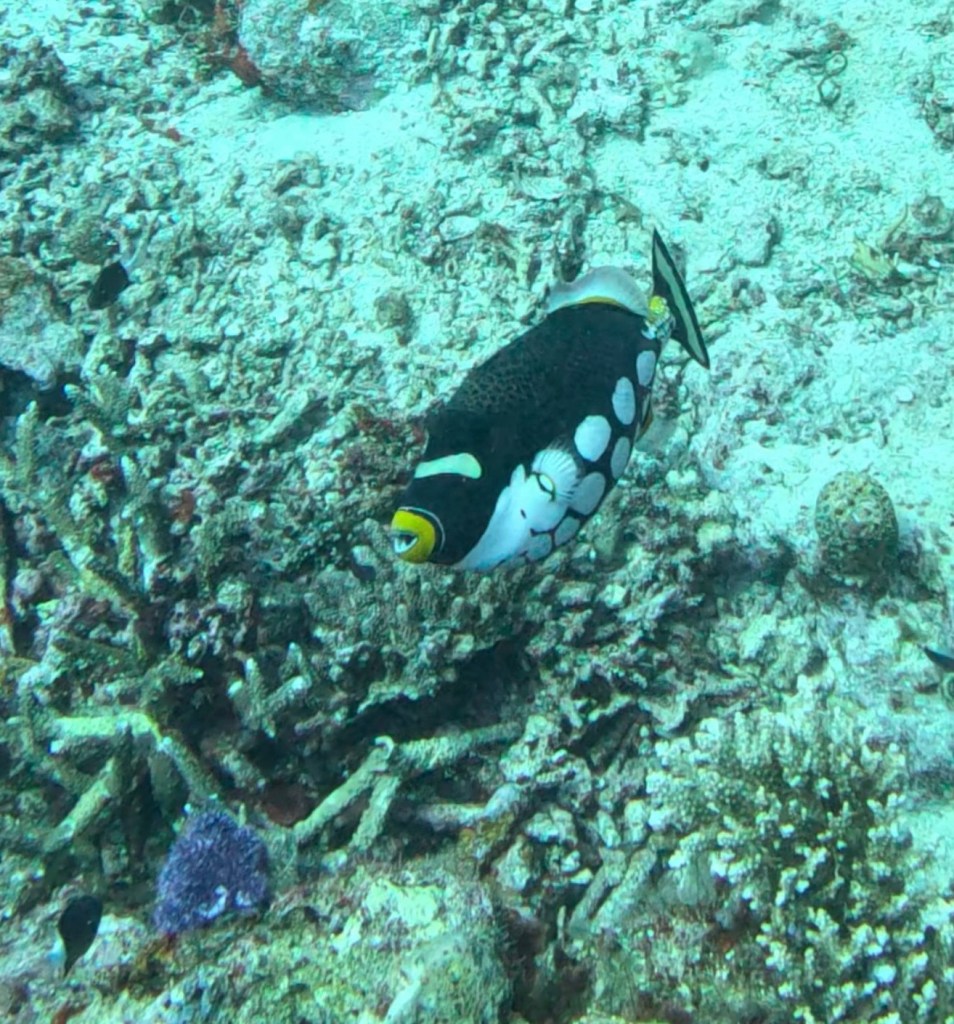
Anchoring down in Kadavu, Fiji is another world class diving area. The variety of corals, the colorful soft corals, the geologic formations and the little tunnels to peek into. Just dreamy. A typical dive for us is 45 minutes at about 60 feet. Sometimes it’s a wall dive or a pinnacle dive or short swim through. It’s also a sailors dream, with protected anchorages all the way around the islands.
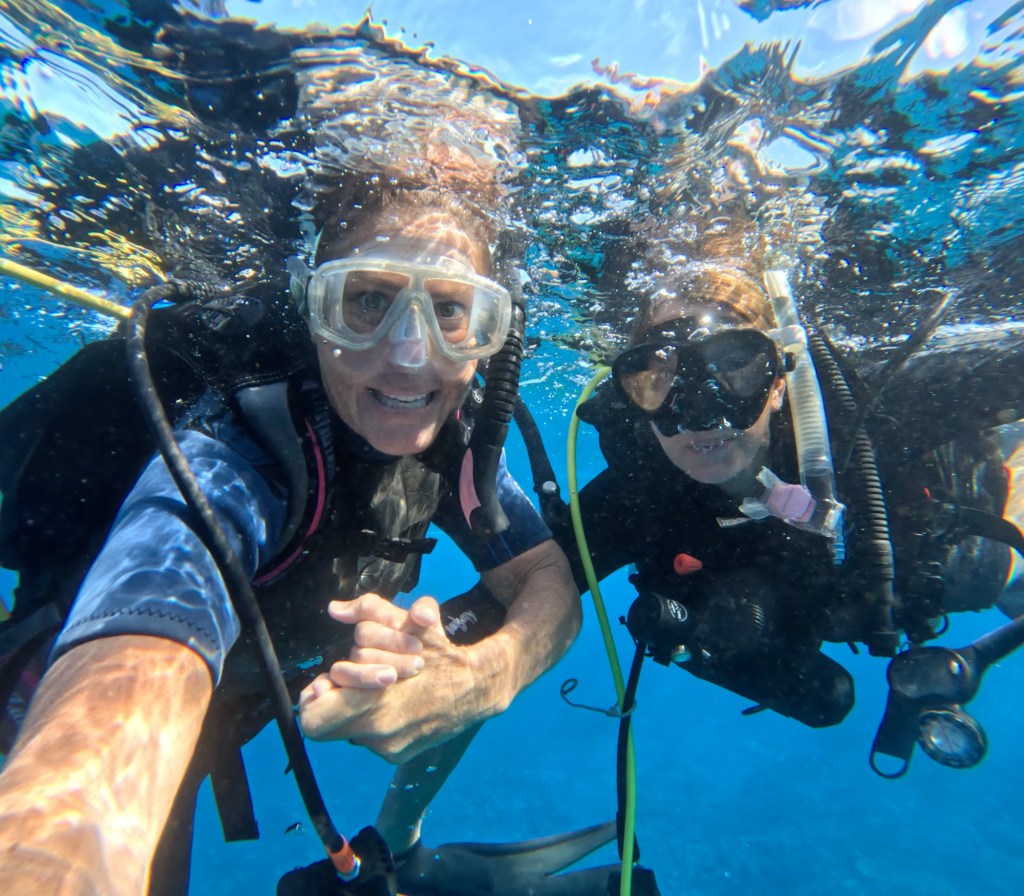
A bit more about Scuba Diving, if you are new to it. We love to snorkel and see most everything that way, but it’s sometimes not as clear or the sea life is 20 feet down. So Scuba it is. We understand and avoid nitrogen narcosis and decompression sickness, every time. Scott and I monitor our air supply and dive time a number of times during each dive. We also always make a safety stop during our ascent. I like to always make gradual descents, clearing my ears about every 8 feet. Scott is lucky as he learned (back in 1977) how to clear his ears hands free, by jutting his jaw forward, still with regulator in his mouth of course. We both learned in our scuba certification courses to always stay within safe depth limits, and if we go to 100 feet, we are only there for a few minutes, to maximize our length of dive.
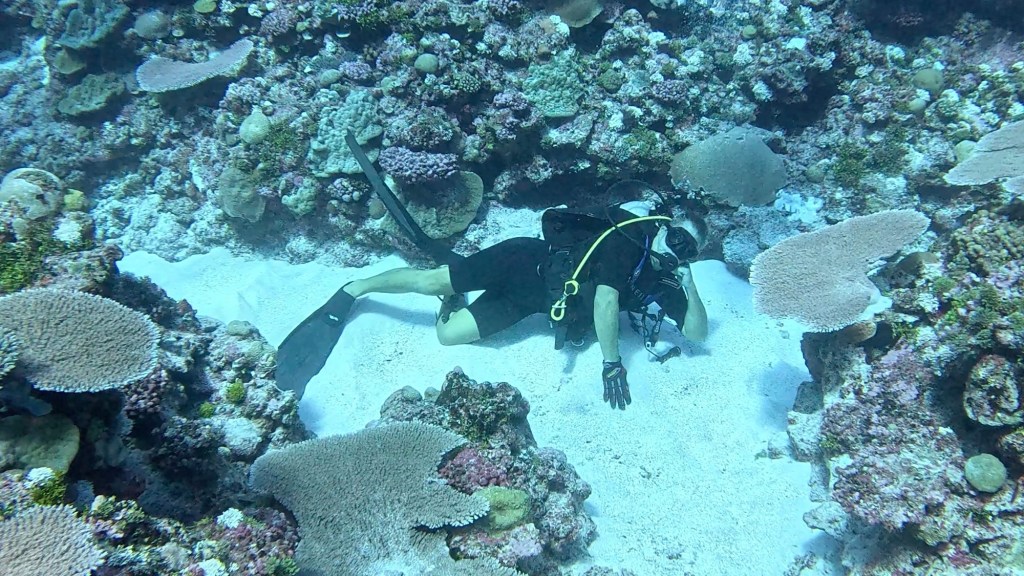
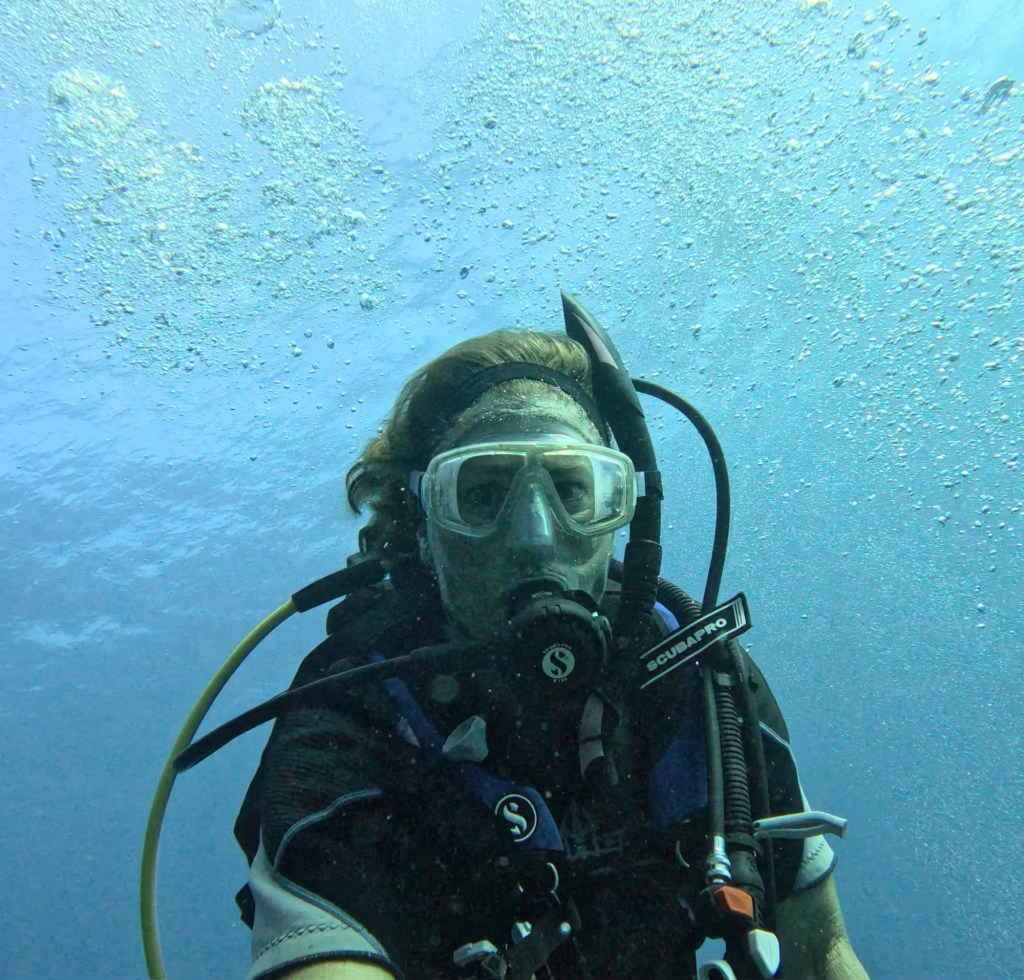
On every dive we choose to have a whistle, an extra second stage regulator, dive computer and gauges, a glove, a knife, a surface marker buoy, a light, and a snorkel at the ready, as when we ascend we may need to swim a distance and don’t want to use our precious air. It’s essential for all divers to understand and take necessary precautions to have a safe diving experience.
 Our World Adventure
Love these reports! Happy you’re having such a wonderful adventure. Keep on. Love, Lou
LikeLiked by 1 person