Navigational AIDS, a must have in French Polynesia

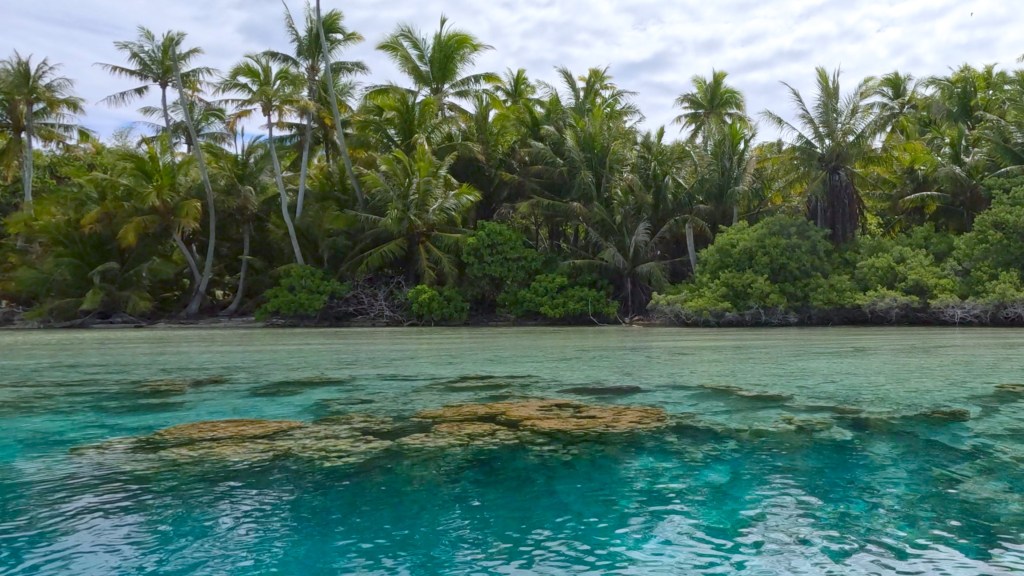
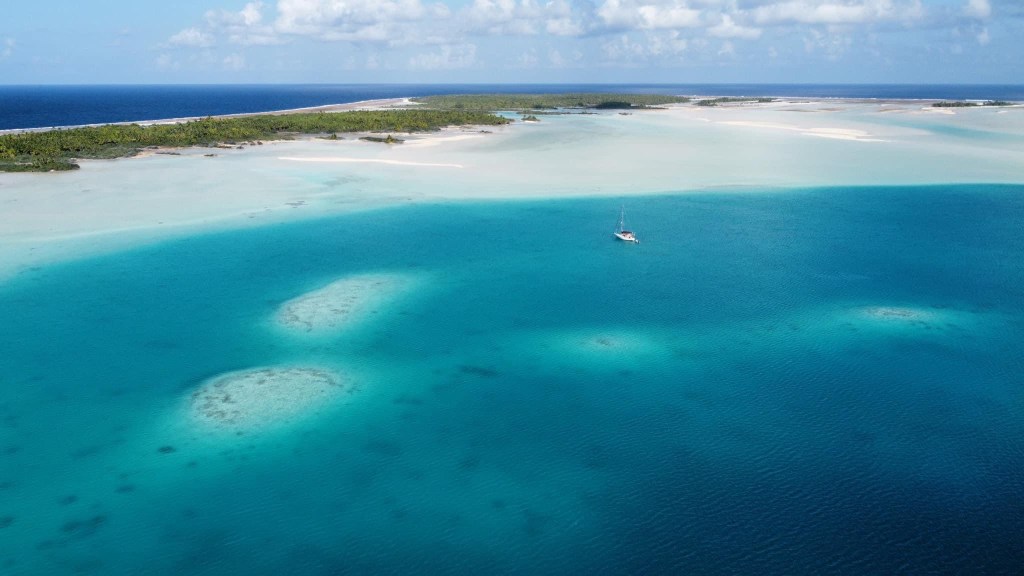
Navigation at its most extreme in these parts. There are no paper charts, no depth soundings and no navigational marks in sailing apps such as Navionics. In and aound all these atolls, you can see coral heads or “bommies” as they are called out here in Polynesian waters. You can clearly see the coral heads all about.

In and aound all these atolls and anchorages you can see coral heads or “bommies” as they are called here in Polynesian. A respectable and necessary practice here is to float your anchor chain, floating above these bommies, with 4-5 floats. Also important, most cruisers download files called OpenCPN for the coral heads and a crew is always on lookout (best if it is sunny and daytime). Satélite imagery is the key to sailing in the Tuomotus Atolls, since it’s some of the most remote place in the world. Cruisers rarely, if ever, traveled these atolls until recent years when satélite imagery was married to GPS positioning.
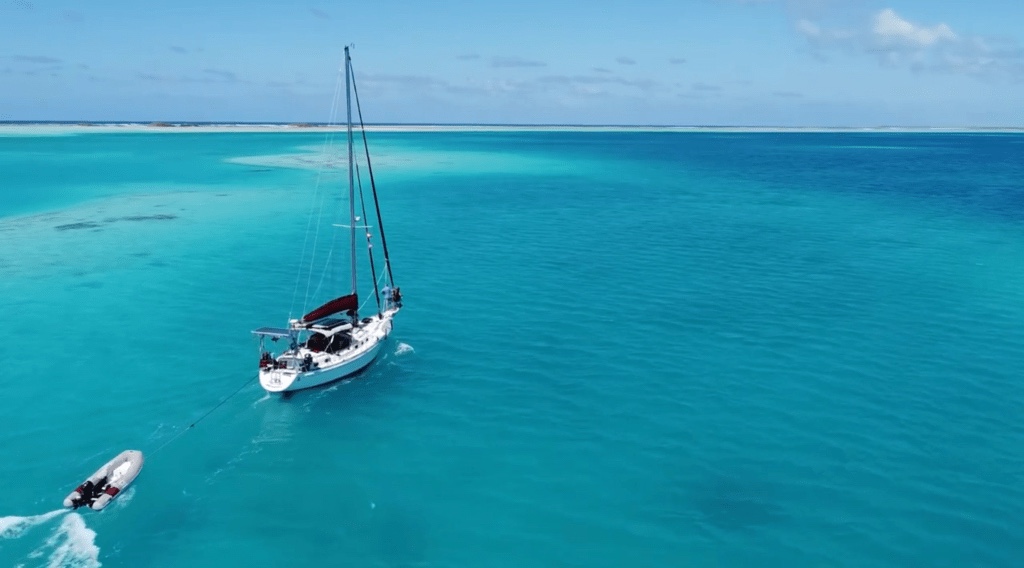

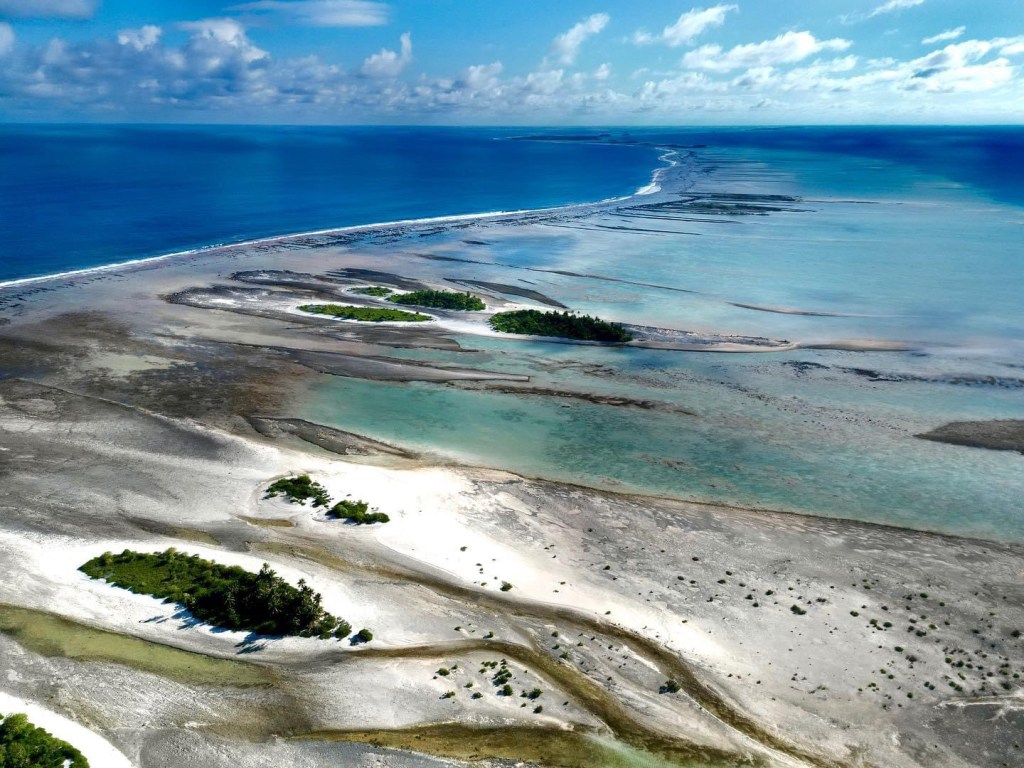
We use downloaded files called OpenCPN and of course our eyes. Satélite imagery is the key to sailing in some of the most remote places in the world. This location was inside the east side of Rangiroa, French Polynesia. Cruisers rarely, if ever, traveled these atolls until satélite imagery was married to GPS positioning.
We travel areas like this only when the sun is at its highest so we can see the coral heads and white reefs. If it’s an overcast day, it’s a no go. Thank you friends on Fundango for the drone shots. Sea Bella will be getting her own drone later this year.
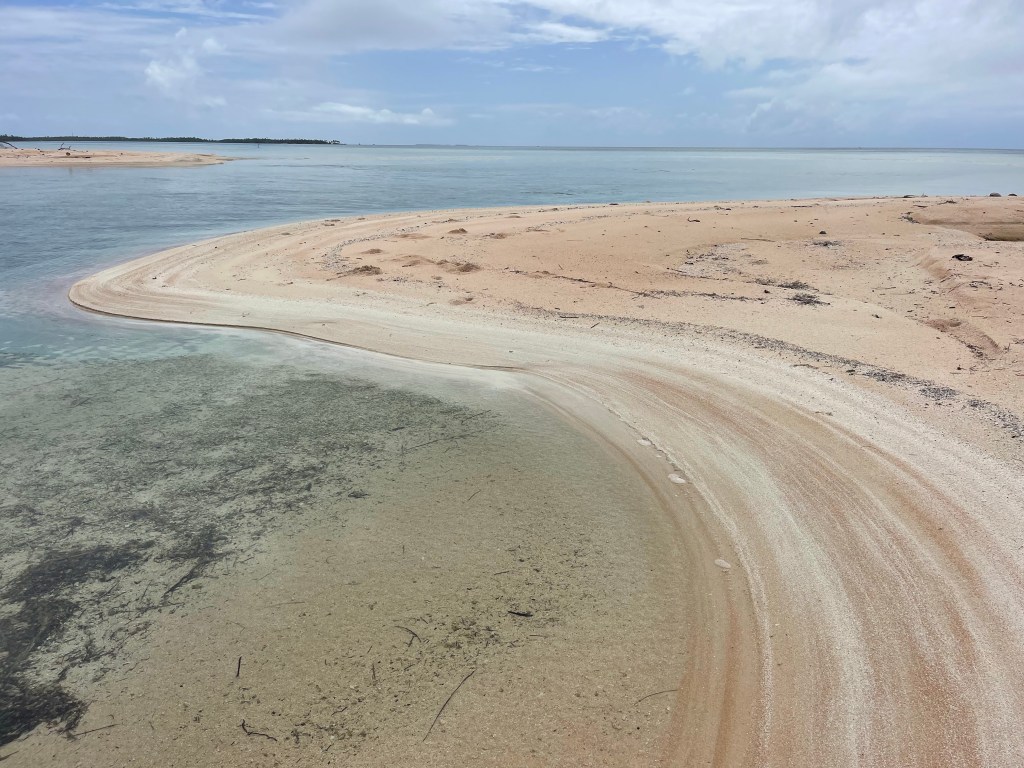
When we go exploring about in the dingy, we both are on a keen look out for these bommies, but also for the shallow waters and sand bars that are in front of the Motu inner islands. The outboard motor can be lifter into 3 different positions, when at its highest working position we draw about a foot. This is when one of us gets out to walk ashore.
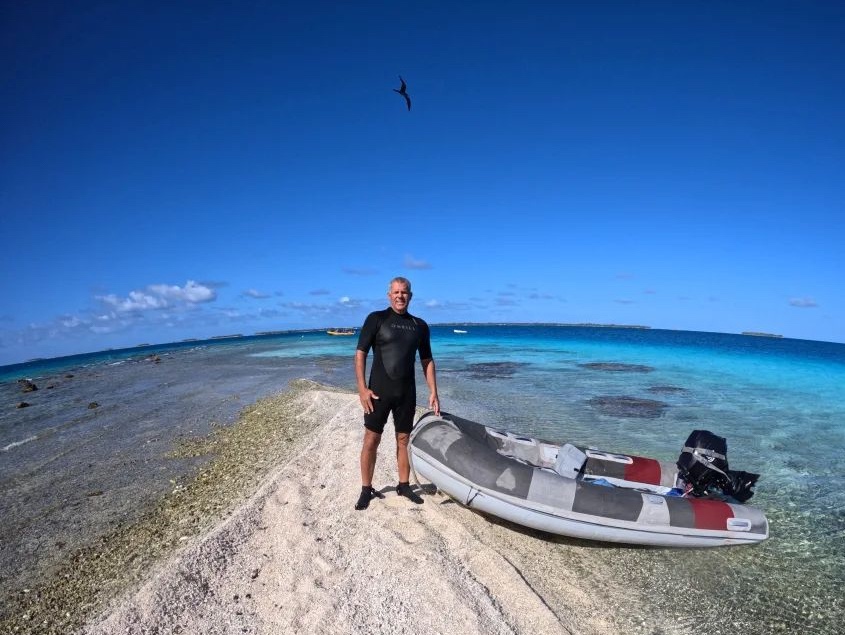
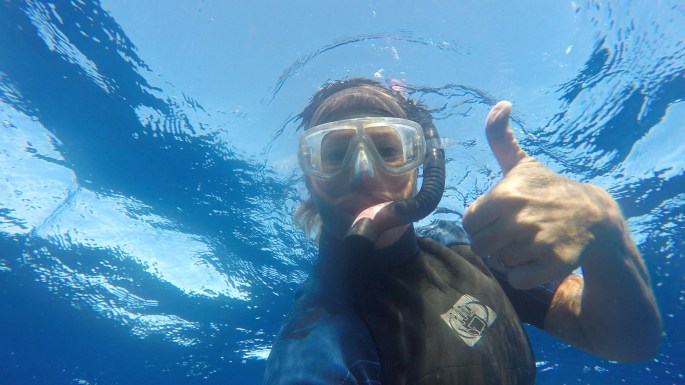
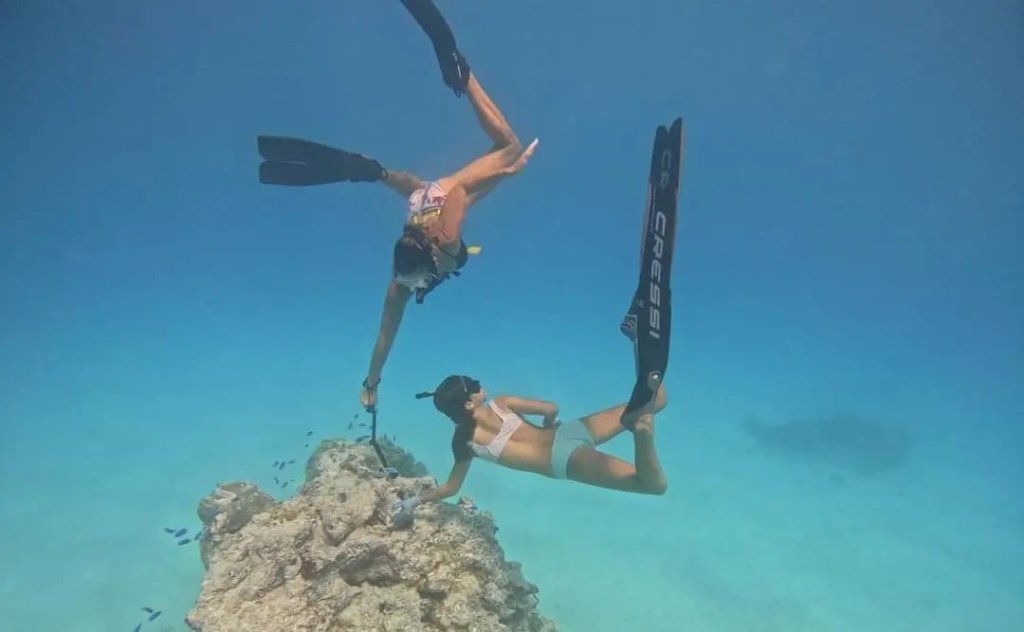
We had shorty wetsuits for our long afternoon of snorkeling.
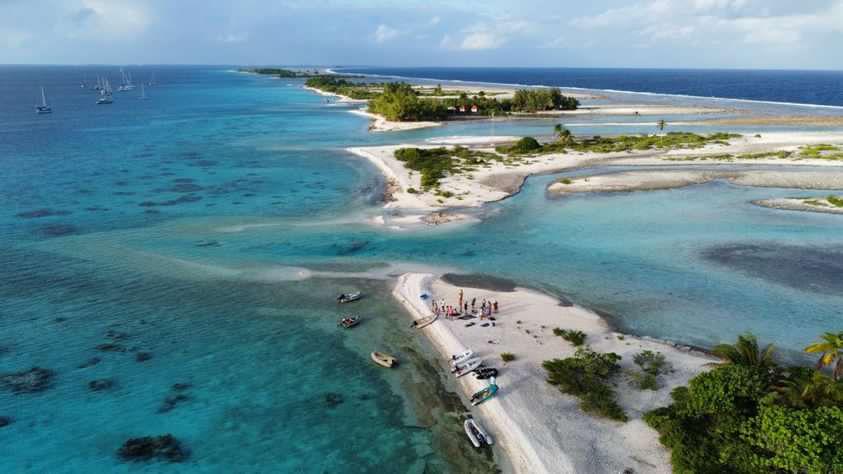
4th of July beach party, Fakarava.

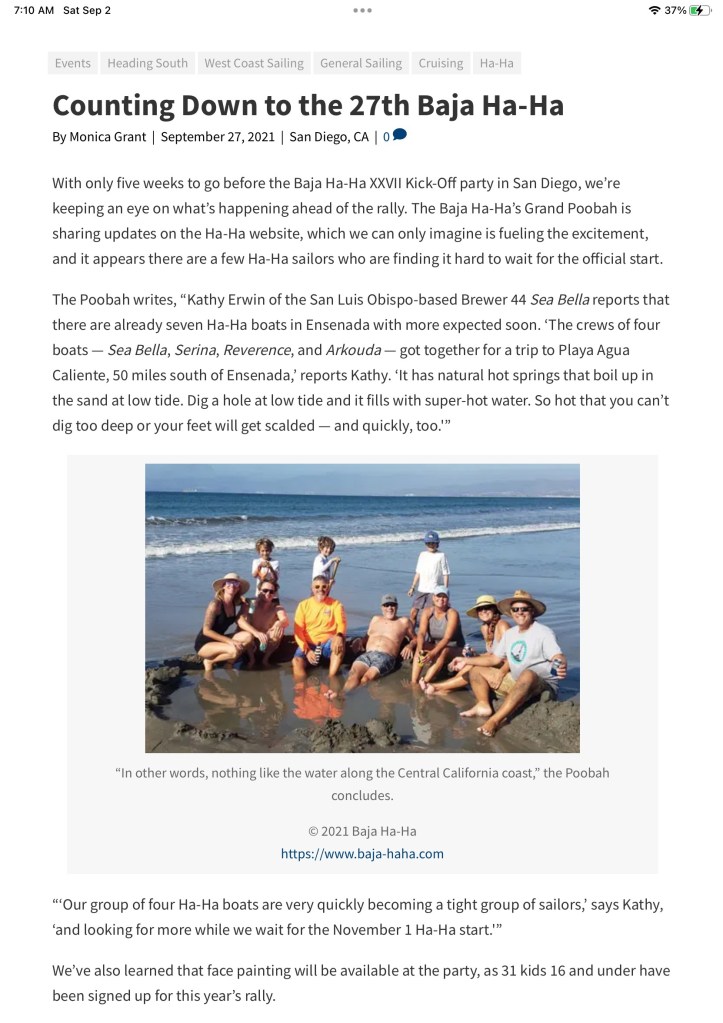
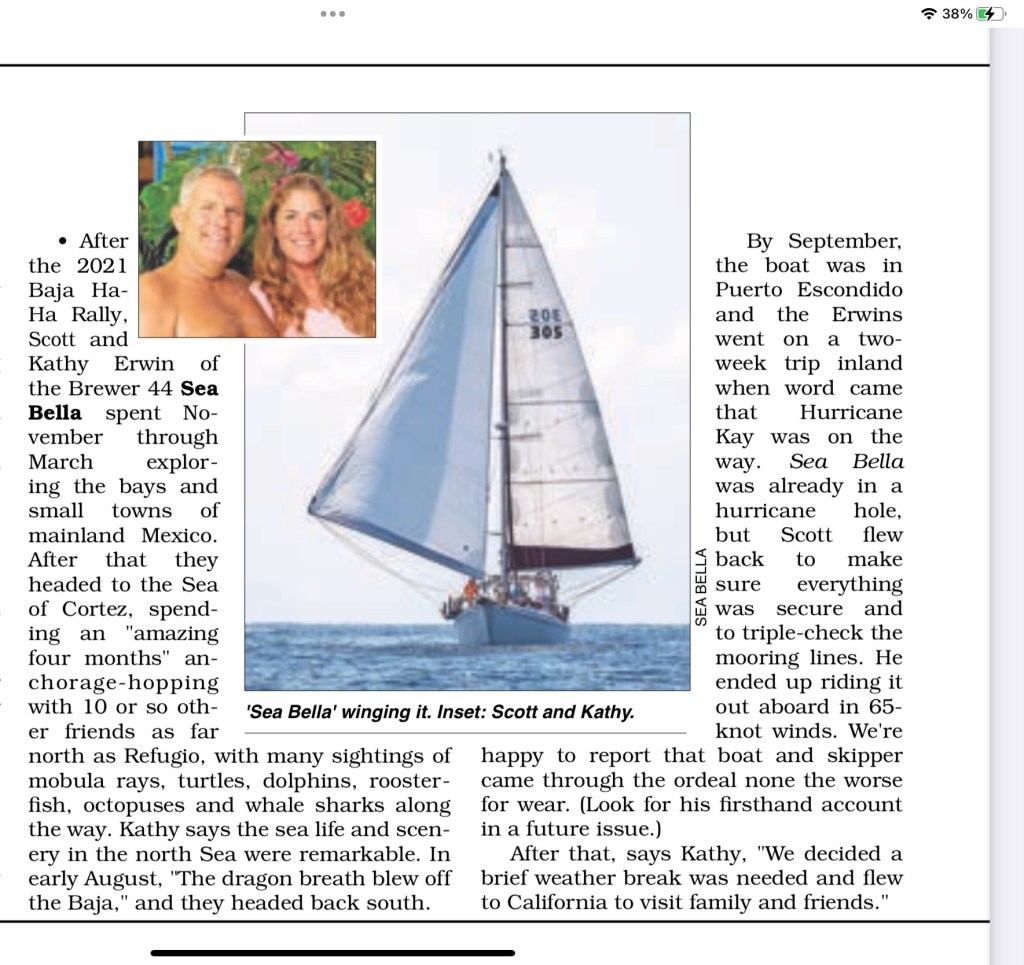
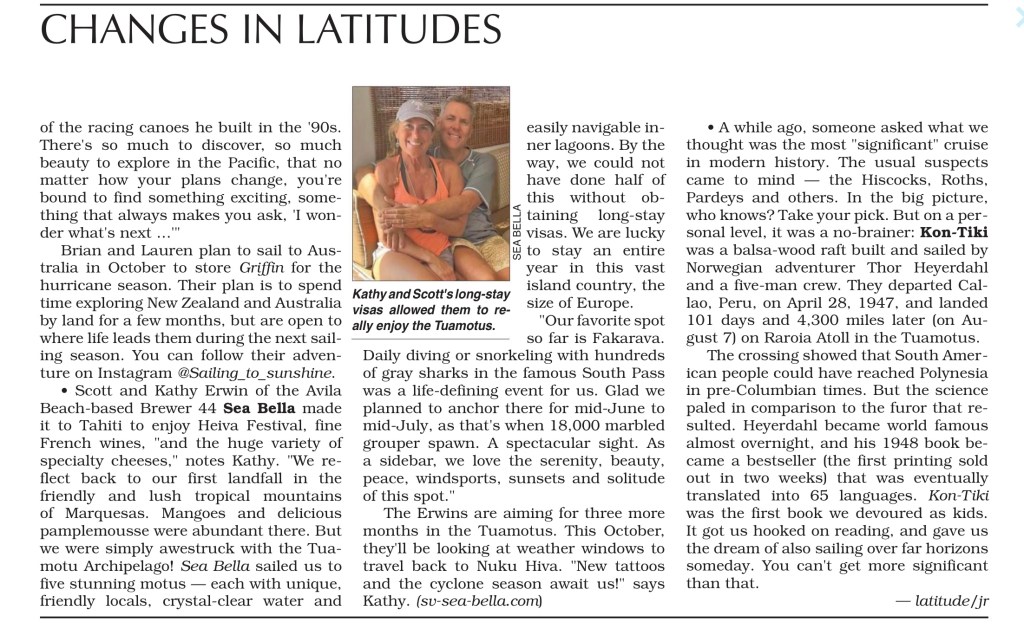
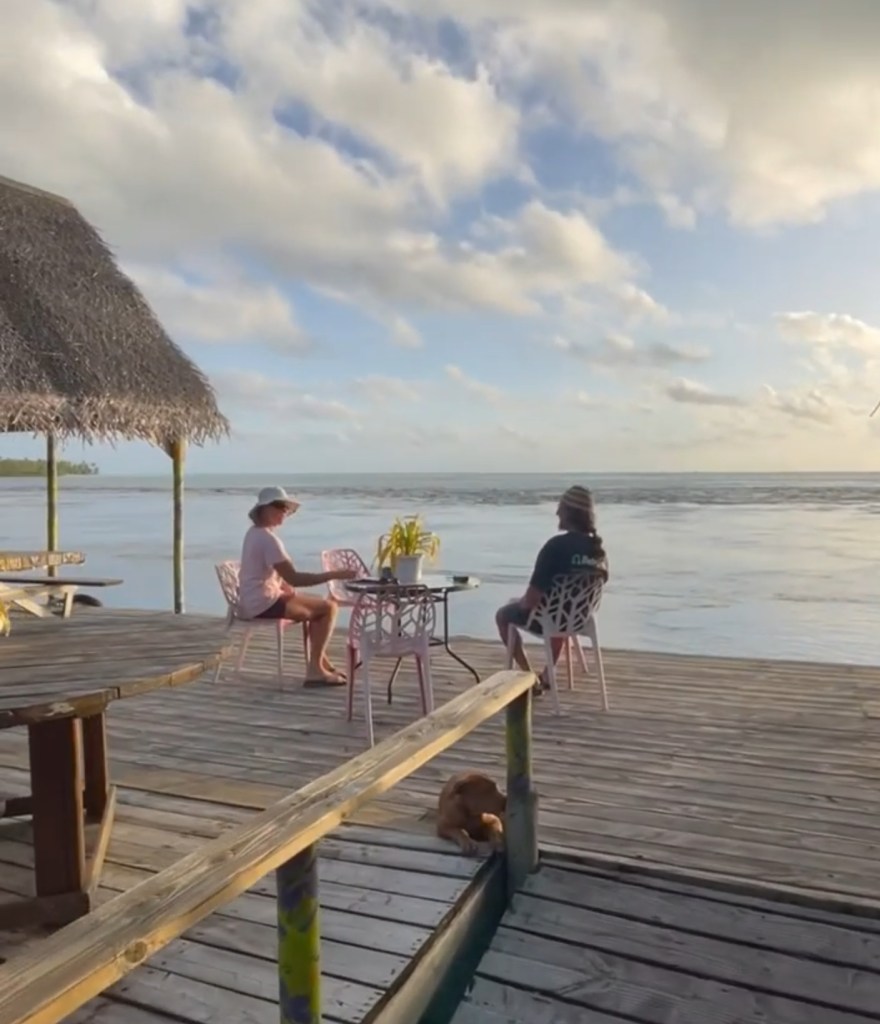
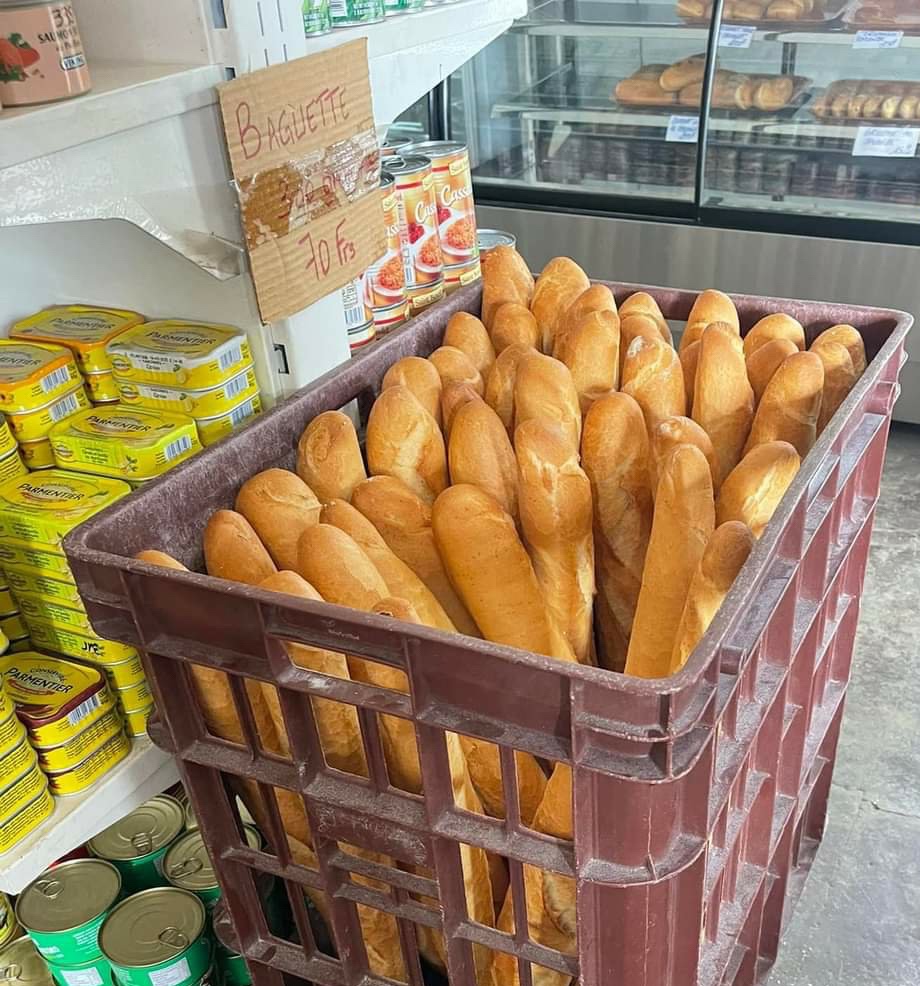
Sailing the French Polynesian waters of the Tuomotu Archepeligo is an amazing experience. Scott and I have spent most of the 6 month sailing season in and around about 8 Atolls. If you glance at a map, you will see these islands are all similar and mostly aligned with the SE trade winds, which makes for excellent travel in this direction. Our experienced was fabulous; the beauty of the pink sand beaches, reefs, sunsets, and sealife are remarkable. Most Atolls in the Tuomotus are very remote and only have a very small village with maybe a market or two. Shipments of foods and drinks come every week or two from Tahiti. Buying the French baguette or croissant is the excitement of the morning and a cruiser is lucky to find a few fresh vegetables or fruit. The people here are very friendly and helpful. It’s really a happy place. Although again, it’s very unusual to find fresh produce, so stocking up with canned or frozen is important.
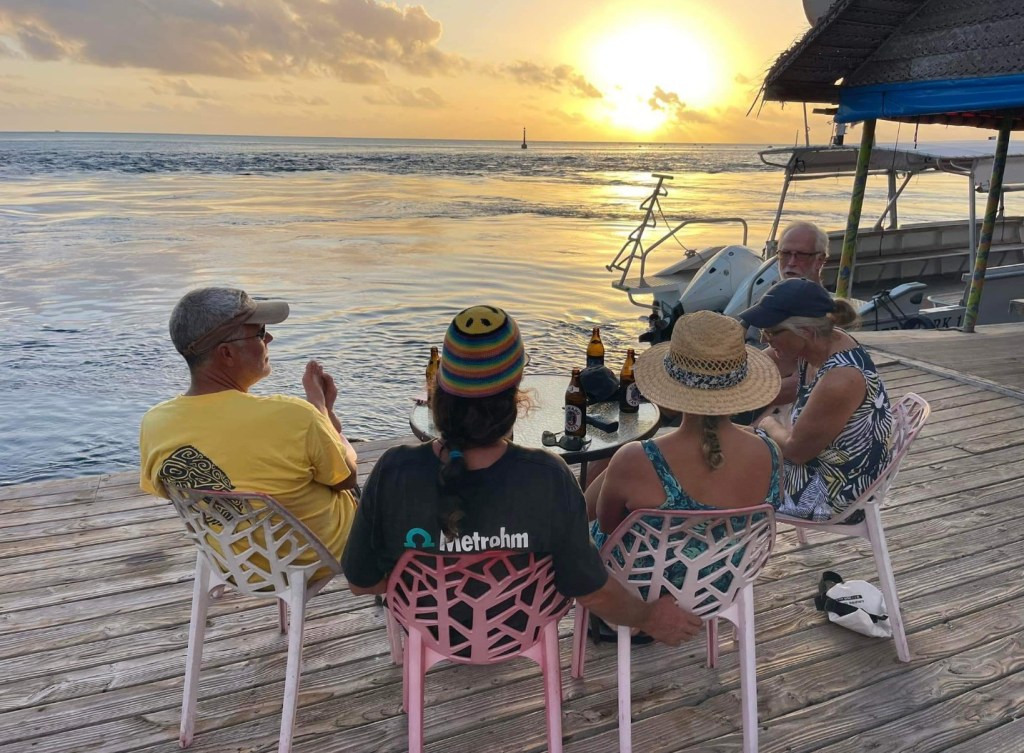
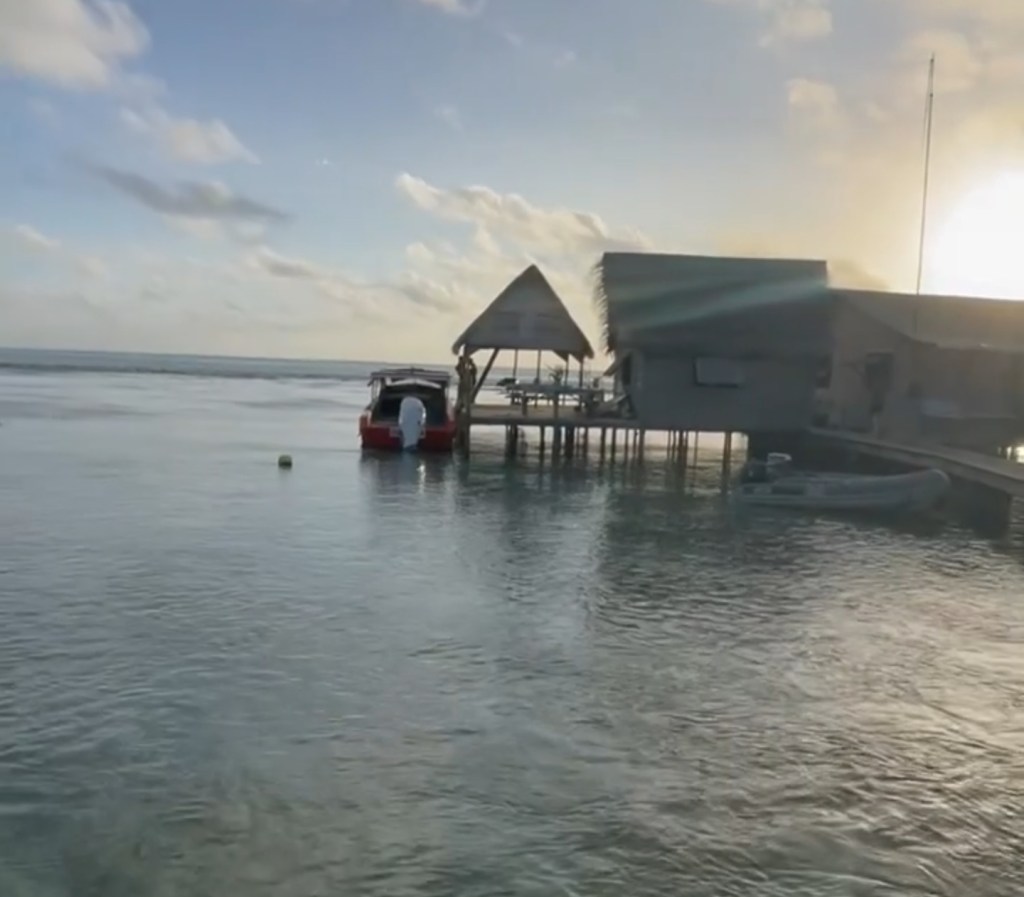
A very typical cruiser schedule in the Tuomotus is ‘early to bed early to rise’ as is with most remote cruising experiences. Mornings are usually lazily spent reading or on Starlink, researching the area, conditions, resources, or making a family call or one to a mechanic, but hopefully not. After the DIY boat projects and repairs are done, most sweaty sailors are ready to snorkel a reef, have fun with water sports, or explore the Motu, see below photograph. Most anchorages in the Tuomotus Archipelago are extremely remote, with out a village or house for 10 miles. And as for a marine services, there is only one area and that is in Tahiti 300-600 miles away. So, cruisers rely on each other. Most people want a sense of community, support, and friendship. It’s typical that cruisers end most days with a social time (boaters are from all around the world out here, so multi languages is common in the anchorages) people are ready to gather up for social hour, usually at a close beach, to meet new friends, share stories, drinks and snacks, discuss weather, sailing, projects, local news, travel ideas, and maybe play some games. These months in the Tuomotus I learned that every day is kind of the same, but by far, the people and beautiful places make it a unique cruising ground.
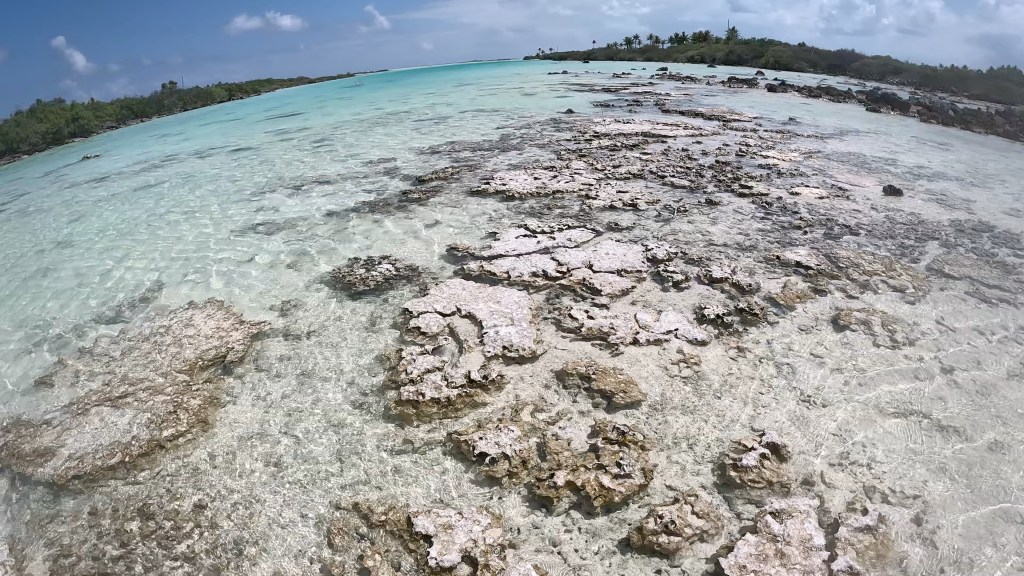
Rangiroa, Tuomotus, French Polynesia and… the ancient coral reef of Motu Faama.

We had terrific sailing experience inside the largest and longest (50 miles) atoll of French Polynesia: Rangiroa. It has 415 sandbars and motus, which are mini islands. One highlight was hanging out in the inside South corner. Motu Faama is quite far from the village and extremely remote. Our good friends from Mexico; Joanne and Scott on SVFundango, took this fun drone vid when we dinghied to the outer reef.

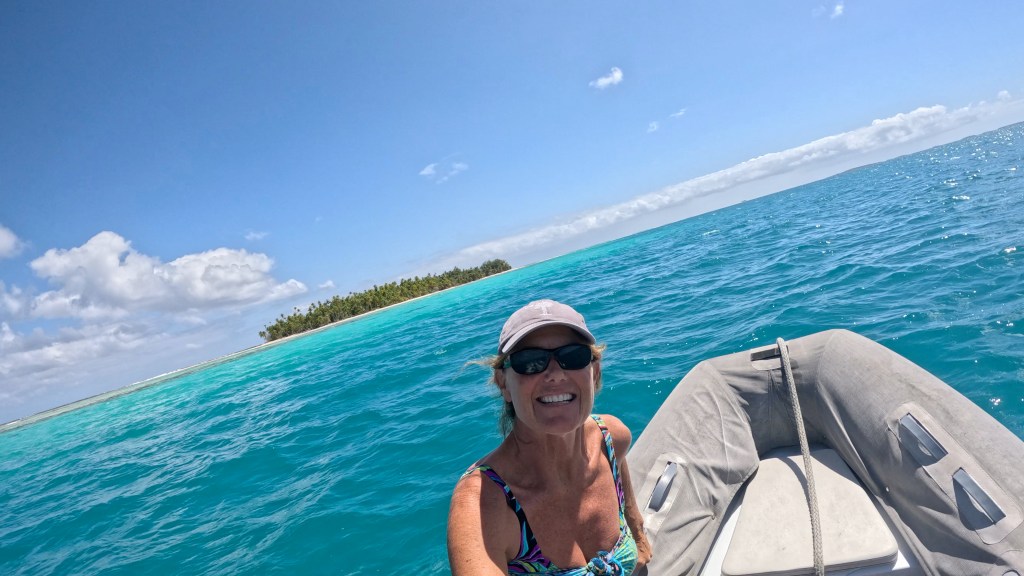
Can you find us in the dingy?

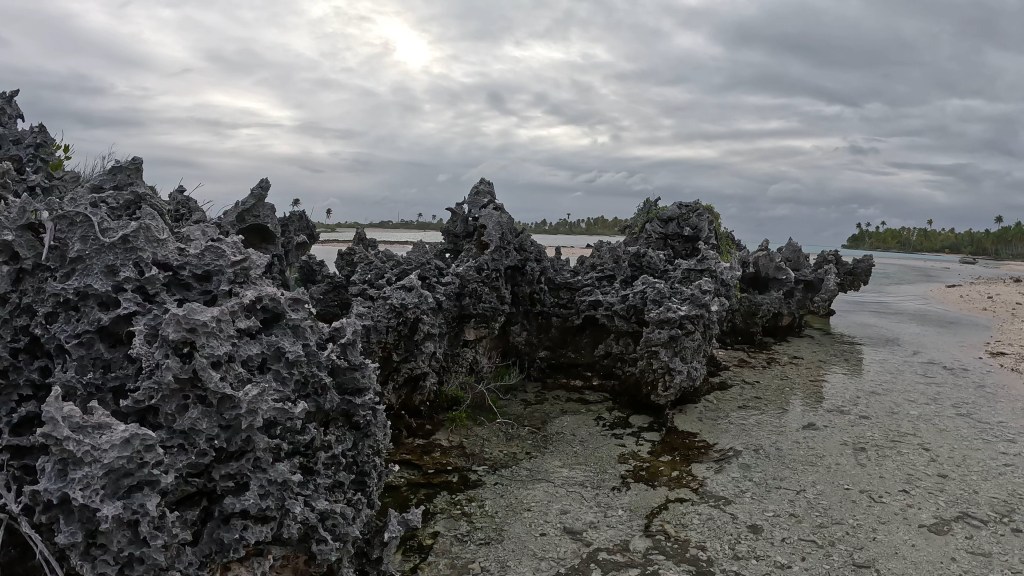
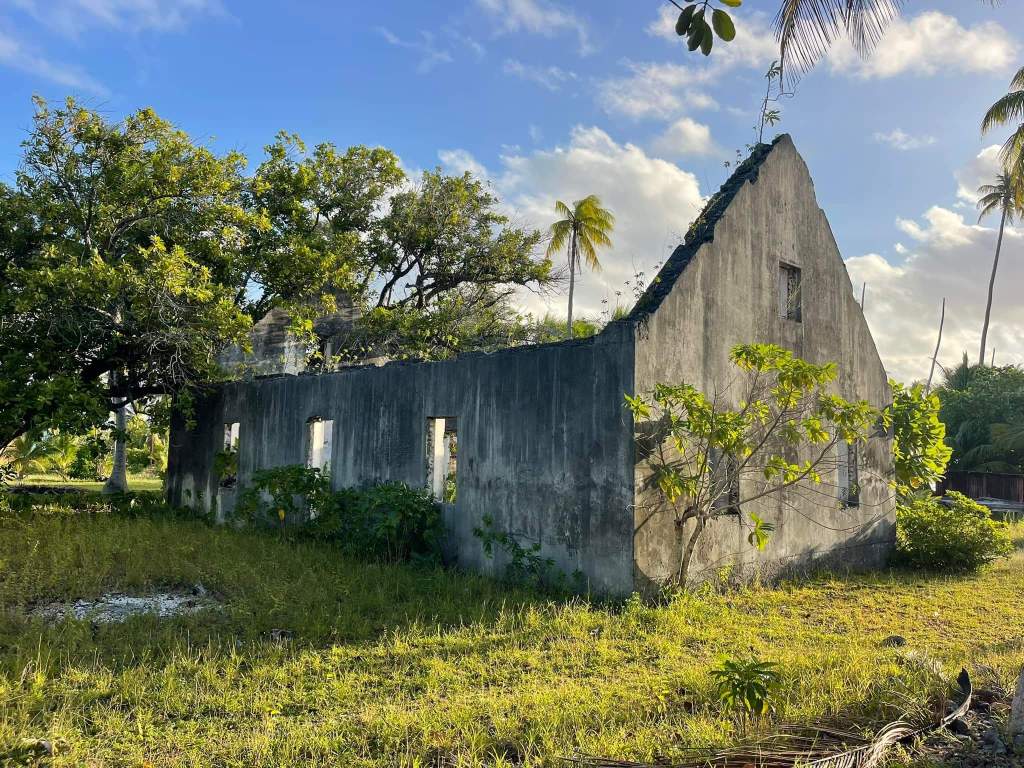
These above ground coral heads are thousands of years old, were once flourishing just underwater then were pushed up 10 or so feet. This atoll like all the tuomotus were formed from volcanoes 50 million years ago. Once exposed to the elements (heat, constant trade winds, cyclones and pounding surf) the outer coral reef left these strangely jagged natural wonders!! Kind of cool!


Now we are off, sailing 120 miles SE to the next atoll, Toau.

The sandy beaches and small islands near the blue lagoon are so addictive. If the weather is right, you could hang out here for a few weeks.

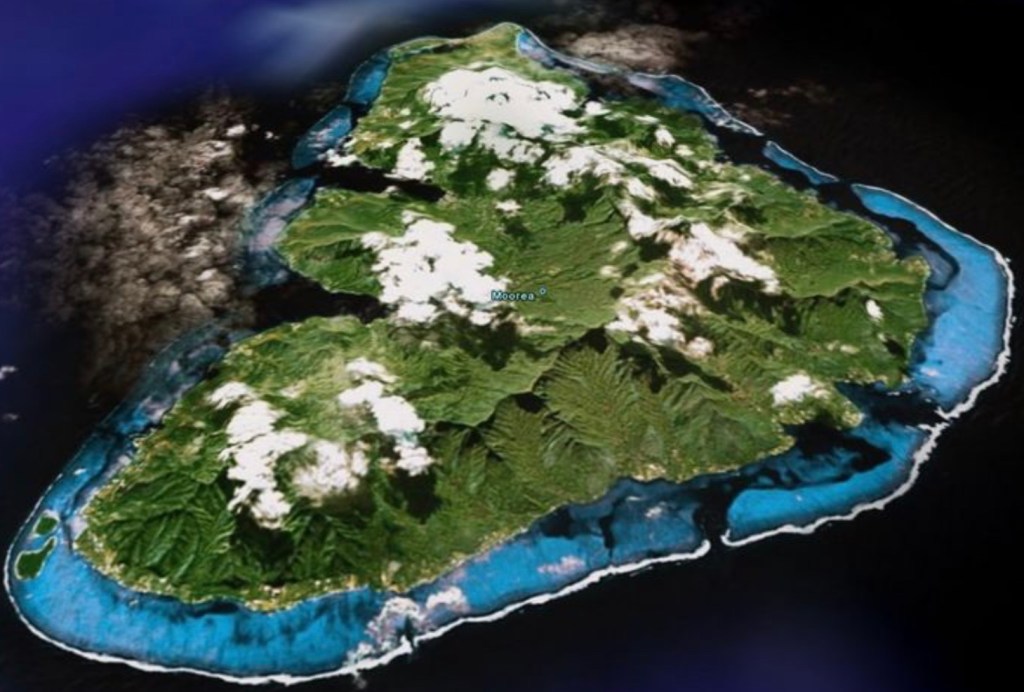
Marvelous Moorea

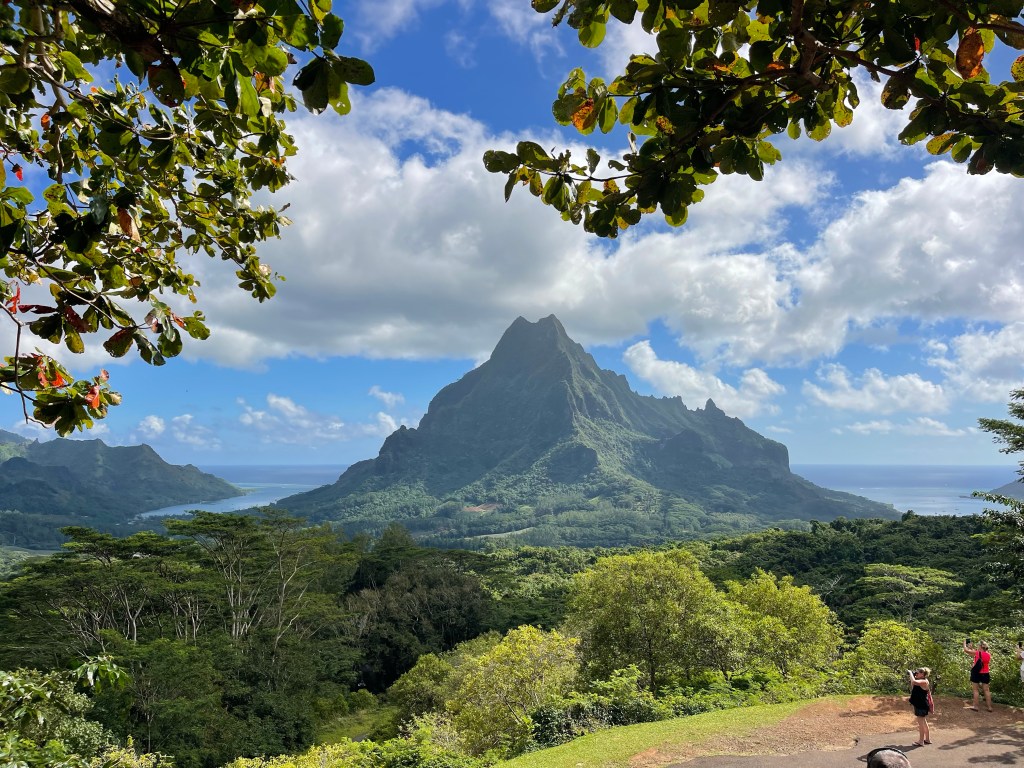
Scott and I really enjoyed our stay in Marvelous Moorea for a week in August. These photos show an area we hiked and explored. Moorea was formed millions of years ago by a volcano that erupted, collapsed upon itself, created a massive caldera and caused 2 giant mudslides.

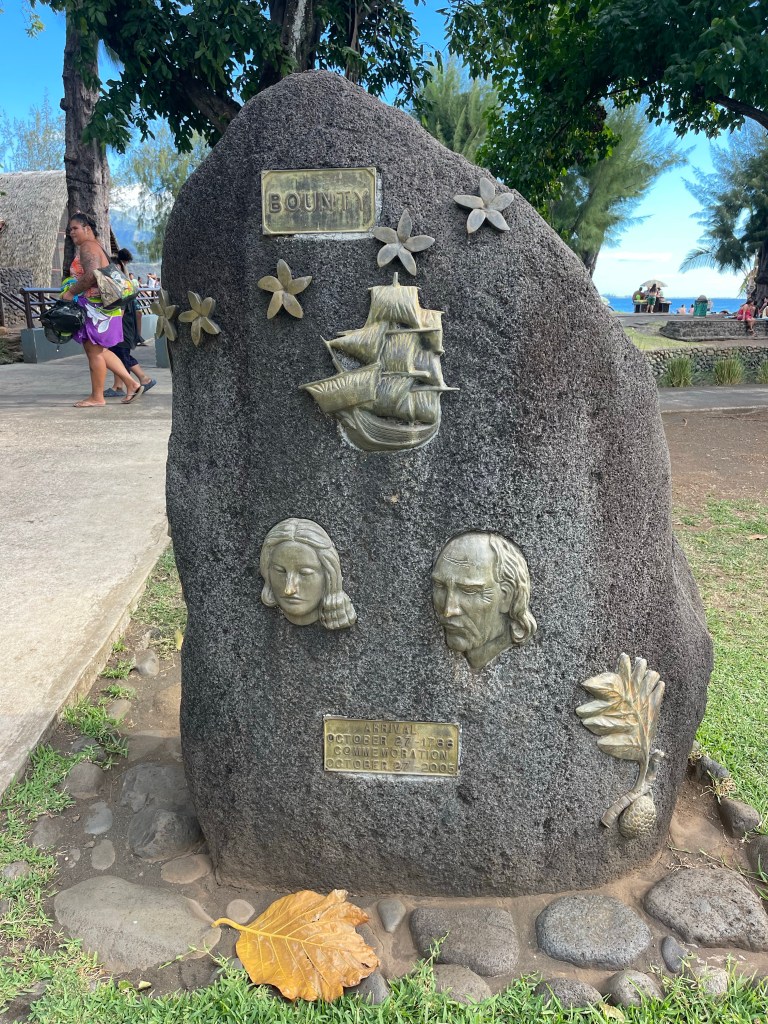
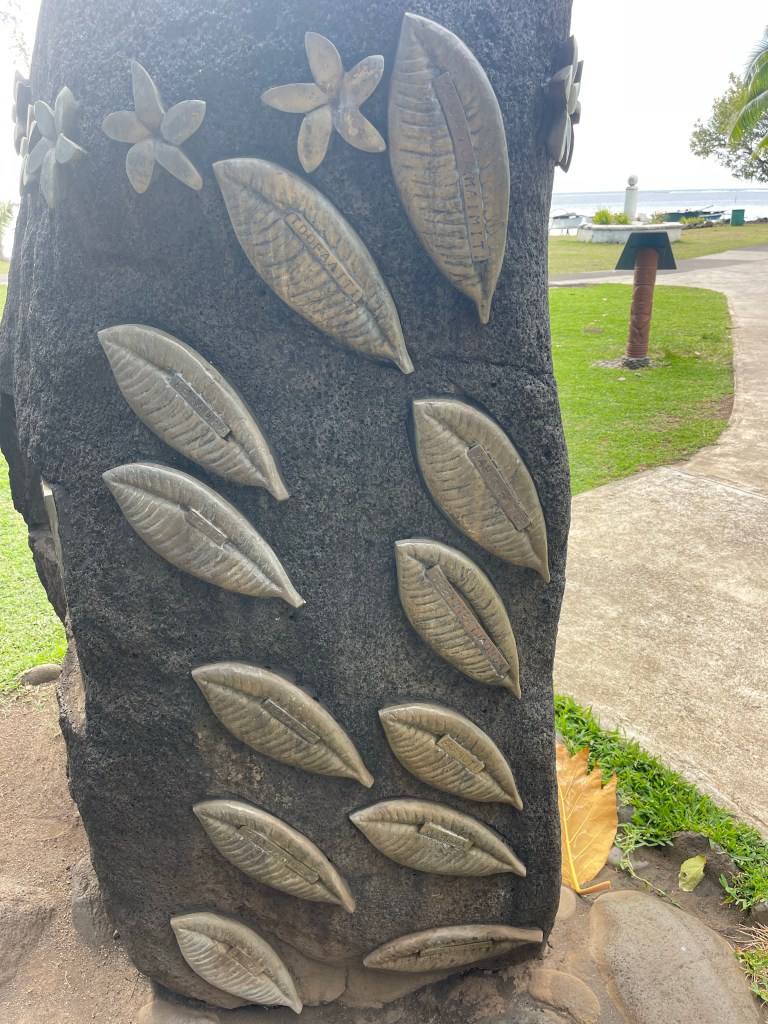
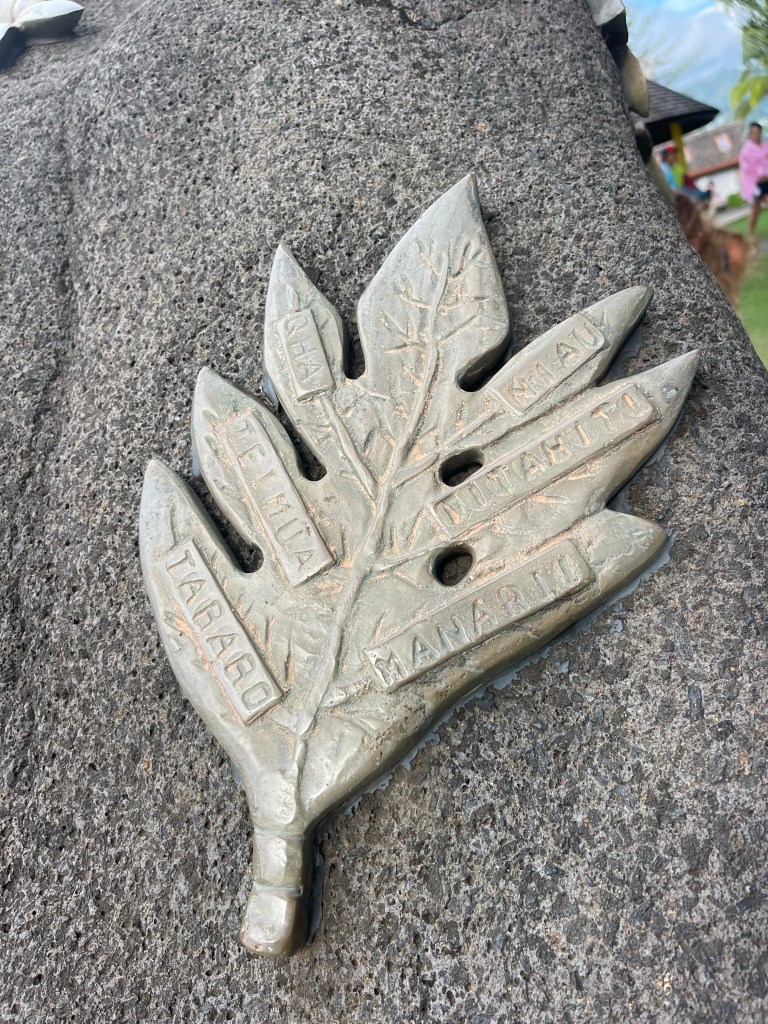
Two beautiful bays are the result of the slides. One bay is Opunohu, the other is the famous Cook’s Bay (where the movie “Mutiny on the Bounty” was filmed). The movie, and book are historically fascinating. It’s about in 1788 a true story of Christian Fletcher. He sailied to Tahiti and kidnapped young Tahitian men and women. Fletcher then sailed off with the captured villagers to the southern Pitcairn Islands. He then burned up his ship, leaving them all stranded there. Today, some of their descendants still live there as well as in New Zealand, Australia and United States.

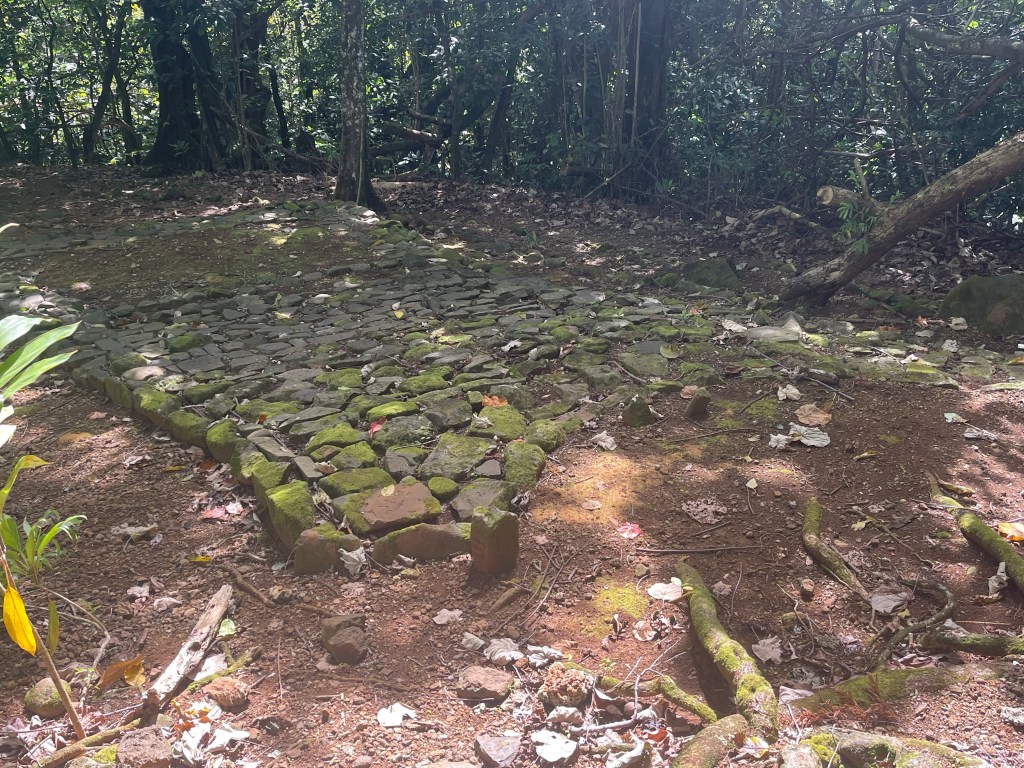
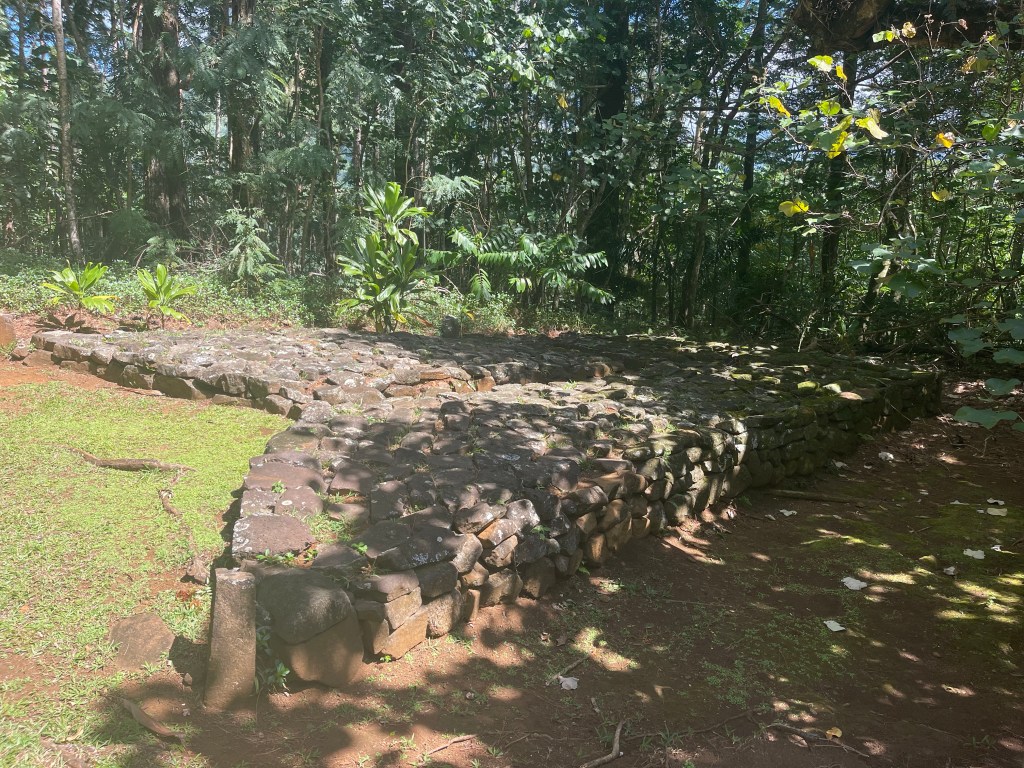
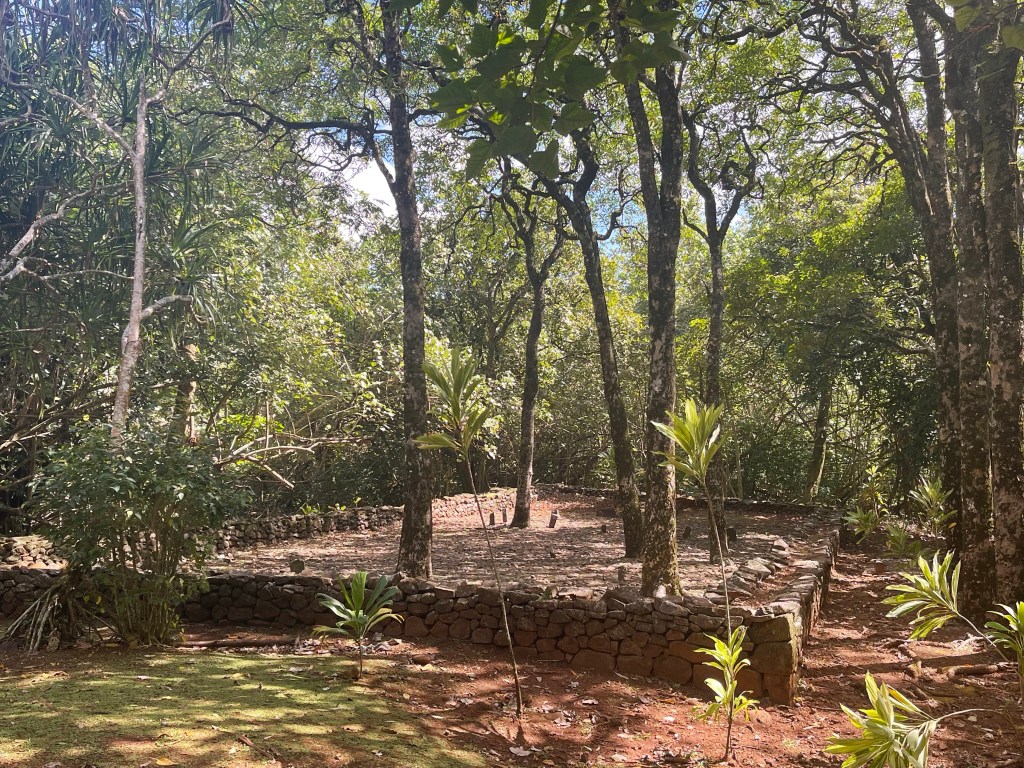
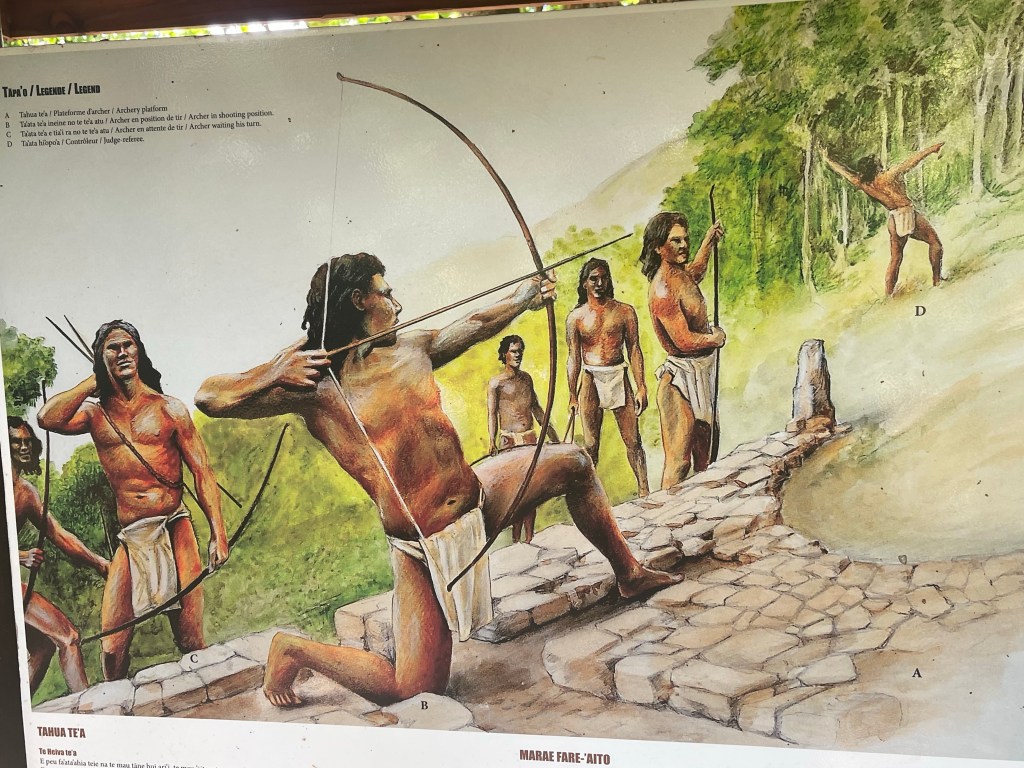
Below are the ancient tribal platforms made for the chiefs to perform the archery challenges. A regular sporting event in those times.

Playful Manta Rays, French Polynesia.

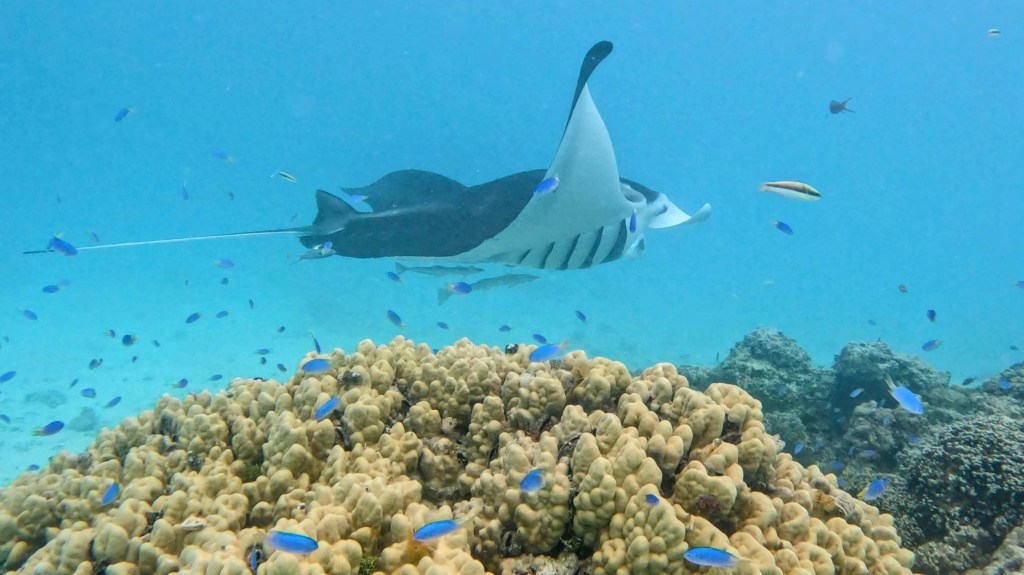
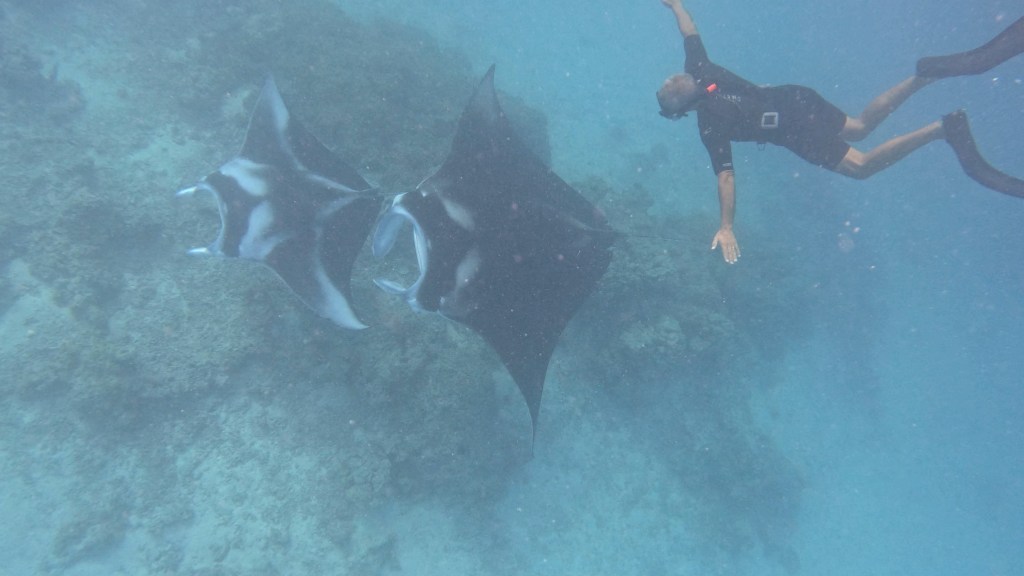
Our snorkeling adventures in Tikehau brought us to a a small coral area where the Manta Rays get a dental cleaning. These are definitely our new friends. Today off the old Pearl Farm in Tikehau, Tuomotus, we encountered these gentle giants being cleaned by small wrasses and remora which rid them of the parasites they have on the skin and mouth.

Although some cruisers prefer to scuba dive, we find the best colors and the most animals are within the top 20’. We have all the scuba equipment (including the compressor) but we rarely find scuba is worth the time and effort.
Believe it or not, the water is getting colder, it’s winter here, in August, and the locals don’t like getting in the water (80f, 27c) lol. We are even wearing shorty wet suits. A bit spoiled we are. It’s supposed to get down to 77 by the end of September. Burrrrrrr, it will be even colder South of here. I never thought I would say we need to go more north to get warm(er) Ha! We even have a blanket on the bed.

A few facts on Mantas:
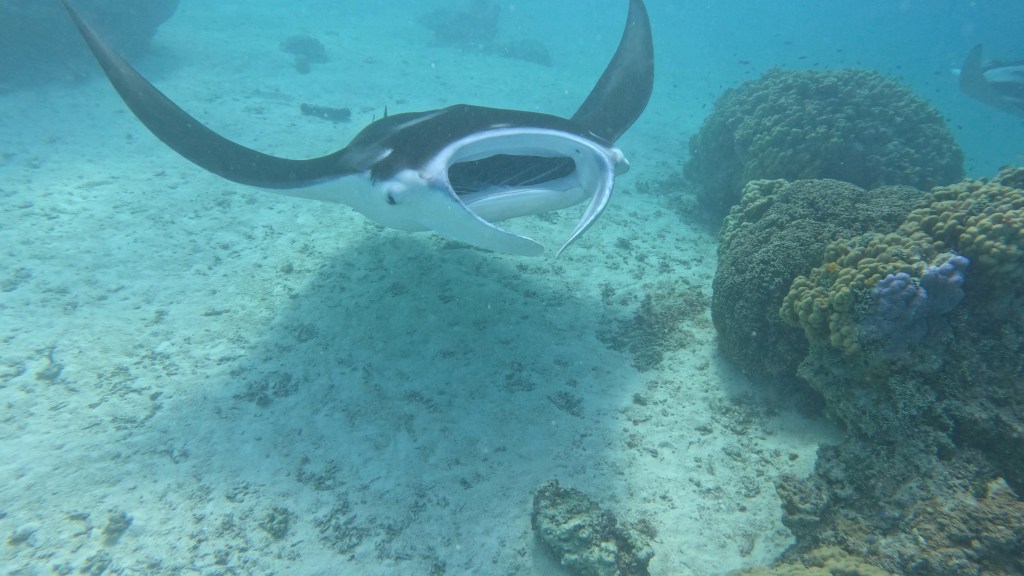
Kathy is intrigued by the Reef Manta Ray. Learning about these new friends; he can grow to a wingspan of 16 ft! But we have only seen these 3 of about 6-9 ft. You can see at the front of his face, he has a pair of cephalic fins which can be either rolled up in a spiral for quicker swimming or they can be flared out in front to channel the plankton filled water for feeding. I watched today that he has a small dorsal fin and a long black tail without a spine or barb like his cousins have.

Mobula Alfredi (Reef Manta Ray)


These Mantas are not afraid of us at all and often turned to look and see where we went.
The Tuomotus never fail to amaze us and this atoll Tikehau is no different. We will poke our way around this atoll for a week or so before moving on. We are adventuring French Polynesia, one island or atoll at a time.

This checks off another box of “things we want to swim with”. Lol Adventure never seems to be far away….I can’t tell you how cool it is not to be in a hurry.

Boat work in Tahiti, Marina Taina

Boat work in Tahiti :
-Repair Generator (Diodes) (lightning)
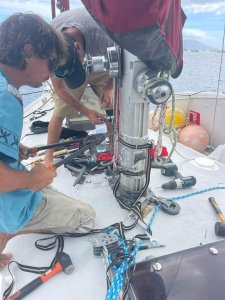
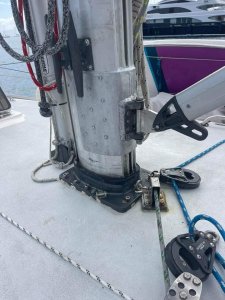
-Mast repair (Vang Bracket)
-Transmission Clutch
-Replumb boat freshwater system to Pex
-Repair Tohatsu (ignition system)(lightning)
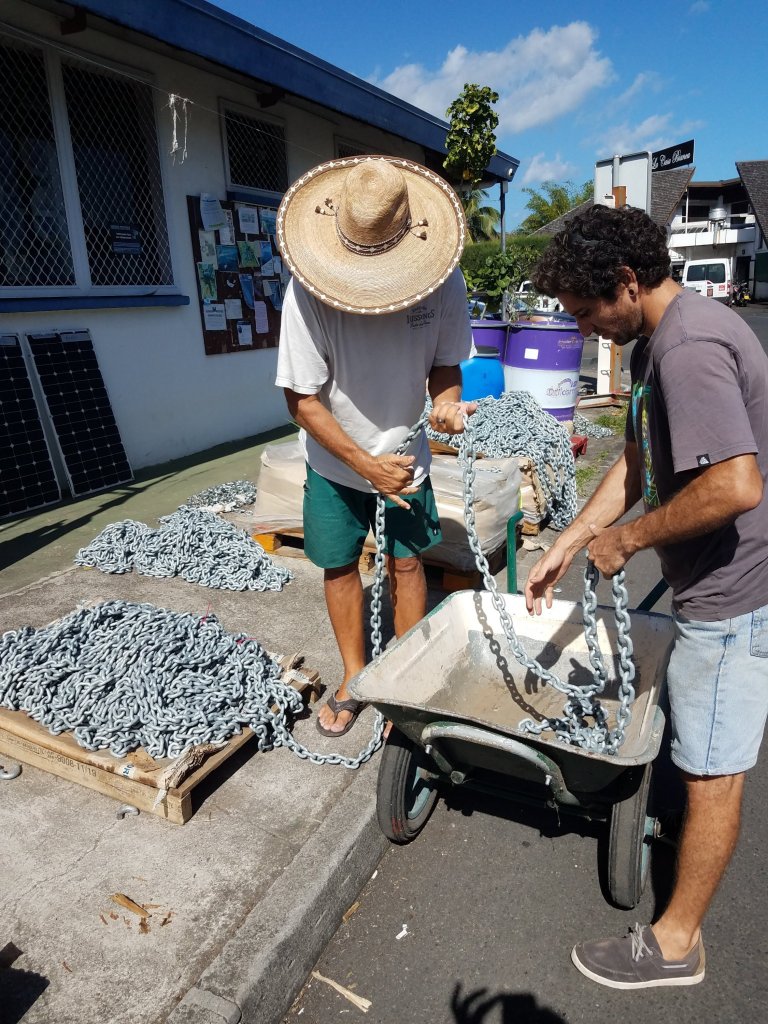
-New Anchor Chain

Whoa! What a two weeks on the dock. Sea Bella went under the microscope and the knife as we needed to address some of the deferred maintenance.
Cruising isn’t all sunsets and cocktails. A good rule of thumb is the maintenance on a cruising boat can cost an average of 10% of the boat value. We got off pretty easy the last two years but we definitely spent some $$s this time.
Some of the items on our list was due to damage we encountered by a lightning strike that happened about a hundred yards from us on shore. Diodes fried in our generator, battery operated fans, B&G wind instruments including the wire in the mast and the ignition coil in the outboard motor, all fried. Crazy as the boat did not take a direct hit.
These are all the items we checked off the list! We even made it to the dentist and dermatologist, all good!


-New Snubber (backup)
-Two new dock lines (2 chaffed through on the concrete dock we were on)
-Oil Change Perkins
-Sand/revarnish Freezer lid
-Spare Genoa Halyard
-Replenish Dyneema reserves
-Anchor Depth markers
-Repair/replace fans (1 lightning)
-Clean/Lube port staysail winch
-New furler for Staysail
-Repair Dinghy Chaps
-New Canvas for forward dodger
-New phone for Kathy (old one didn’t like the saltwater bath)
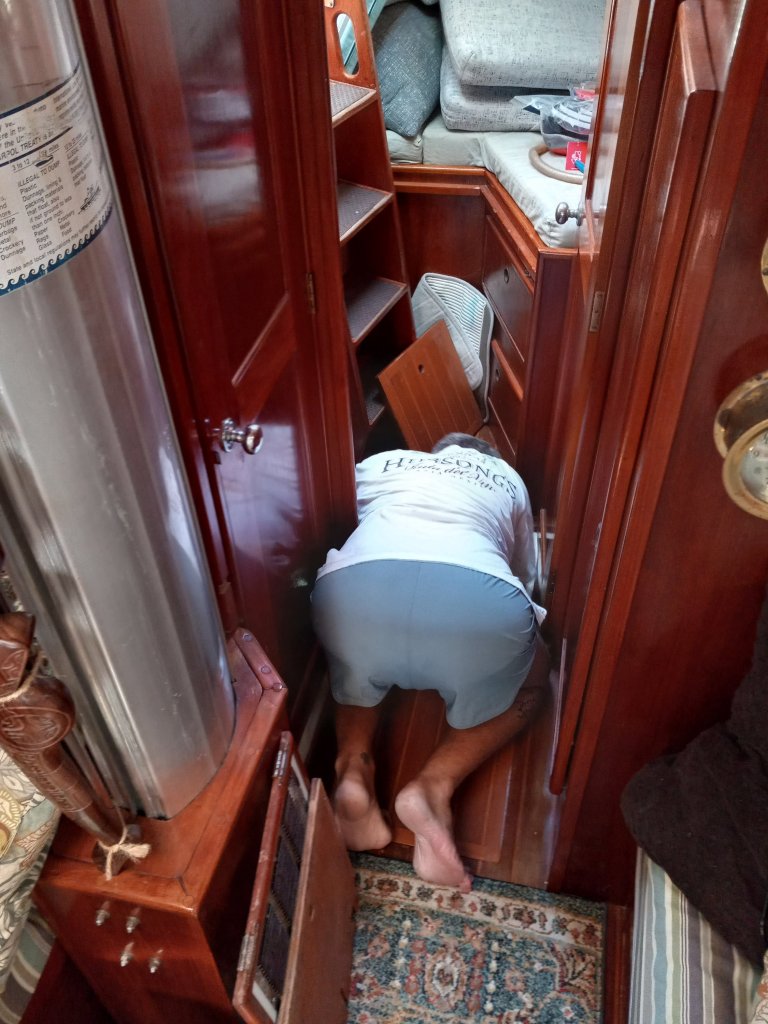
-Find/repair all deck leaks (about 3-4)
-Rebed 2 cabin port holes (more leaks)
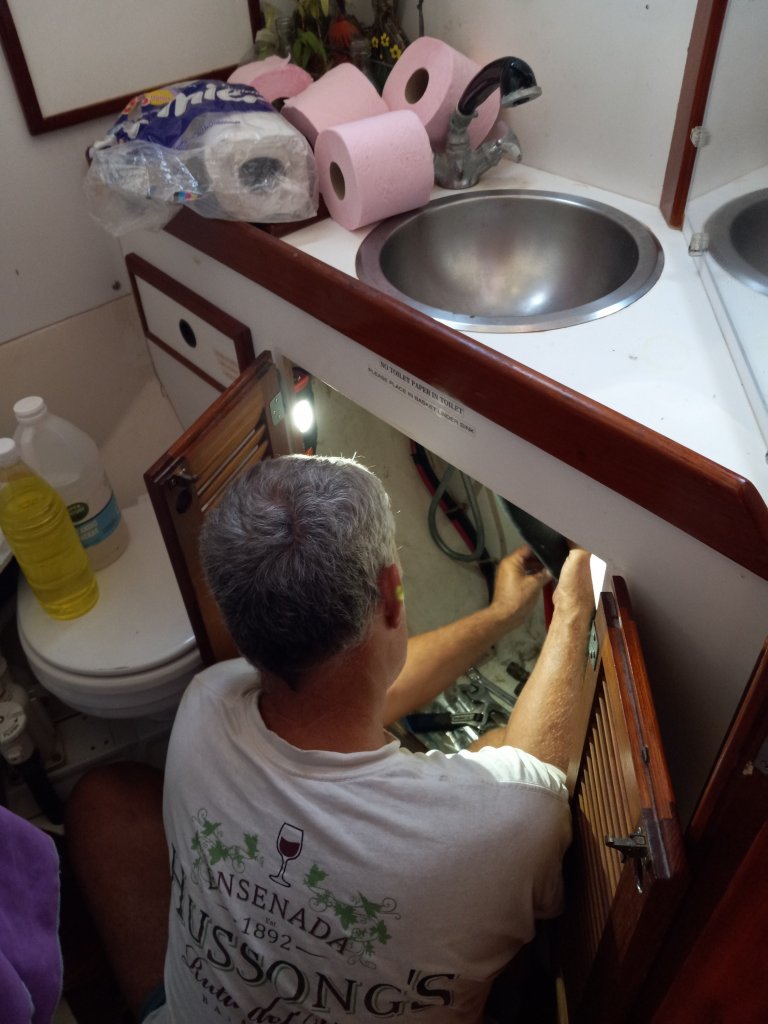
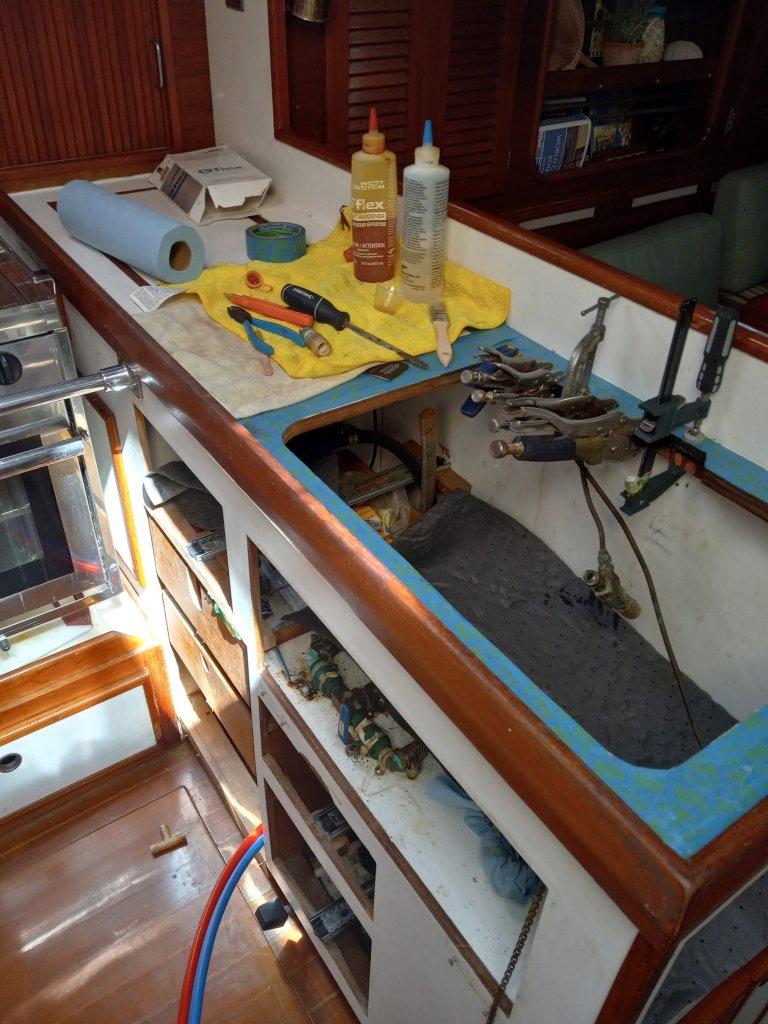
-New Faucet in main galley
-R&R counter top


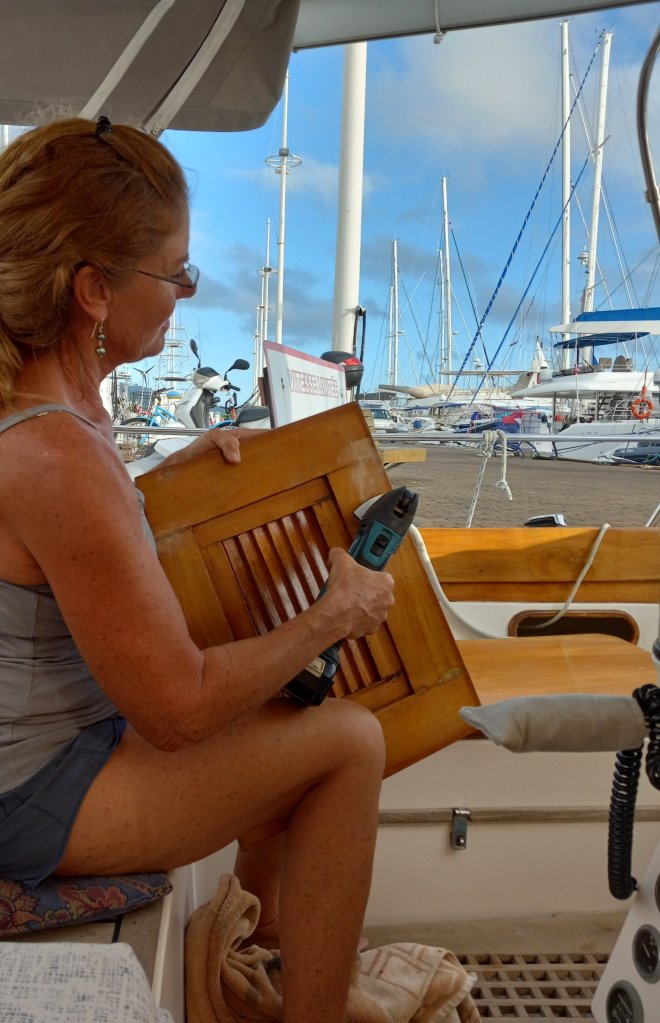
-Sand/repair varnish hatches
-Repair/replace port water tank level sensor
-R&R multiple wood finish in cabin
-Launder all cushion covers inside and cockpit
-Replace Watermaker timer
-Food Provision for next 6 months
….and dozens of small stuff to small to list

Mastering Scuba Diving! Fakarava

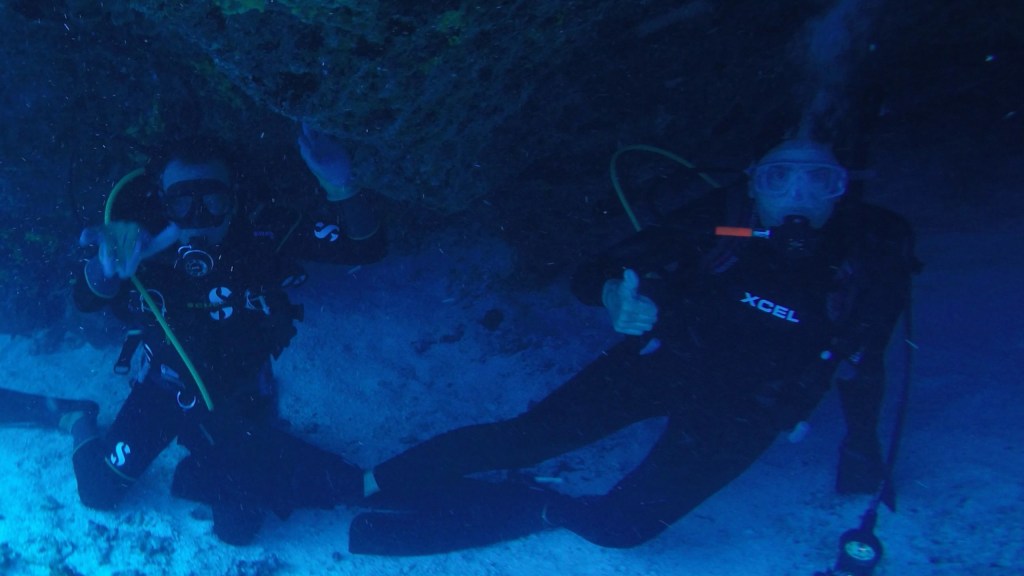
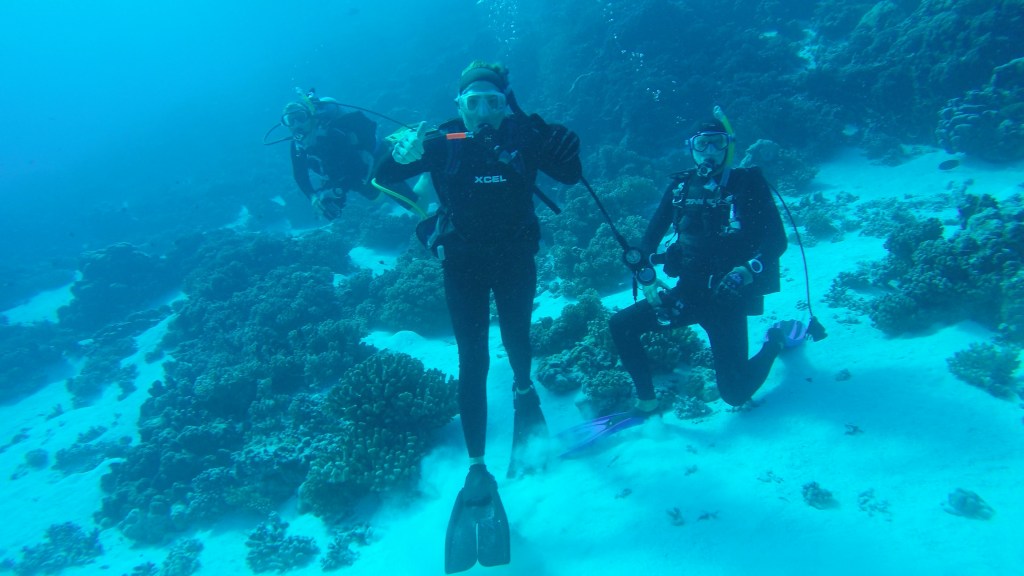
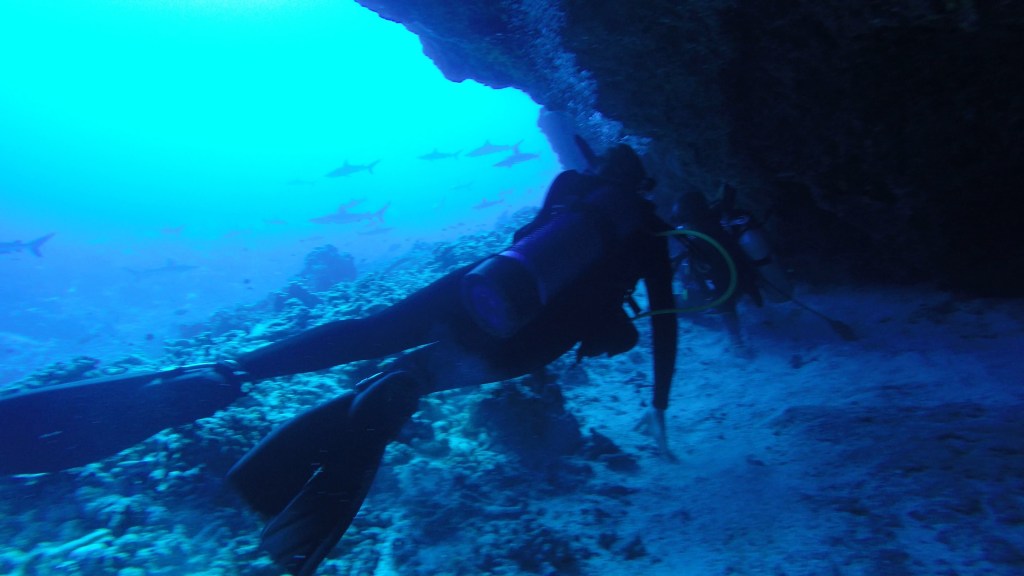
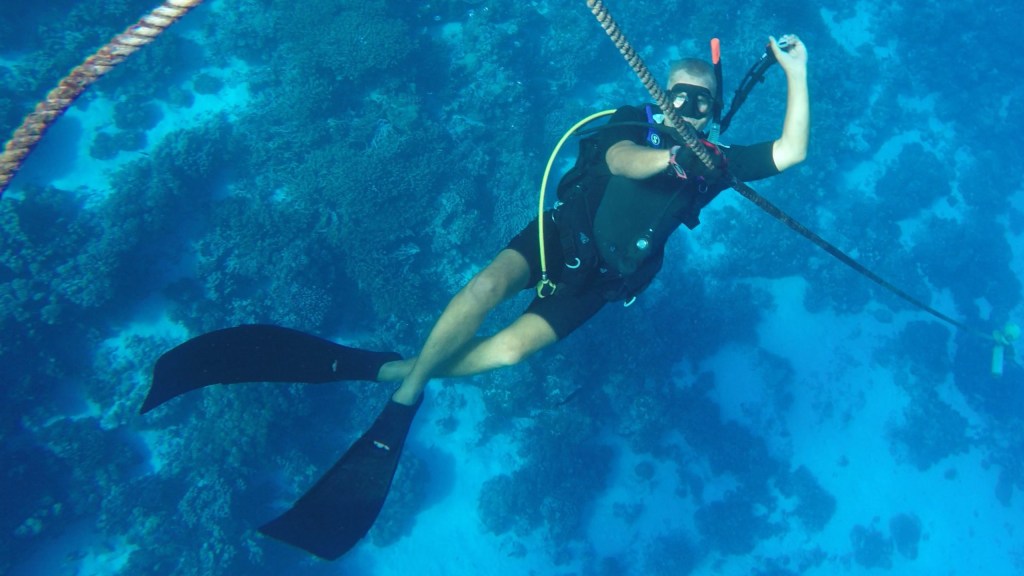
Kathy here, I did it! Finally I conquered my irrational fear of scuba diving! Yesterday I dove 93 feet! Years ago in college, while in the cold waters of Southern California, I got certified to scuba dive and I hadn’t put a dive tank on in 30 years. My fears hadn’t been of the unknown or scary creatures, it’s been more about breathing and claustrophobia while scuba diving. It became kind of a big “thing”. I have been enjoying snorkeling so much these last few years, I just put it off. Finally I just went for it. A few practice dives under our boat in 20 feet of water and I realized that all is well and to stay focused on the beauty. Well, French Polynesia is the perfect place for scuba diving. So clear, such beauty, I love it! Fakatava South Pass is a famous dive location and Top Dive filled our scuba tanks daily. Most friends back home are amazed at the hundreds of sharks and overwhelming amount of healthy coral! Our scuba diving friends and bloggers on We Sail showed us a cool cave, too. Going back for more today.

Glad Scott was there, every step of the way

Sailing and Scuba in Fakarava, so amazing!

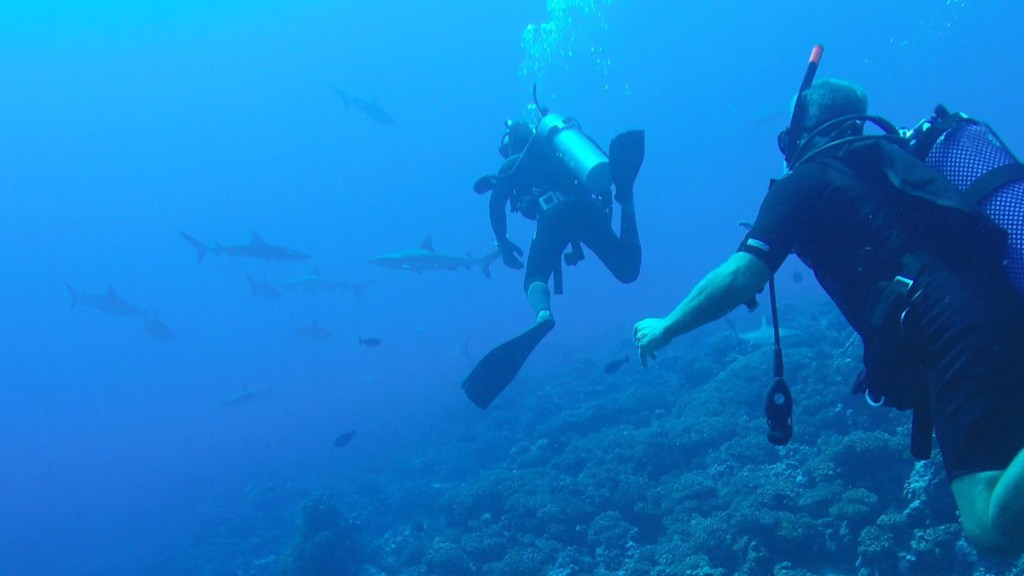
Here are a couple of scenes from Fakarava South Pass. We scuba dove daily for 4 weeks. Snorkeling too. Its so beautiful here with 85 degree temperatures and 80 degree waters. July is in the winter months here at about latitude 17 degrees south of the Equator. Rainy season is French Polynesian Summer, but still beautiful and warm. But, look out for Cyclones in December through March in the South Pacific Islands.

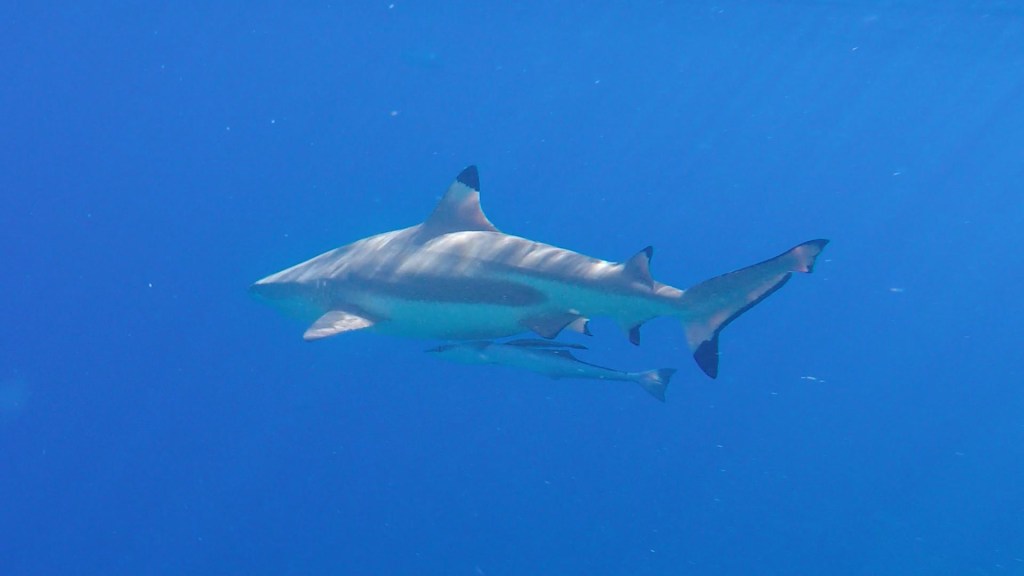
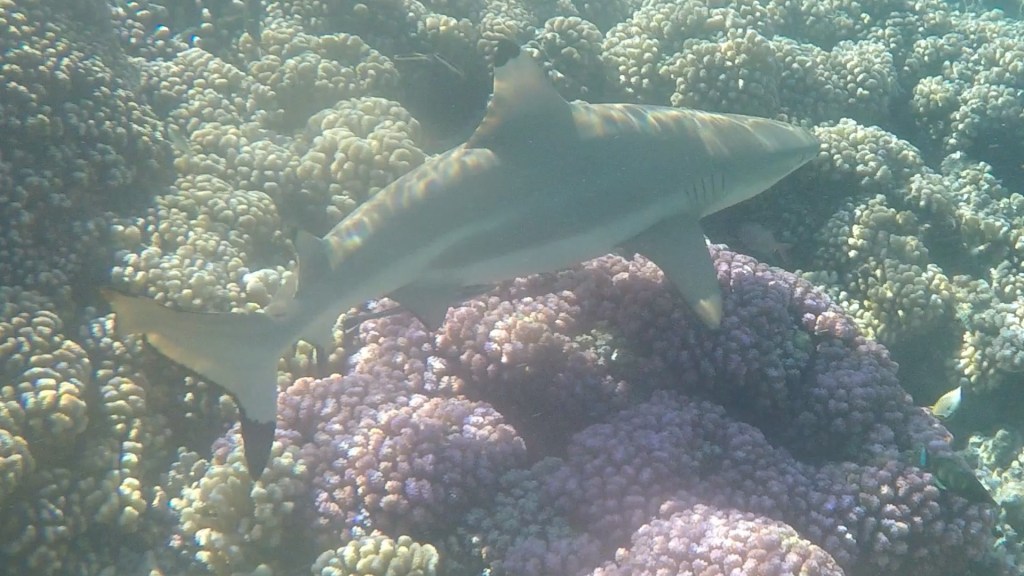
But what was really exciting were the SHARKS!!

Snorkeling with Danika on our buddy boat Simplicity

Tahiti is next. Look for beautiful Island photos and posts about Heiva, the fantastic annual Cultural Festival.

https://www.instagram.com/erwinseabella/

Weathering in Makemo, South Pacific

Crazy storm past over last week. LOVE our anchor, thats for sure. Harder it blows the harder she digs in.
We clocked over 50 knots multiple times and had sustained 30-40 knots for a day. A few boats here broke their snubbers (the rope attached to the anchor chain to softwn the pull and protect the windlass)

Ahhh, sunny day coming!

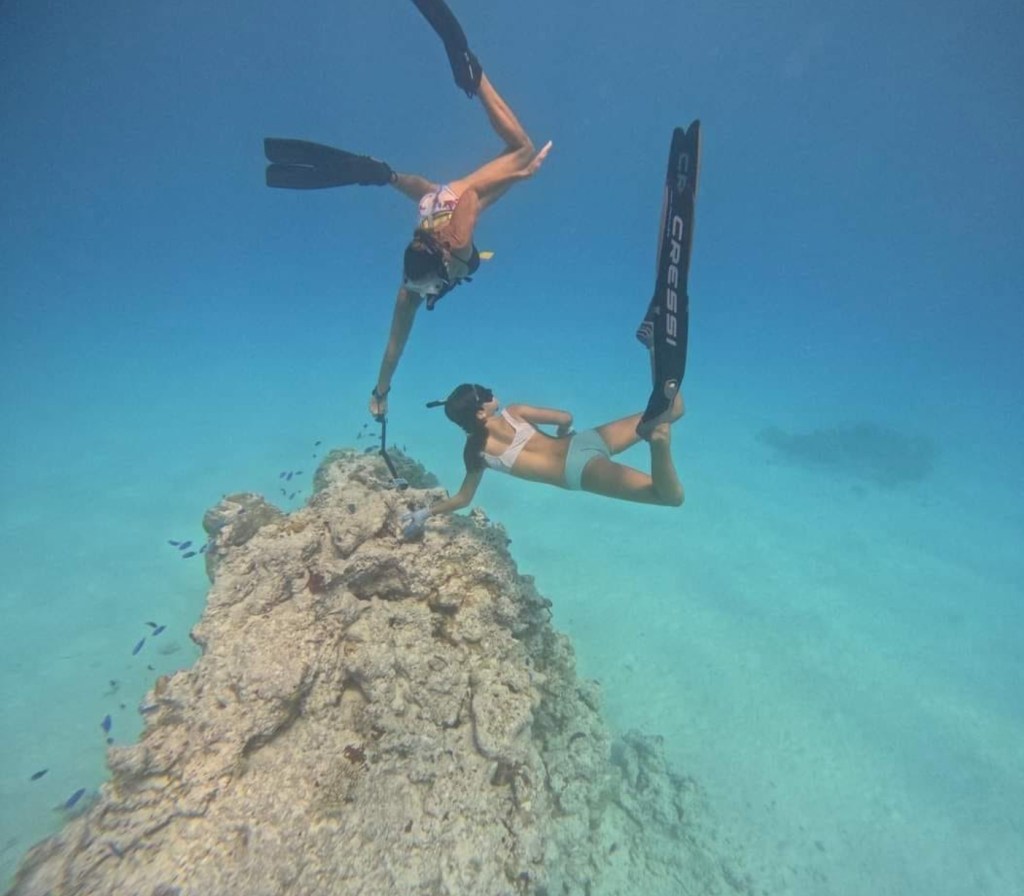
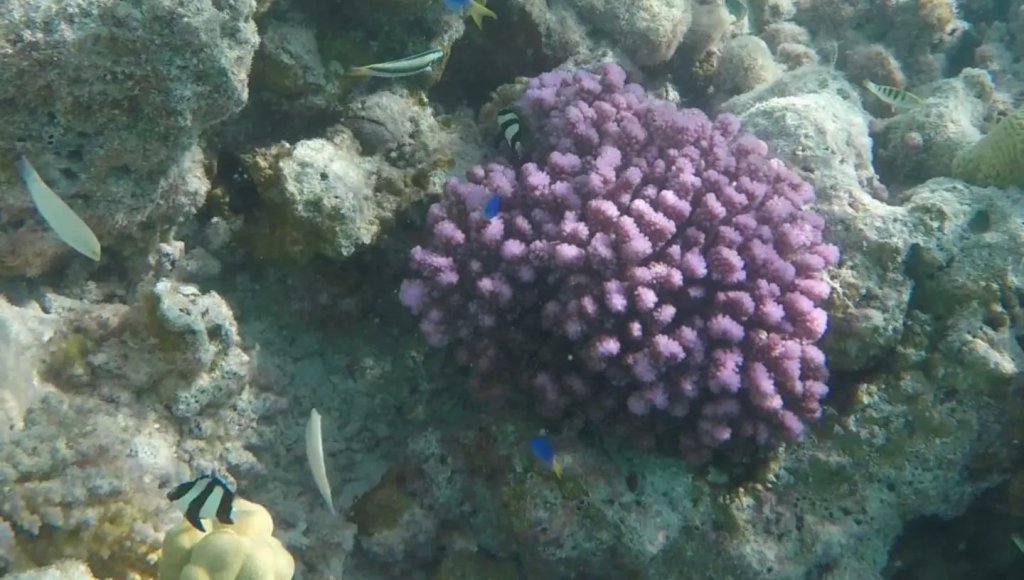
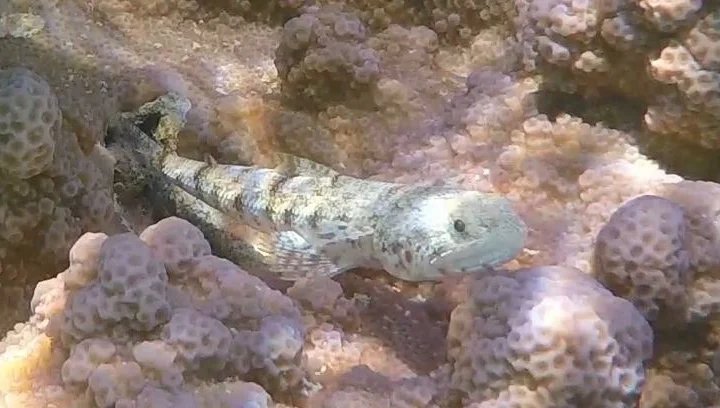
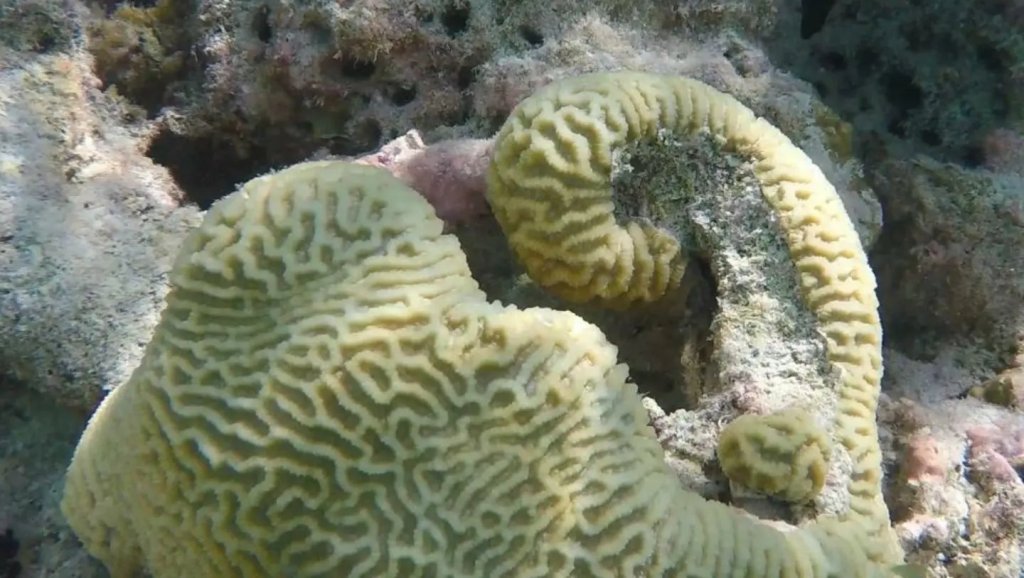
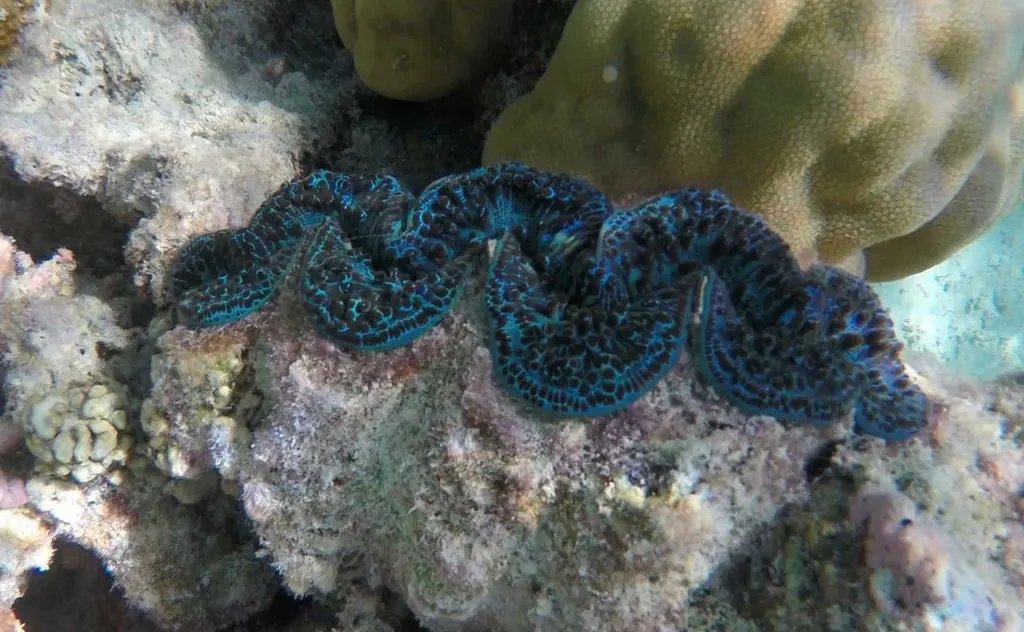
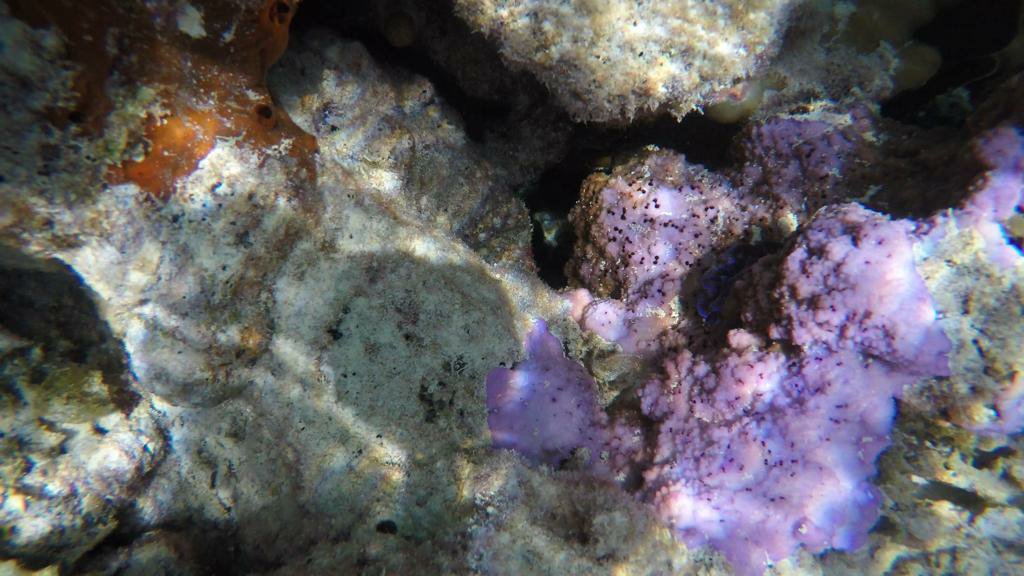
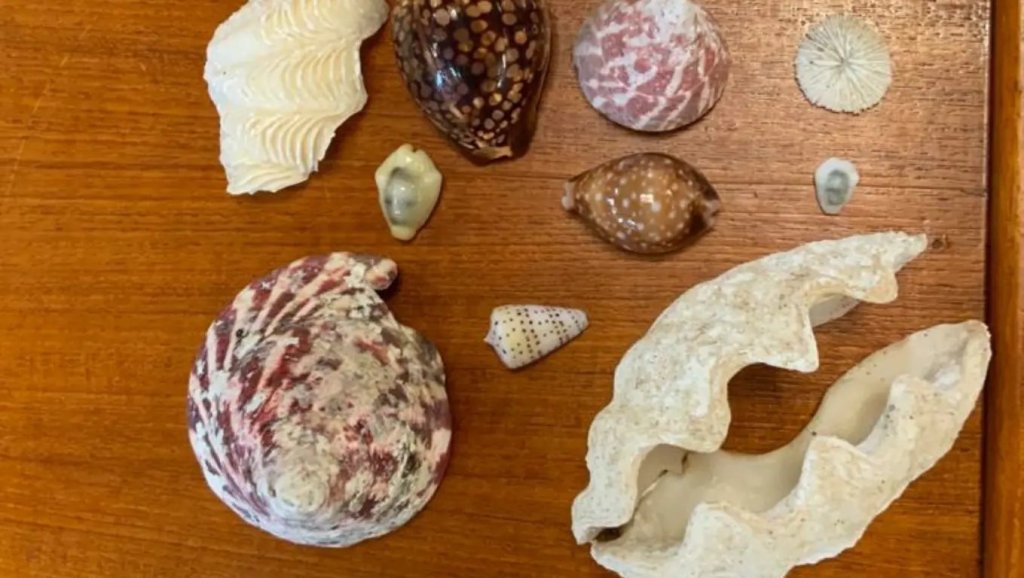
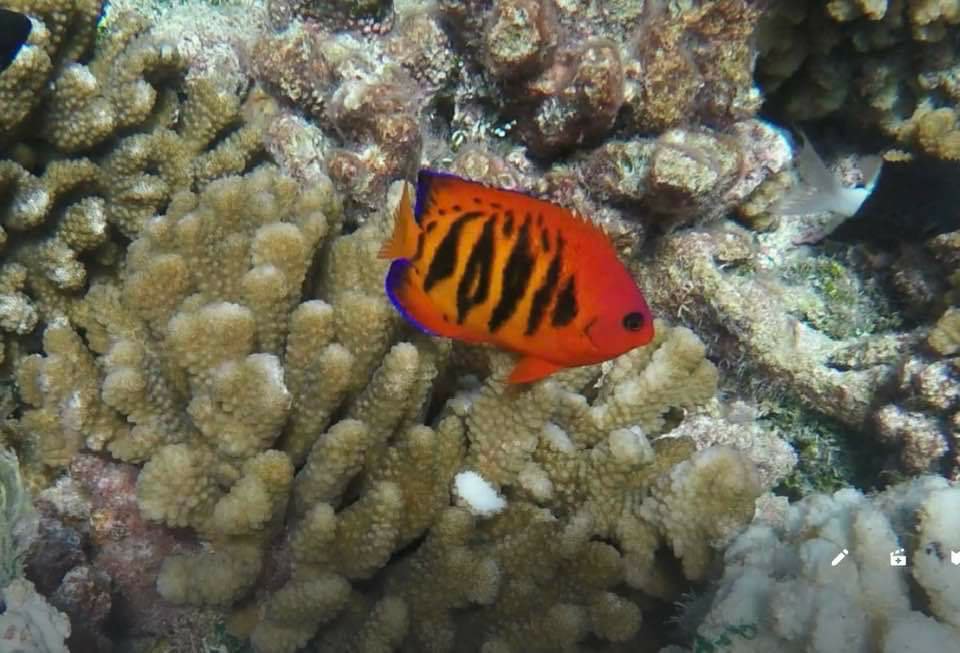
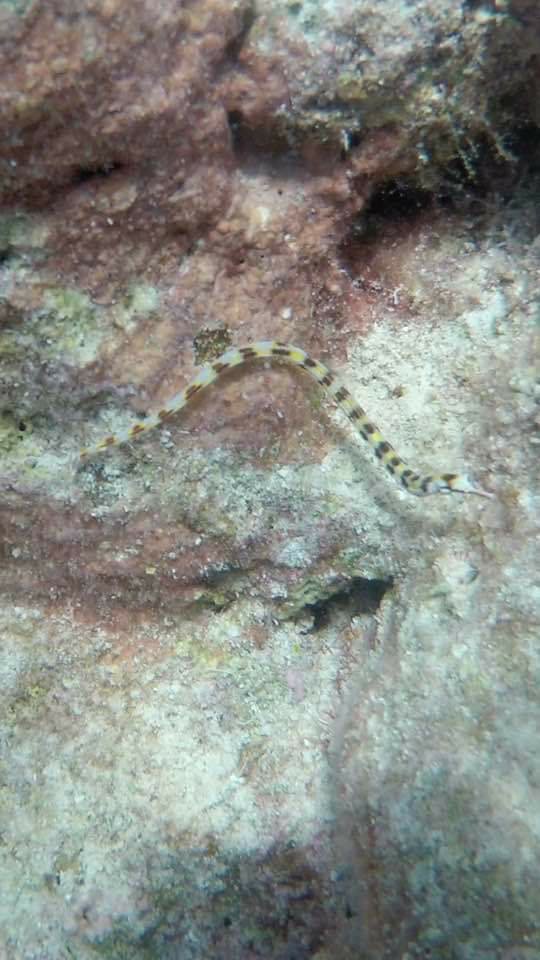
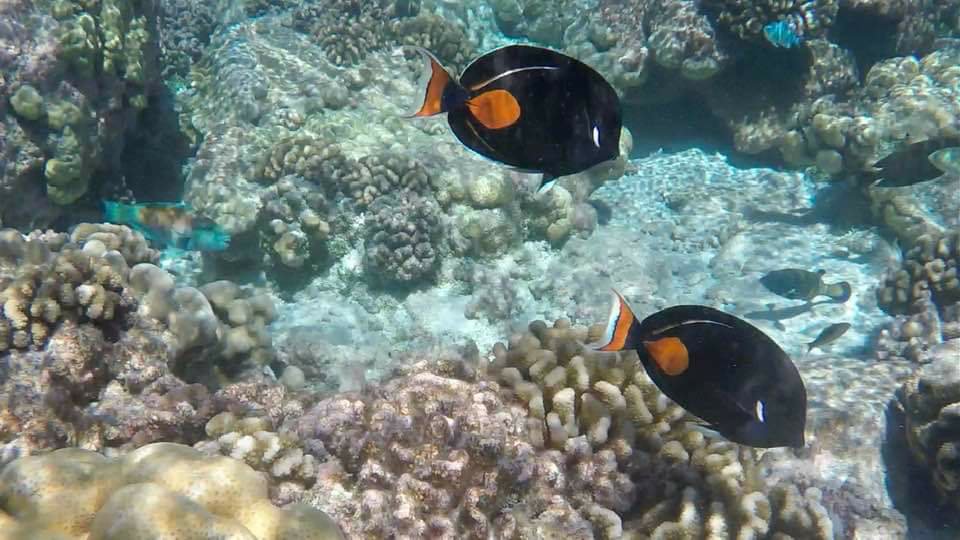
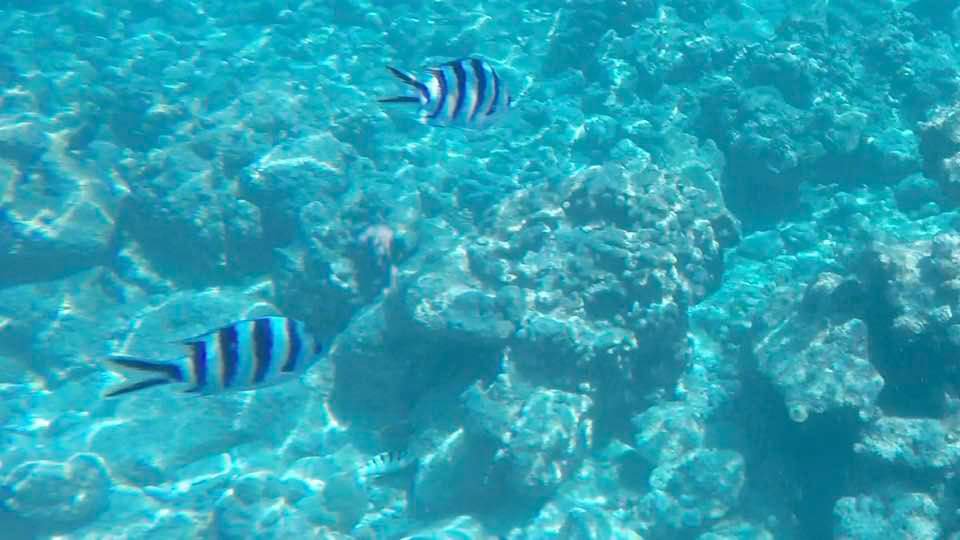
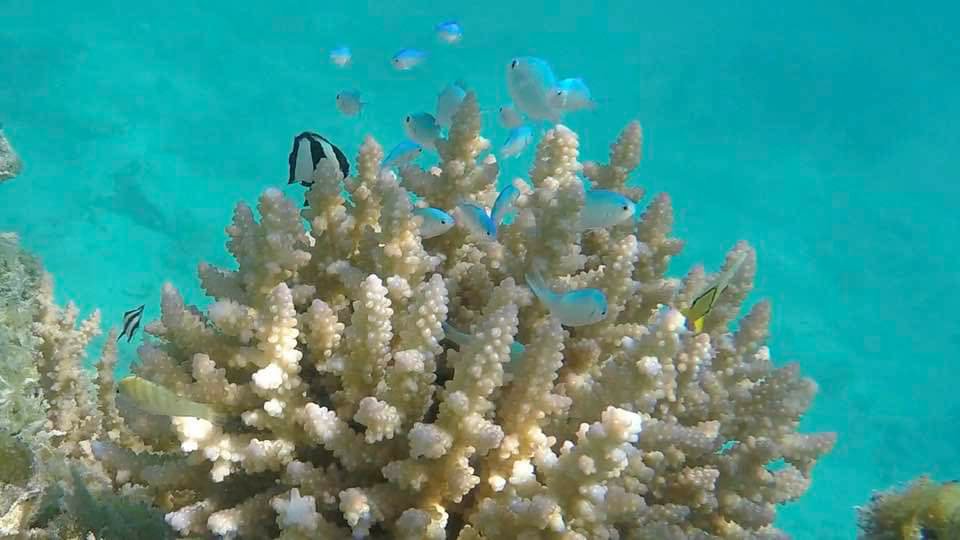
The clarity of the diving in The Tuomotus is stunning! We have all been in the water nearly all day all about our boats. See the octopus cleaning his head with his tiny arm? And the colors of the coral, reef fish, shell…but best of all is sharing this incredible life with friends on SV Simplicity.

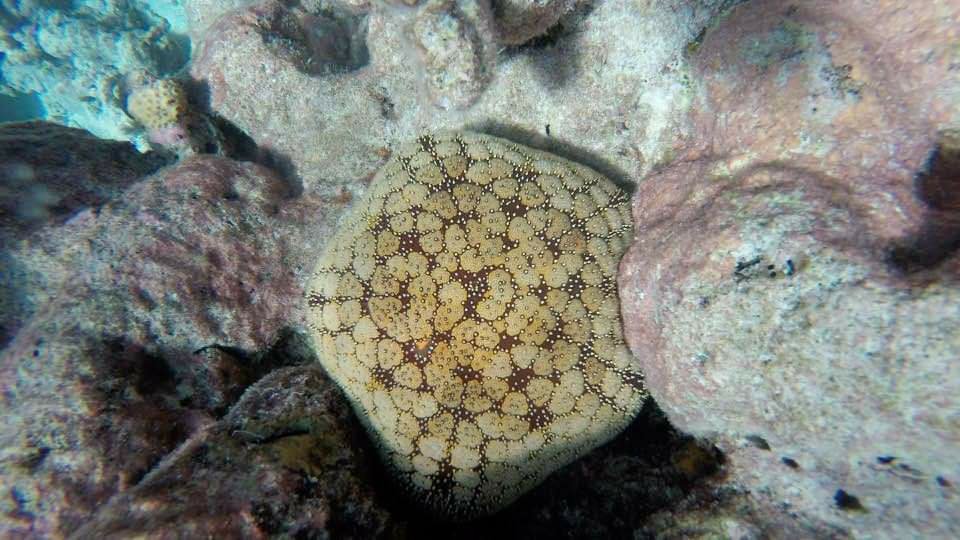
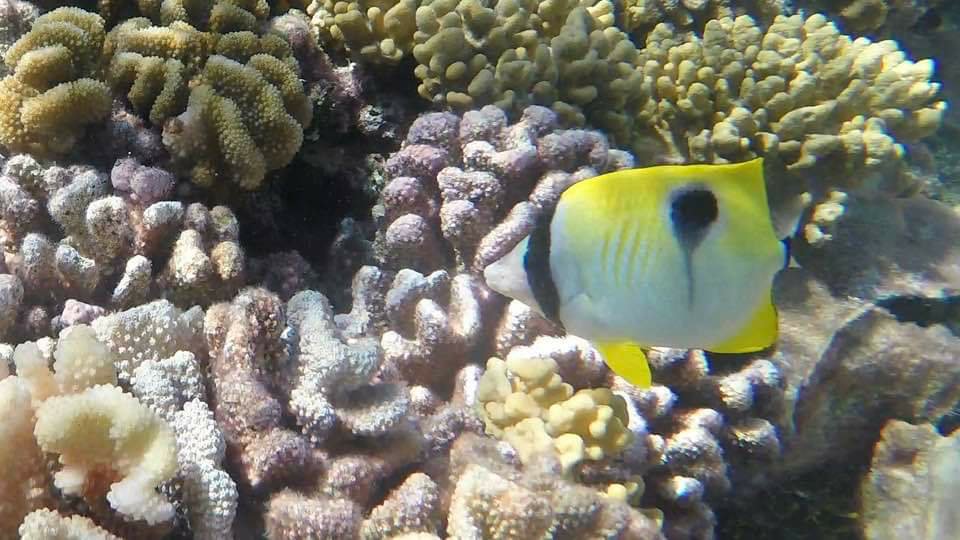
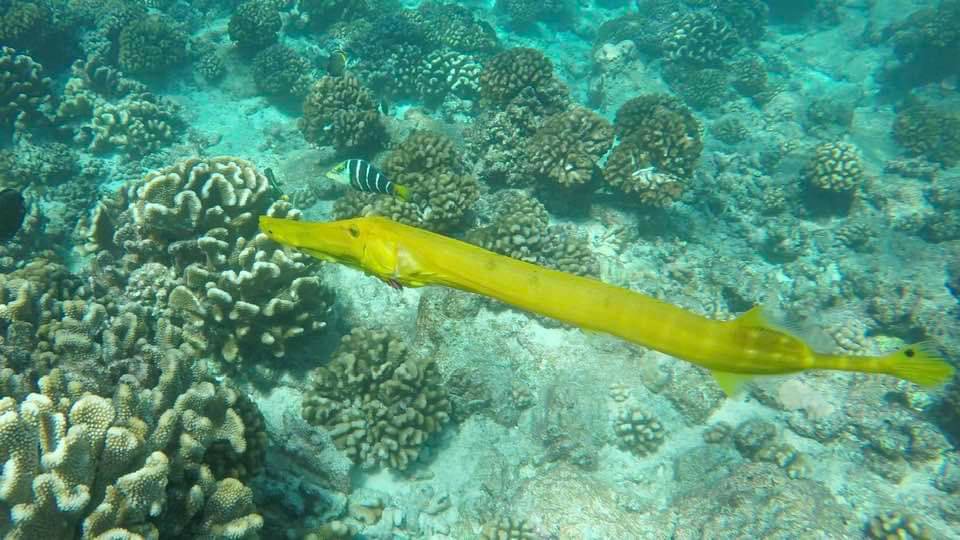
More go pro photos, as we just can’t get enough of the colorful and strange sealife here in the Tuomotus. Good thing there are no jellyfish (yet anyway) and the water temperature is perfect for just a bathing suit!

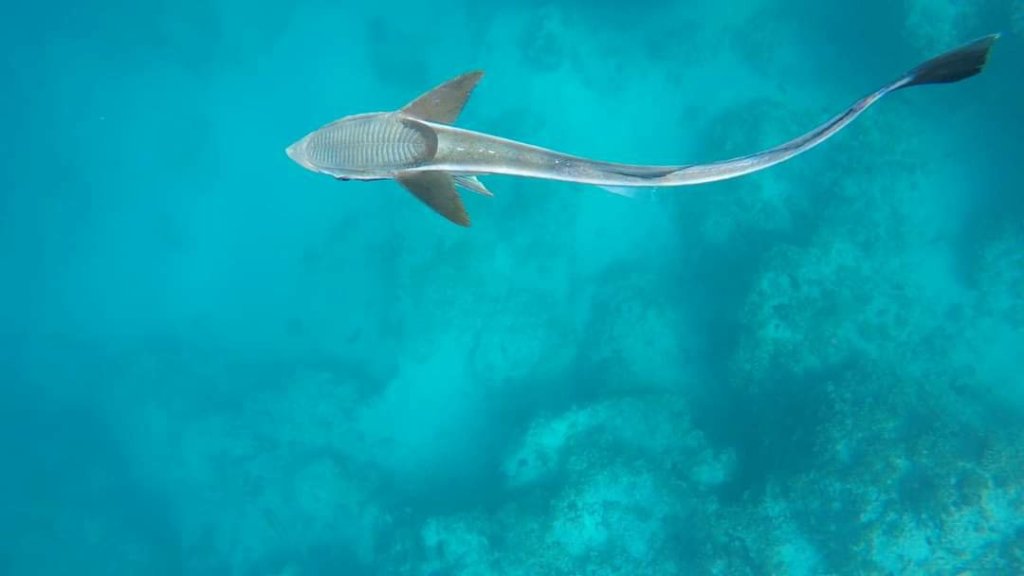
These remora’s usually hang out under sharks and boats, but this little guy stayed with and under the 6 of us for an hour.

Travel to Amanu, a small Tuomotu Village

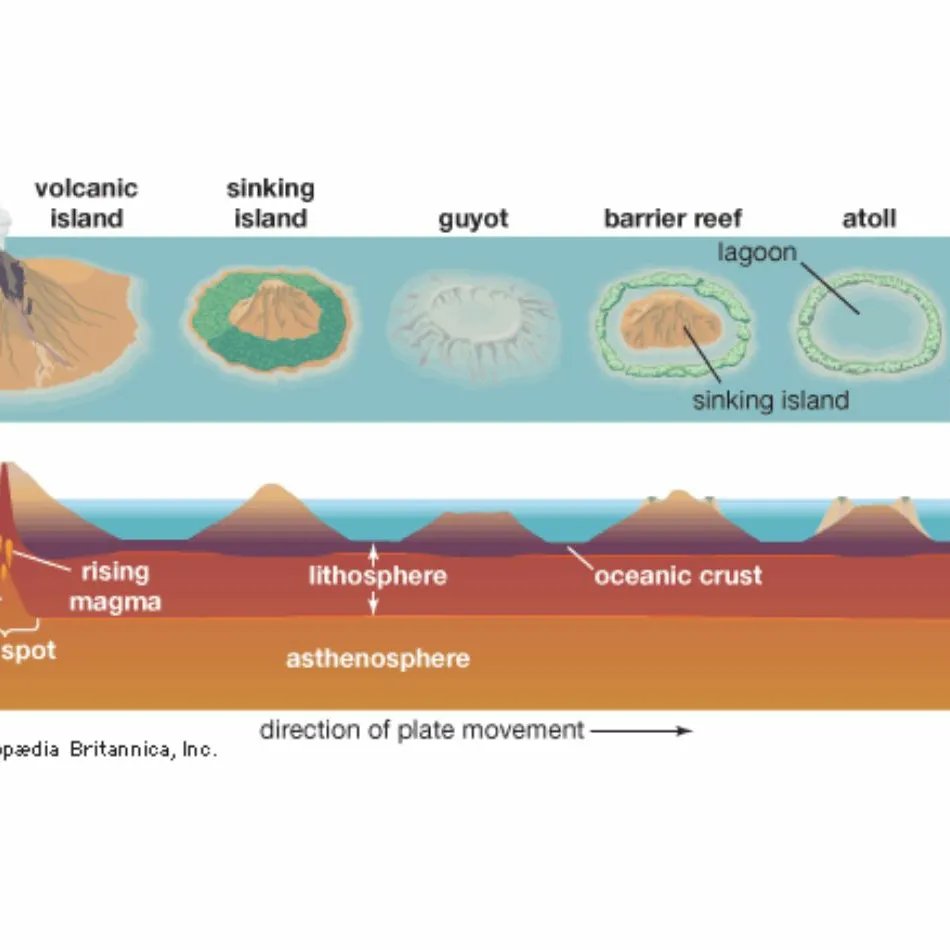
What is a French Polynesian Tuomotu? Very much like the Hawaiian island chain, the Tuomotus began as Volcanoes. The difference down here is the plate movement and the development of coral. These Motus are all coral.

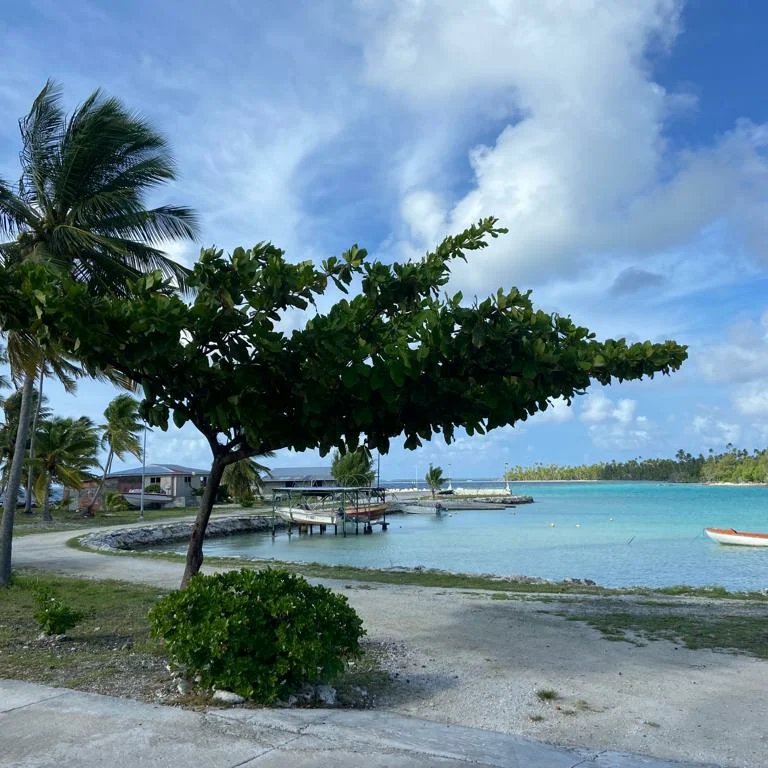
Amanu Atoll is a seldom visited Atoll in the Tuomotus that has a population of about 220 people.
We spent a week here and checked out the village and surrounding coral reefs.
An Atoll is basically an ancient volcano that is sinking into the ocean with coral now topping the outer ring. The center of the lagoon is mostly over 100’ deep with coral heads called “Bommies” that come all the way from the bottom to within inches of the surface. This makes navigation around the inside of the atoll very challenging. Amanu was seldomly visited by cruiser’s because up in to 2019 the atoll wasn’t even on Navionics charts. We used multiple navigation aids to get around but the most useful was Satellite photos used in a program called OpenCPN. Thank you Bruce on SV Migration! We spent the last week with Bruce and Alene on SV Migration getting a good education on French Polynesia and OpenCPN.
It is windy here!

With no mountains for cover and the island chain being in the trades we saw between 10 and 20 knots ALL the time, with squalls up to 35 knots. We used a mooring to secure Sea Bella upon our village visit and we almost chaffed through both our mooring pendants on the coral. Expensive and valuable lesson!!!!!
The reefs are amazing to snorkel and we were fortunate enough to see many sharks and mantas. We spent as much time in the water as we spent on shore cracking coconuts (a true skill).
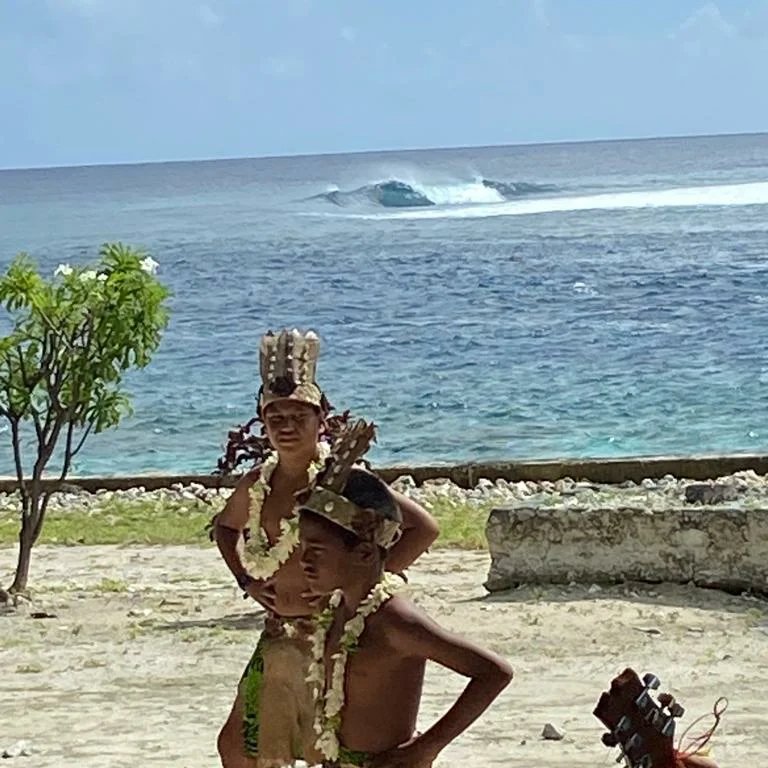
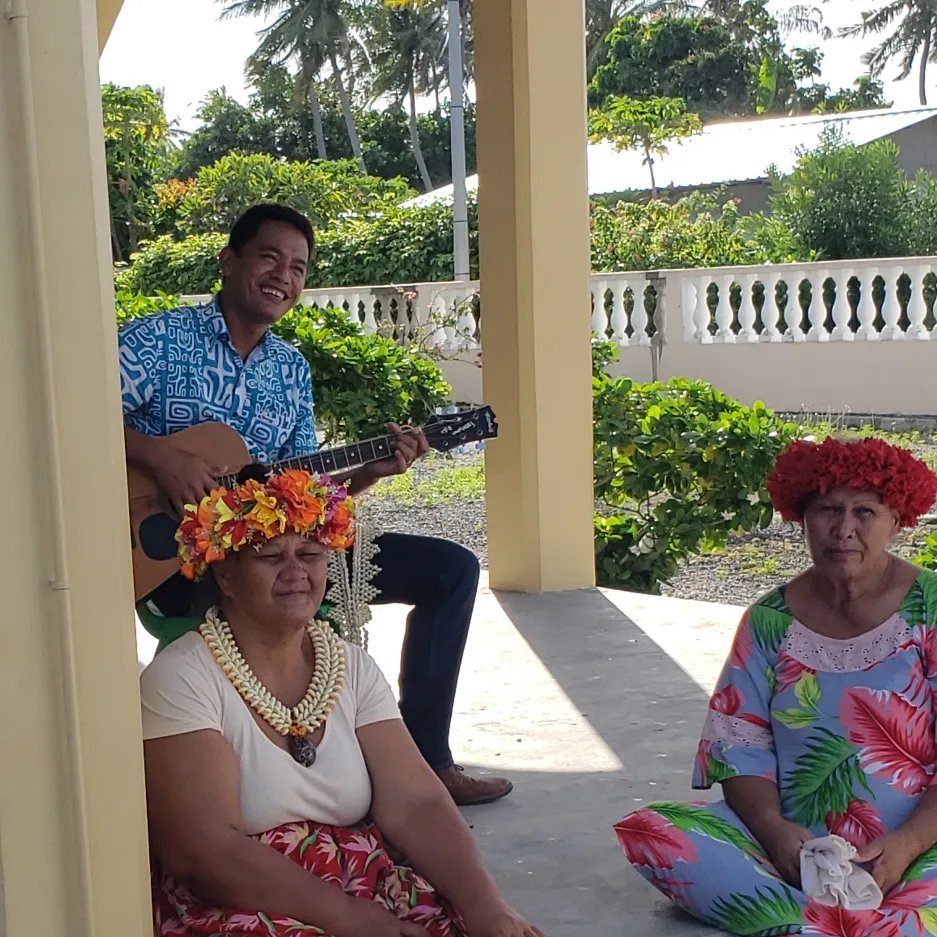
Our visit to town was on a day that the village was welcoming some visitors from a National Geographic ship and we got the full tour. See the attached kids dancing

The Mayor of this town is 30 years old and is in his third term. Francois became mayor at 19 years old when the previous mayor (his Father) was lost at sea.
Francois was flown to France and celebrated as Frances youngest ever mayor. The mayor is also a member of the welcoming band and seems to be in well control of the island.
Today we are off to the next Atoll to the west called Makemo. 175 miles so we should see the the completion of this passage by midday tomorrow.
The Mayor