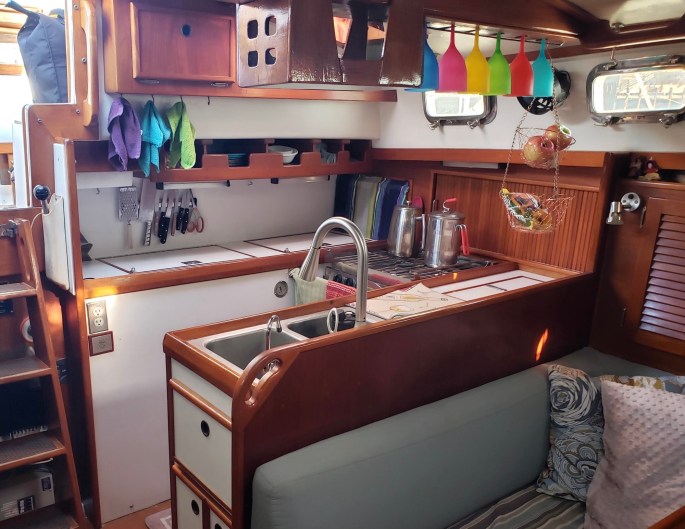

Making my own breads, yogurts, tortillas and muffins have been a fun new way to provide staples for Scott and I. Often breads are not to be found at the small island stores. I wonder, how do they make a sandwiche? Homemade baked goods are fun to bring to cruiser parties or as gifts for the village locals. We keep a sourdough “mother” which was given to me from a cruiser friend in Mexico and has provided us well over 50 or loaves! It’s also difficult to find or store packaged yeasts.
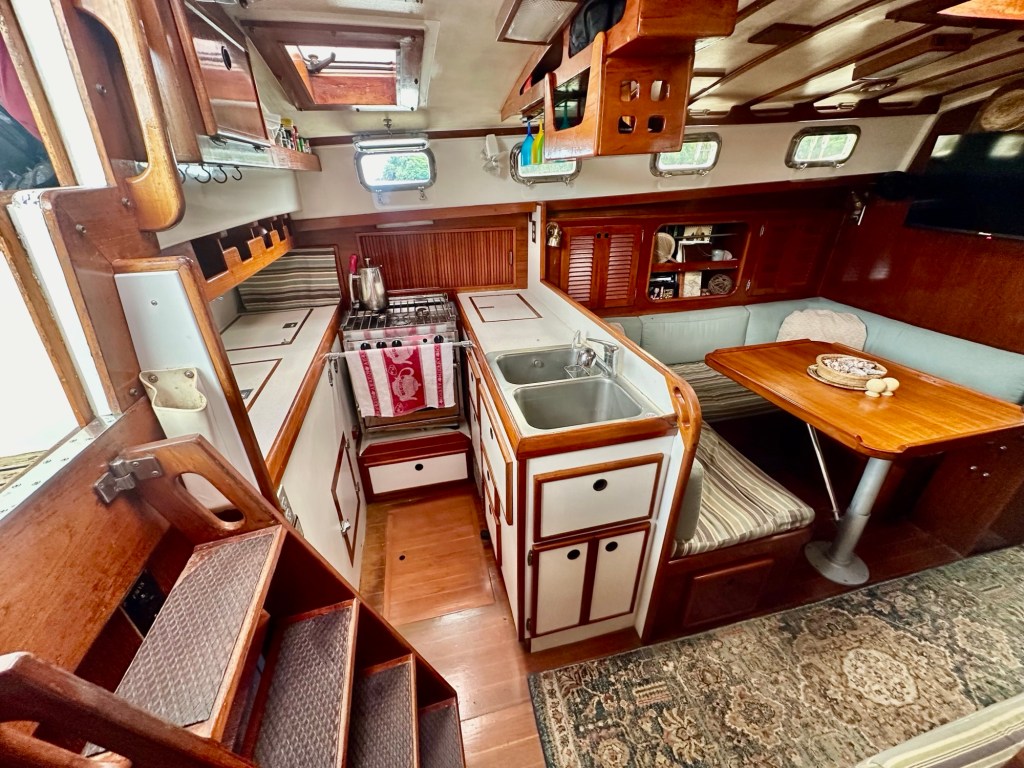
Making my own yogurt has also been key, not only does it reduce my plastic trash, it’s versatile and a good staple ingredient for other recipes. Storing large amounts of yogurt also takes up valuable refrigerator space. All I need for making yogurt is powdered milk, easily found and easily stored, and 1 small thermos (oh, and a thermometer)
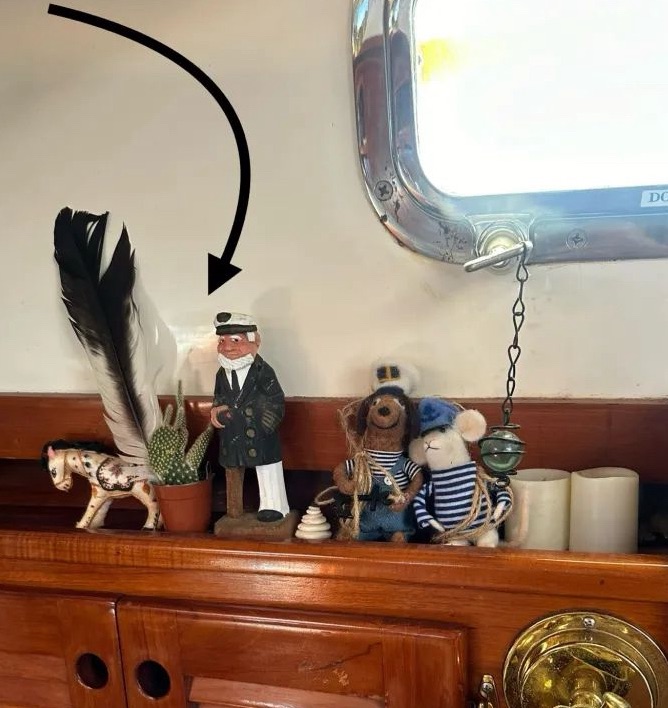
Another idea I considered was having a small hydroponic garden for a few favorite herbs and sprouts. Fresh greens were the hardest to find in remote islands. I have dappled in this area, since it’s a major land hobby of mine and I come from a family of gardeners. But, nonetheless, it’s quite difficult on a boat. Why hydroponics? Well, having a plant with dirt doesn’t do well while healing sideways, but water only spills and dries up, no mess at all. Hey, we live on the water. My last batch of basil and rosemary got scorched in the direct sun, so back to the drawing board I go. Currently, I don’t have any plants, unless you count my very tiny cactus.
I have dappled in pickling, jarring and drying foods these last 2 years. But, since the mason jars/lids are difficult to find, I decided on mostly storing cheap canned or frozen veggies instead, I know, yuck! I can hardly complain though.
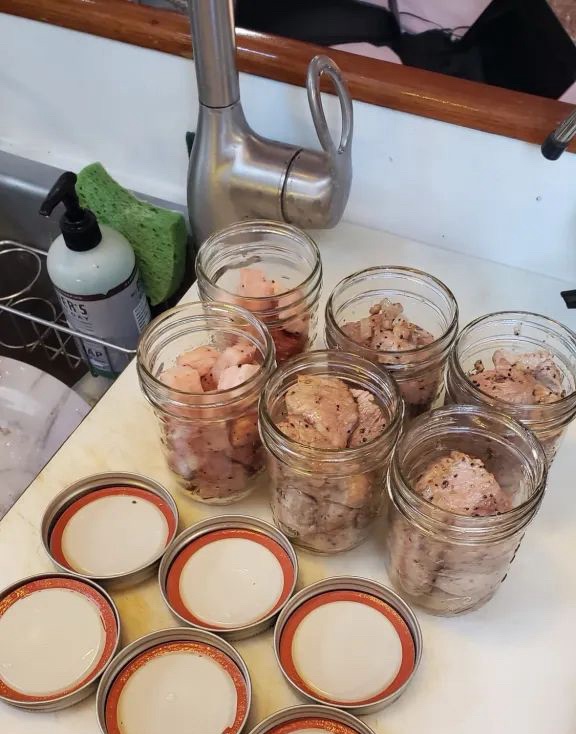
I had learned about pressure canning and was quite successful, only took me one full day! Since I knew we would spend a year in the French Polynesian islands, where meats are pricey and some hard to find, I started my research. It paid off! We had many delicious home made lasagnes, meatballs and stews during the 6 months spent in the remote Tuamotus Atolls. In Mexico, I had made 14 jars total of pork and beef, but the best was italian sausage.
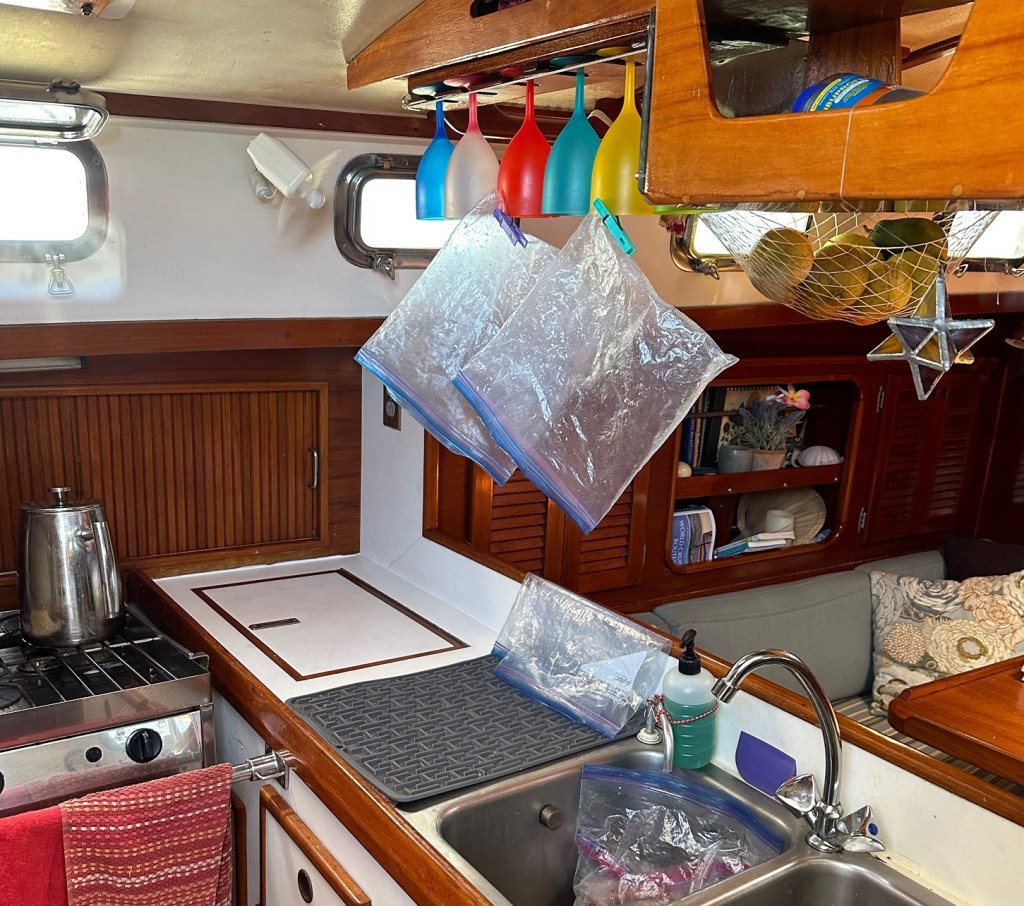
My biggest answer to storing foods while on a boat: Ziplocks! Bulky storage containers often are not airtight and don’t fit well in small fridges, freezers or lockers. Since ziplock bags are hard to find out in the islands, I bought many and use and reuse them until they are so thin or have a tear. Even then, I tend to use them, double bagged style. I was raised to be thrifty, which now comes in very handy!
Provisioning and prepping foods while living on a boat in remote places is quite a challenge but a fun one that I have embraced. My Mom always said “cook with love” which proved to be great advice. Cooking on a boat is a topic for another time, but shopping, storing, and keeping foods and drinks cold is the tricky topic of the day, especially in remote locations and foreign countries. I feel I have done well so far, but have only experienced Mexico and French Polynesia. Learning to be resourceful and having flexibility in the foods you eat are the main key.
That’s about a wrap for the day, no pun intended!!
 Our World Adventure