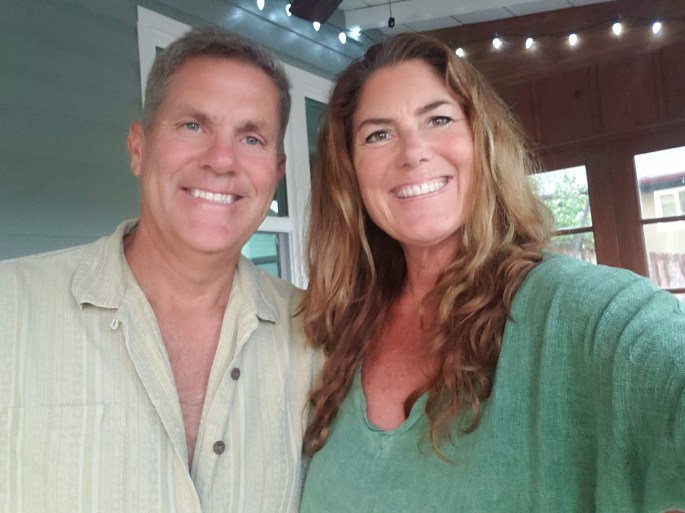
Our sailing home takes us, Scott and Kathy Erwin to travel the world one island at a time. Come along on this adventure to learn, or join Kathy’s Yoga, and explore and see the world.
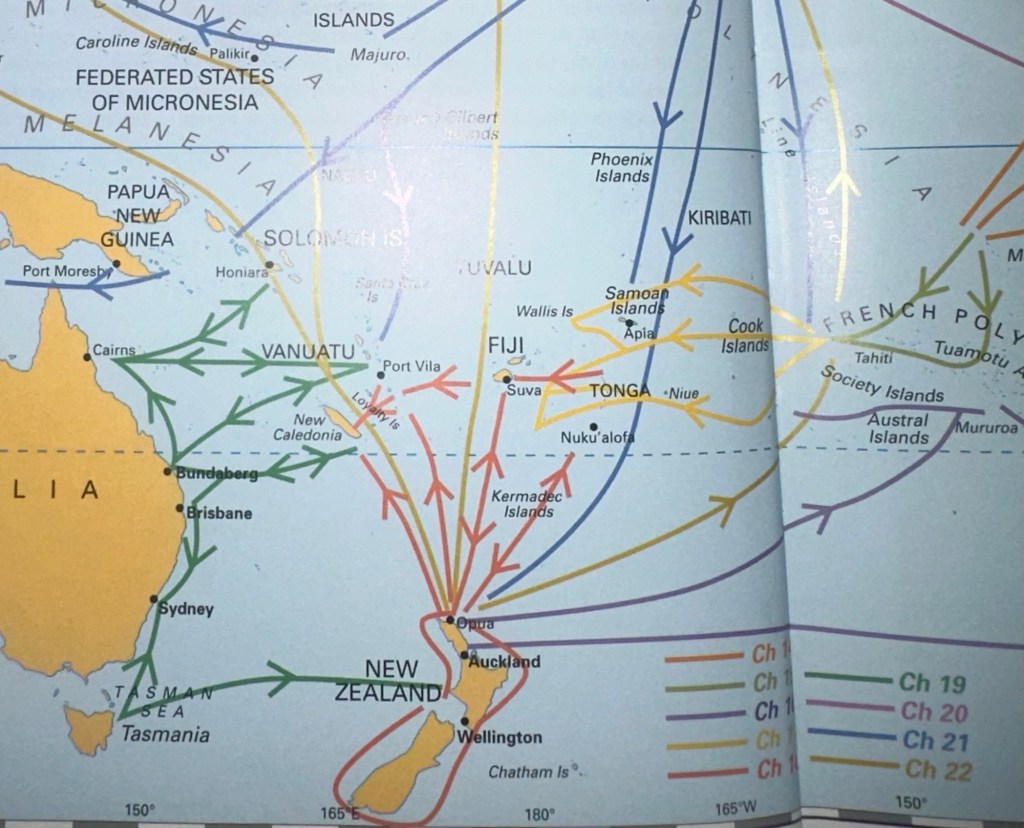
Skipper Scott Erwin and First mate Kathy Erwin began this 2020 Vision and departed on our world adventure 8/2021. California Coast, Mexico, French Polynesia, Niue, Tonga, New Zealand, Vanuatu, New Caledonia and Fiji. Come back soon to see more adventures.
Friends and family ask us, ”What’s next?” While we wait out the summer storm season (Nov- Mar) in our safe haven, beautiful home of the Marquesan Islands, we research, plan, discuss, read, yes play and put a plan loosely together.
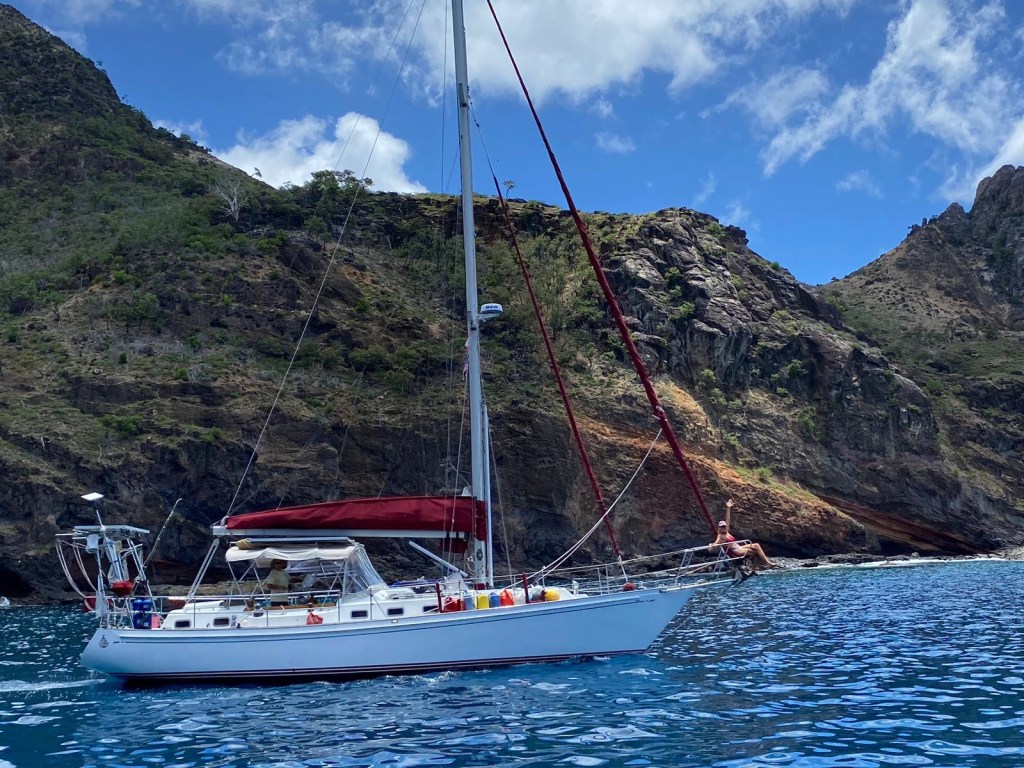
Weather is the primary factor while we research. Our cruising buddies’ plans are also a factor. It’s important for Scott and I to experience remote islands and the unique flora and fauna of land, sea and air. We also participate and explore the local culture, traditions and cuisine. As you may recall, we are on a slow westward path, enjoying as much LIFE as possible. A Sailing Adventure continues to be our theme, so we head to the Southern islands of Marquesas.
Come April we visit the Society Islands (Huahine, Bora Bora and Maupiti) and leave French Polynesia. We hop to a few Southern Cook Islands, adventure around the islands of Tonga, sail toward Fiji, first stopping at the amazing dive spot called Beveridge, and end up in September in Fiji. “Then what??” The Pacific Ocean is too large for Sea Bella to cross in one season (unless we don’t stop much) So she needs to stay in and around Fiji for the next cyclone season Nov-Mar. Fiji has safe harbor marinas, if needed, and 500ish, pristine islands to cruise around. Looking forward to it all! Stay tuned…
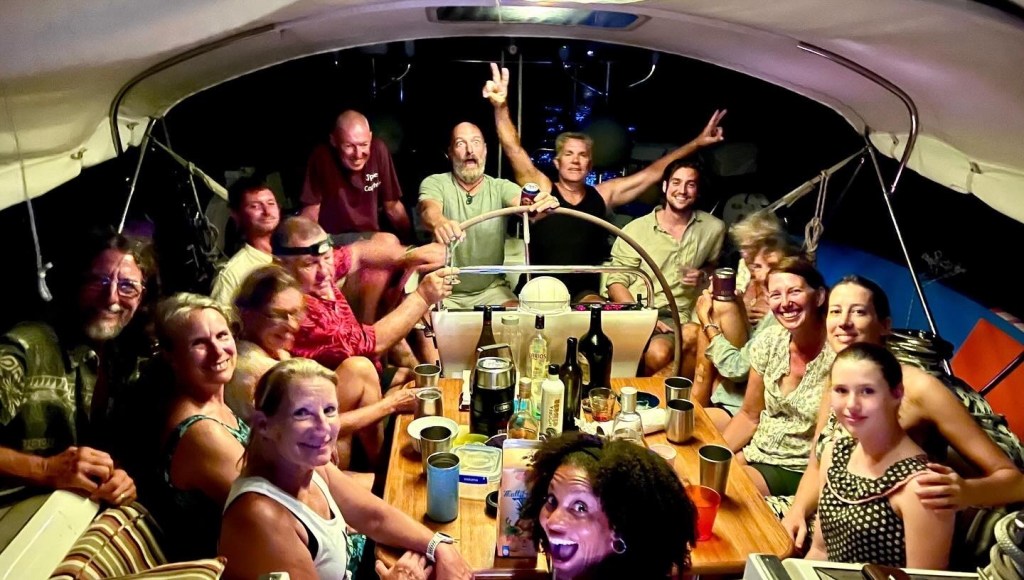
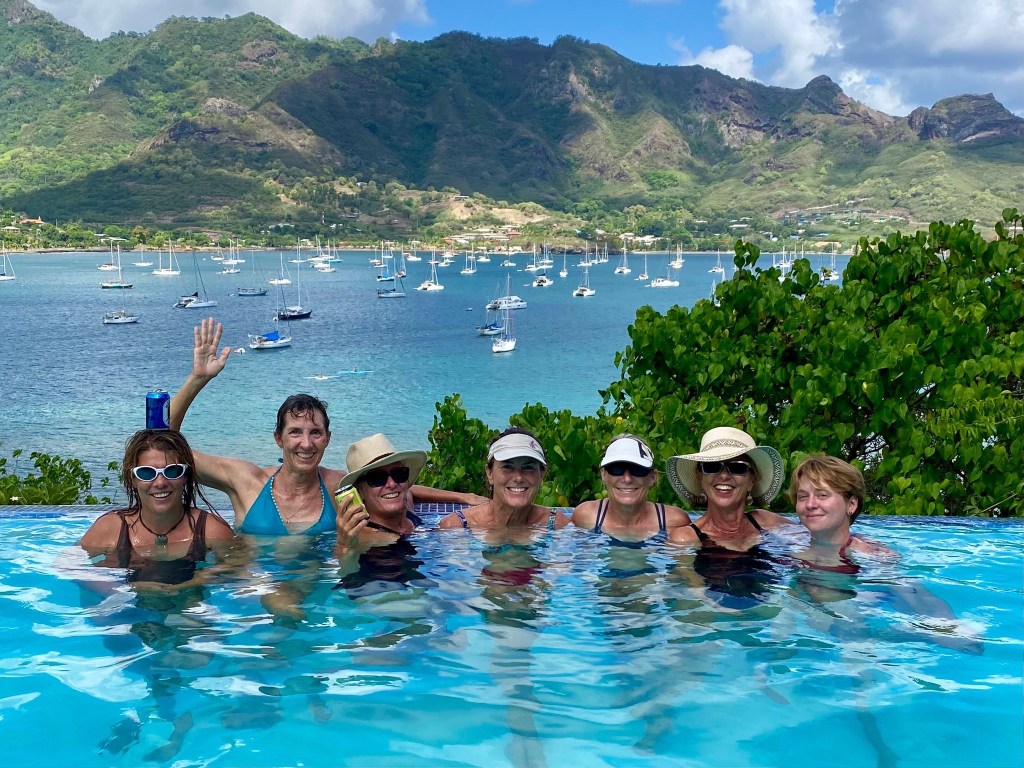
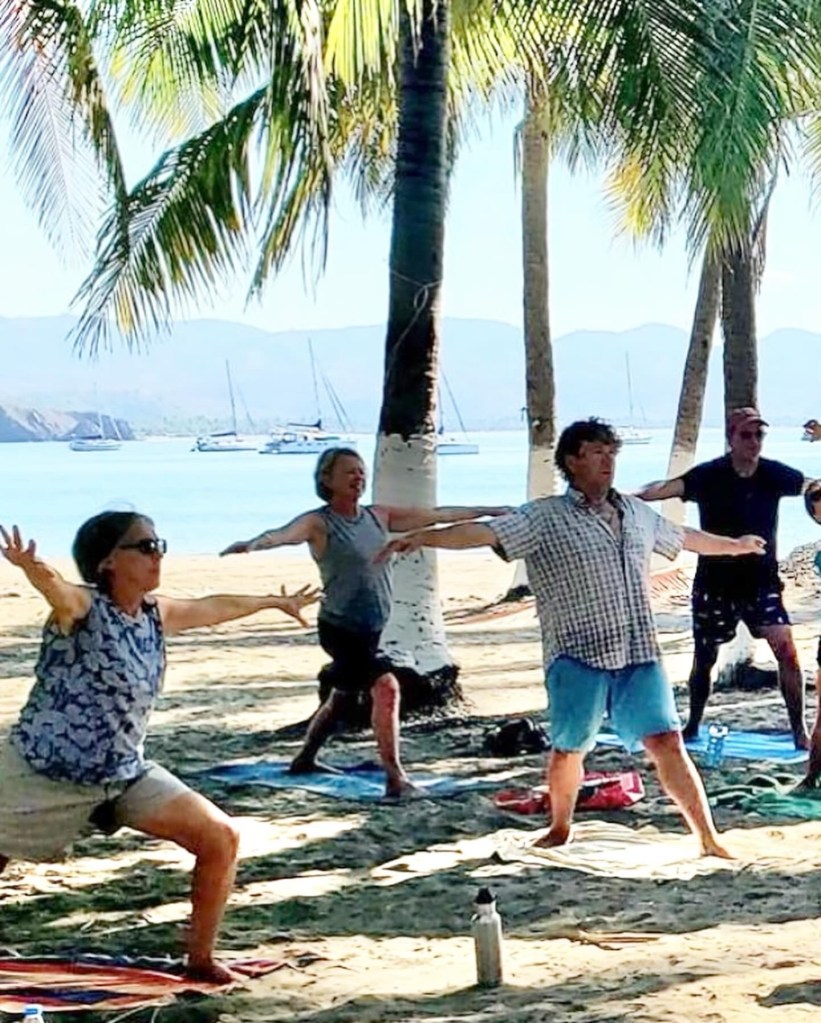
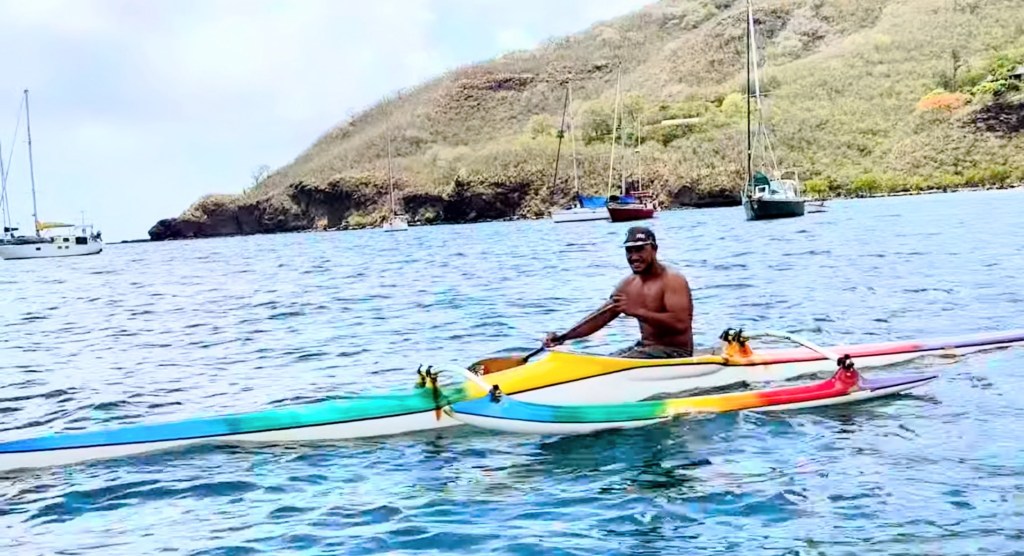
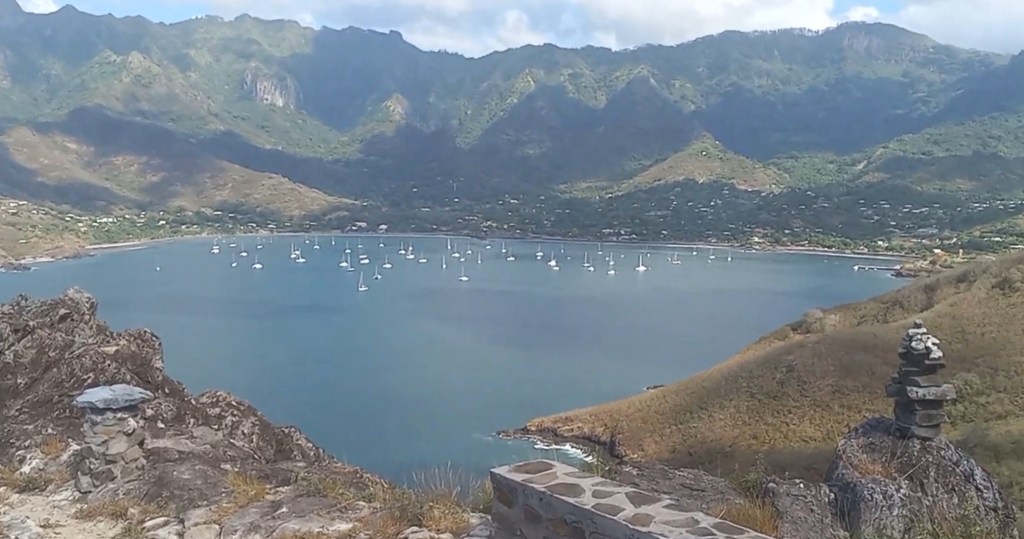
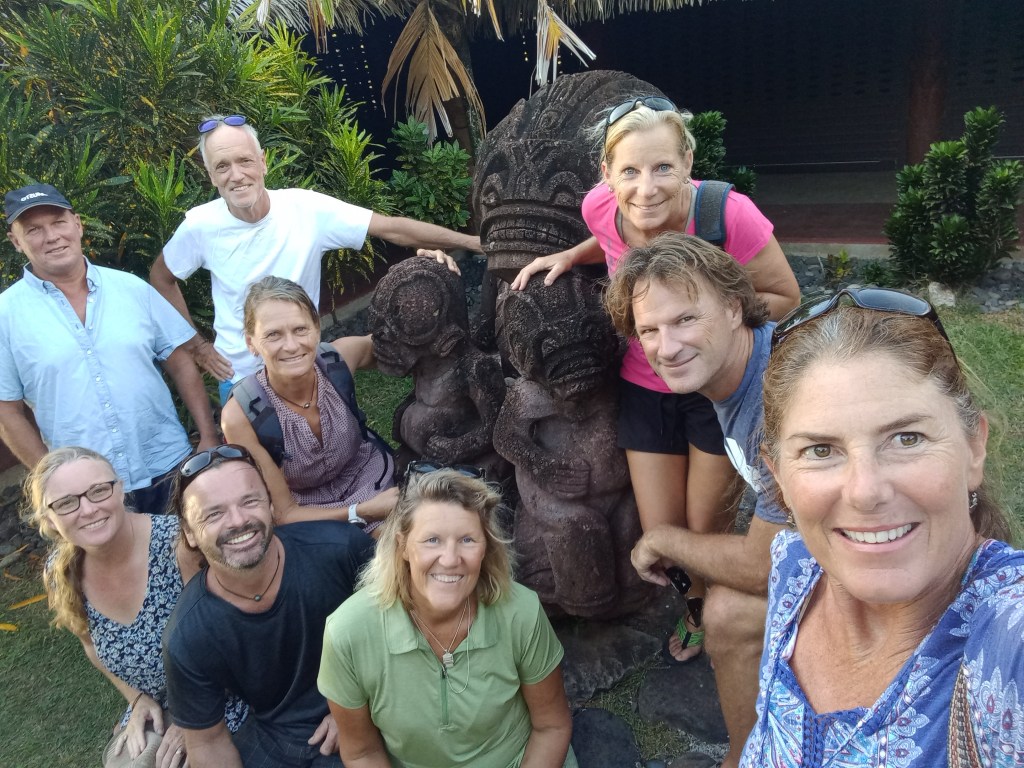
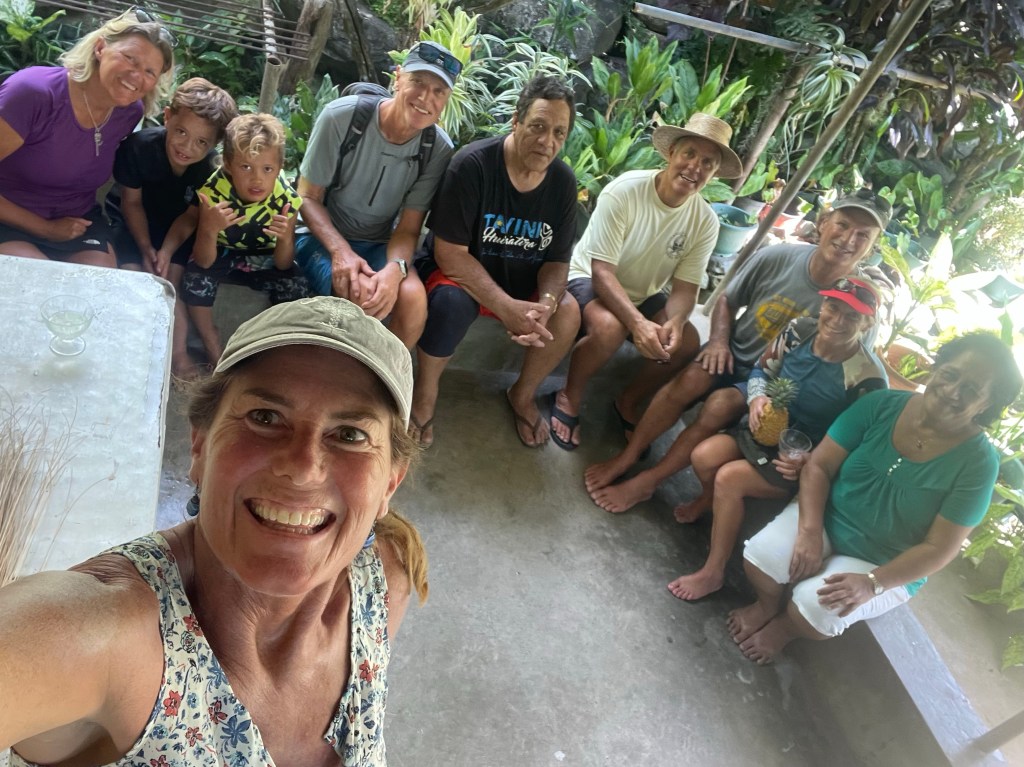
Some anchorages just have that super strong sense of community, it’s hard to pull anchor and leave. We have been so blessed in this small bay named Hooumi. 4 boats are our good friends from Mexico, 6 boats are new friends we met a few months ago here in FP. We feel like such family, with daily activities loosely organized by different people every day. The spontaneity and variety is just so cool. 19 friends showed up for my Yoga and meditation this morning, hugs of gratitude all around. Yesterday, some of us dingied up the river to a little village, bought a few staples and did cannon balls in the clear and refreshing river water with the local children.
We all laughed and drummed ourselves silly the other night at the beach. Bonfires and s’mores are always fun. One boat had us all over for Taro Card readings and appetizers. There was a scotch tasting on SV Captain Music. Last week, Ingrid made enough Poke Bowl to share with us all. Luckily, English is our common language but we’re from 6 or so countries. It really doesn’t matter the age, socio economics, political opinion, religion, how long cruising, what country you launched from or where you are headed. We all have one thing in common, a positive outlook with an adventurous spirit. Mind you, not everyday is easy and fun, but we are in it together.
To Name a few: Joanne Pilkington and Scott, Jutta Birfelder and Mike. Michelle Fetkenhour and Jeff. Margot McKirdy and Elliott. Bruce Balan and Alene. Ingrid and Adam Lewis. Emma Aingé and Dan. Candice Deal and Jason Deal. Jan, Inge, Lauren and Liam.
My 15 day Sailors Yoga Camp is now compete!
YOGA CAMP
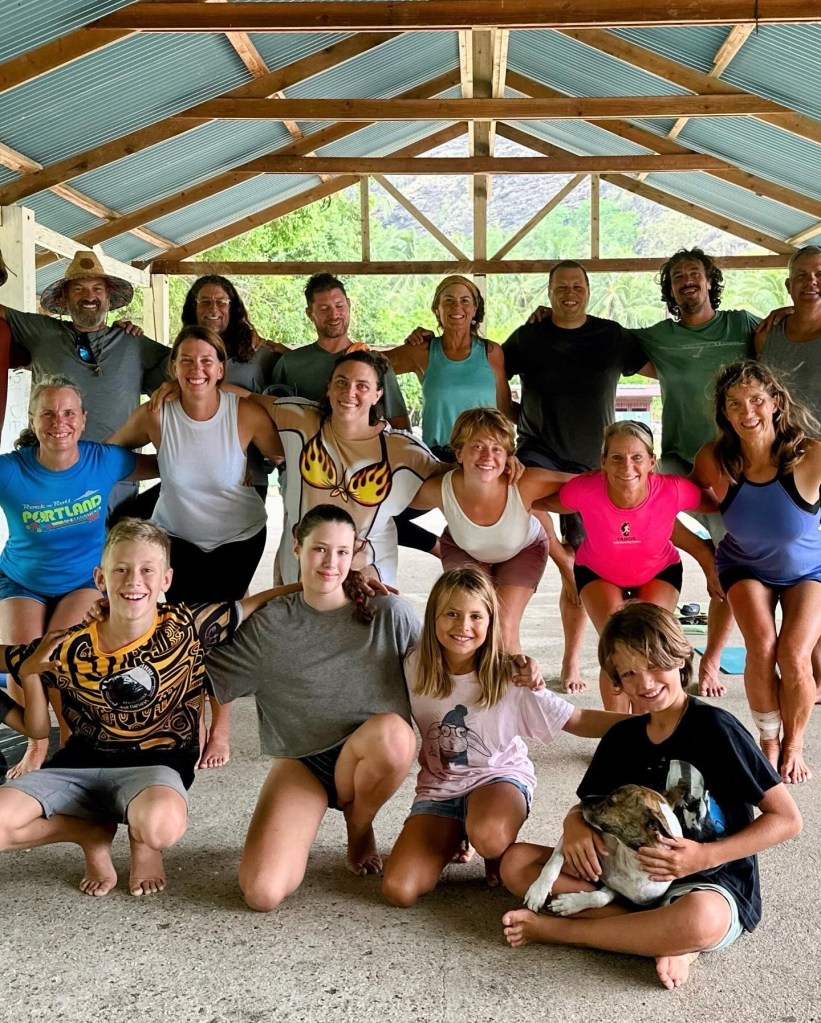
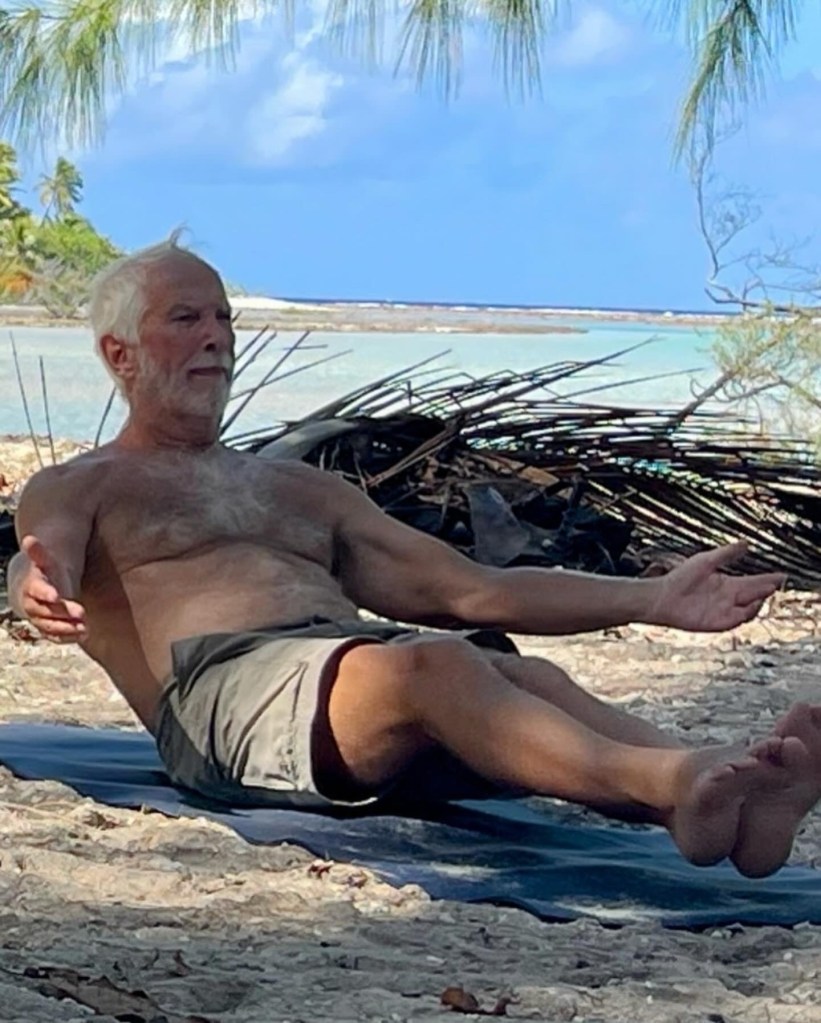
Testing out my new skills was easy and fun with my cruiser friends. I tried new poses, transitions, meditation themes and even stumbled my way with chatty children and a few locals at my side. The last day I was presented with a special card signed by all the Hooumi Bay sailors. Then they performed a ‘Trust Experience’ for me, where 20 students lifted me up, wow I felt so loved and cared for. I’m feeling inspired to do Yoga Around the World!
Scott was able to spend a week in Texas and a week and half in California. “Spending a fantastic Thanksgiving day with Family in Texas! Nothing like excellent family, food and wine! Anarchy Wine Co. (Darn cold here in the states) 😉
Happy Thanksgiving to all those missing Thanksgiving down under in the South Pacific and south of the border!!
California visit for Kathy was so, so special, two relaxing and perfect weeks. “I want to thank my family and friends for taking GREAT care of me and providing healthy land time. A much needed break from the rolly boat, heat and just missing my CA peeps. I did manage to get important check ups, select better sunglasses (and back ups) find essentials like Kirkland nuts and peanut butter, and basically enjoy normal life for awhile. I started in Santa Cruz on Christmas Day with a lovely time with Mom, Roland and my brothers’ family. I was lucky to borrow Mom’s car to drive to Fresno to couch it with my son. My daughter came over and we 3 headed to the Sierra foothills for a few days of R and R. Cooking amazing meals, singing on the Kareoke machine, silly card games, fun dance pad and mostly enjoying a large, flat, non moving home, lol. Some big hugs and a few tears later….”
I was off to San Luis Obispo to visit our rental and hang with great friends! My final 4 days I spent back at Mom’s in Santa Cruz with my Aunt, Uncle, Sister in Law and Dad. Overall, an action packed and special time for all. Soon, I make the 24 hour long journey (only an 8 hour flight over the great Pacific) returning to home on the water in Marquesas and best of all, back to my Hubby Scott.
But then, guess what happened?!.!?
Homeless Day in Tahiti
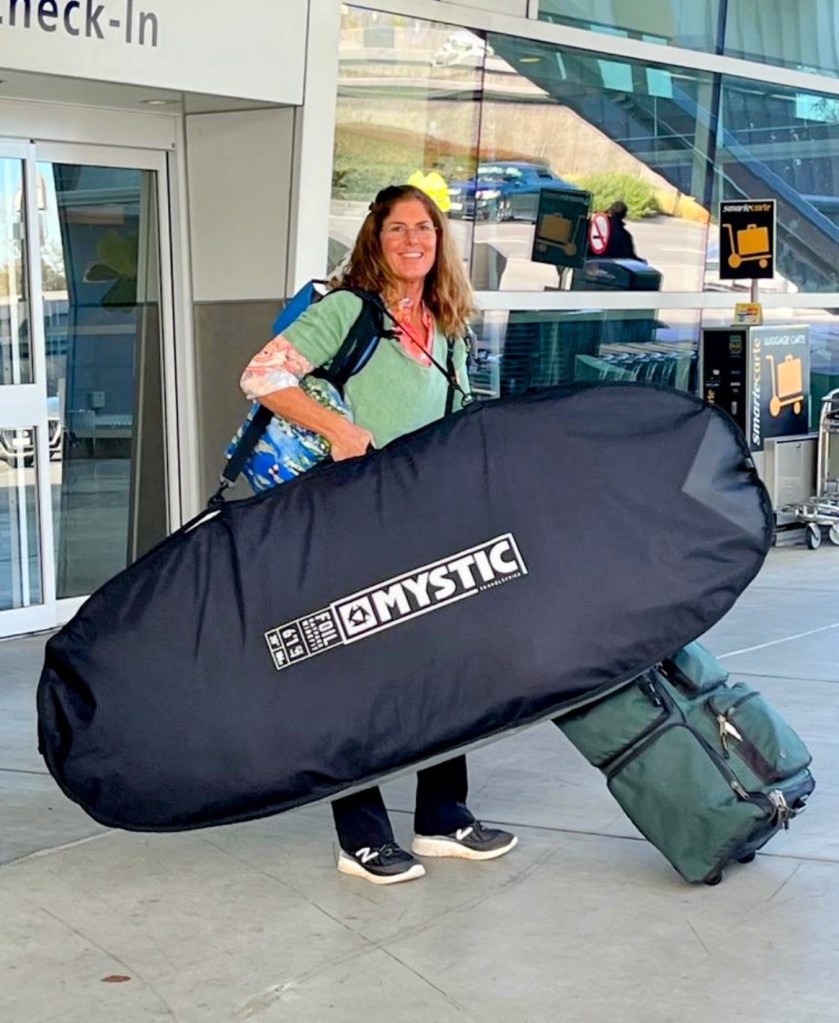
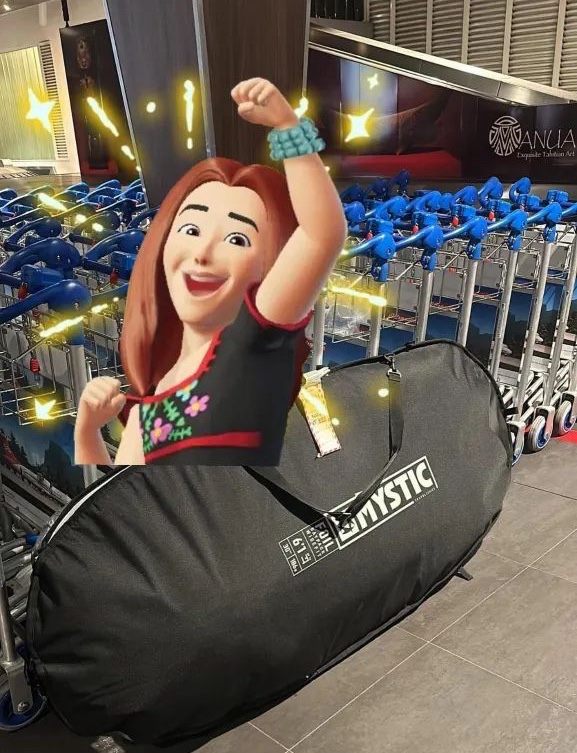
…and it sucked. I was grumpy. 😦I had hardly any sleep on the red eye, and our new foil board was not at baggage claim! It’s lost!😮Whine, whine, I know it. The nice, but French speaking attendant, insisted I report it right then, so it can hurry on the next the plane. But, it’s now 6am and I miss my connection flight to Nuku Hiva, by just 2 minutes. AAAH! 😱😱😱And still no board. 😡So, I book a new flight for 4:30 am tomorrow, book a close by lodge, and ditch my heavy bags in this sortof hotel (but-check in is at 4pm!) What to do allllll day???? Homeless for a day. I find a bus riding into downtown, mind you it only now 7:00am. 😳Searching for an open coffee shop like a homeless person, on very tired feet and sluggish mind, I sit for a needed Quiche Lorraine. Shoot!My phone doesn’t seem to have data or cellular and has only 35% battery. I tried plugging it in, but the outlets aren’t compatible! 😭NOT MY DAY! I wander from closed shop to closed shop and find the famous Papeete Market, but “closed on Tuesdays”, I mainly just wanted a bathroom. 😤UG. Getting a bit lost without any GPS, I find a park bench, to rest, feeling very homeless by now. I brushed my teeth in the public bathroom, thanking the French for having clean water. It’s 9am. 😖I only have 7 more hours to kill wandering aimlessly. I see a great book store, super right? I can sit and read for a few hours, but, no. Only French books here. 🤪Next stop, find the Air Tahiti office to file a claim. They send me to Air Tahiti Nui, 6 blocks away. Pointing a finger at each other I think. I would call… but no cell. It starts raining buckets, 🙈UG! One of those days! I am soaked within minutes, I hop on a bus to stay dry, head east, no clue where to. 😩I am kind of familiar with this city, thankfully. I explored around a favorite grocery store, bought some tops, and ate some yogurt and bananas. I managed to get my phone back running, after 45 minutes with TMobile. 😳I do have the time though, tons of time! I continued walking aimless about. (It’s, only noon) I will end this lengthy drama with a positive…you know me. I bought Scott some onions and potatoes, put them in my purse. Our anchorage town in Nuka Hiva is all out. (more heavy items for my carry on) grump, grump, grump 😁
(The next day)
When I go to check in at 4:00 am, the lost baggage office is open and there is our new Foil Board!
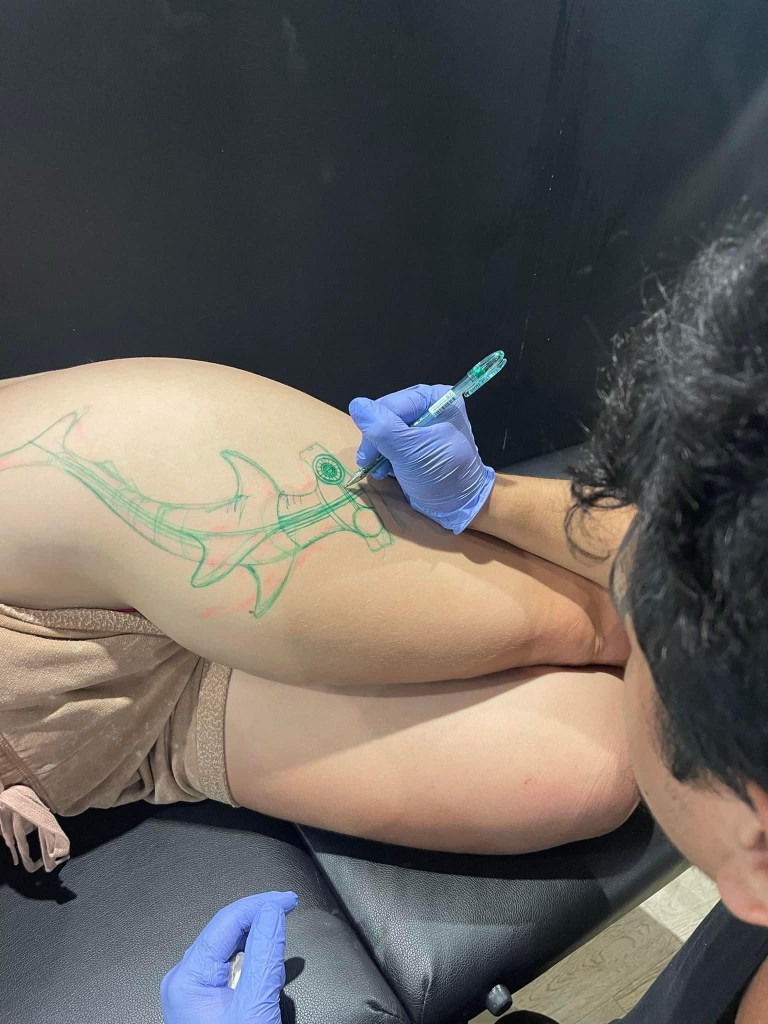
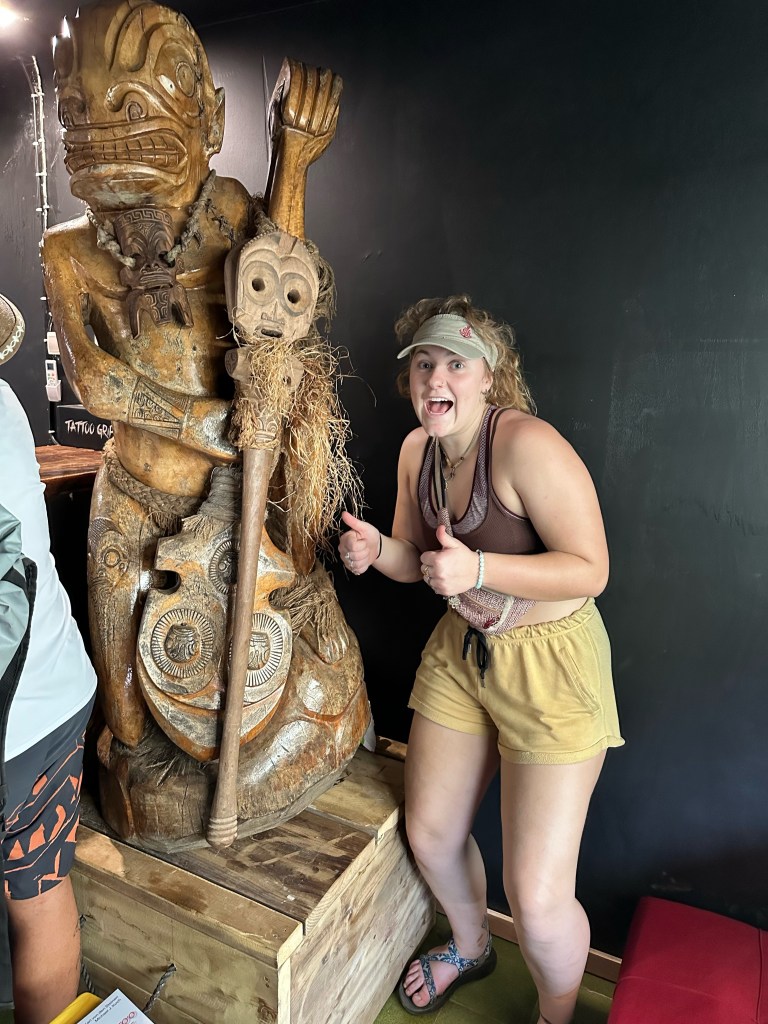
Hope Erwin had been planning to get a tattoo during her visit to us in Marquesas for nearly 6 months. The tattoo process here started with a conversation between her and Ahi the Artist in Nuku Hiva. The interview was a week earlier than the time of work and it consisted of sharing important aspects of Hopes life and family. At the time of the interview, we saw volumes of books of symbols and drawings of century’s of Marquesian body art with historical meanings. The selection of what art is to be “Hope’s tattoo” was all up to Ahi although Hope wanted a few specific items that meant more to her.
On the day of the work we showed up at 8:30 am where Ahi was explaining to a lady a tattoo he had placed on her the day before. She was flying out that day and was emotionally overwhelmed (in tears) by the art and symbolism representing her life. Hope at that time was very moved about the process awaiting her.
This is all free hand and no computer or graphic images helped along the way.
Ahi is 28 years old and has been taught by the Guru of Marquesan history. This history was almost forgotten over generations of cultural suppression by the Catholics and the French. Only in the latest 2 generations have the Marquesians demanded that their culture survive and be celebrated (much of this we saw in the Matavaa festival). Fortunately, the artwork was well documented in the 18th and 19th centuries and still practiced in small circles. Ahi explained that the art work is at the root of the culture and “has”’ to be shared. “Marquesans are proud of who we are and we want our Tiki to be known”. Thus, the tattoo culture is shared with others and not just kept to themselves.
The process was as interesting as the history. Ahi free handed for hours in green and pink with many revisions until he was happy with his canvas. Only then did he sit with Hope and explain the meaning of each symbol which we recorded on video. (One Hope will keep private). The whole process was complete by 3:30.
BTW, the Marquesans seem to have a very strained relationship with both French Polynesia and France. It’s one I would relate to a rebelling teenager in their middle to late teens. They are striving for their history, culture and independence. Marquesans are absolutely the most generous and kind people we have met yet, but there is an underlying anger from the last few hundred years. Time will tell if this generation will heed to parental supervision or will they push for more independence. In its present form these Islands are similar to Hawaii 100-150 years ago. -Scott
What a great couple of weeks with our daughter Hope Erwin.
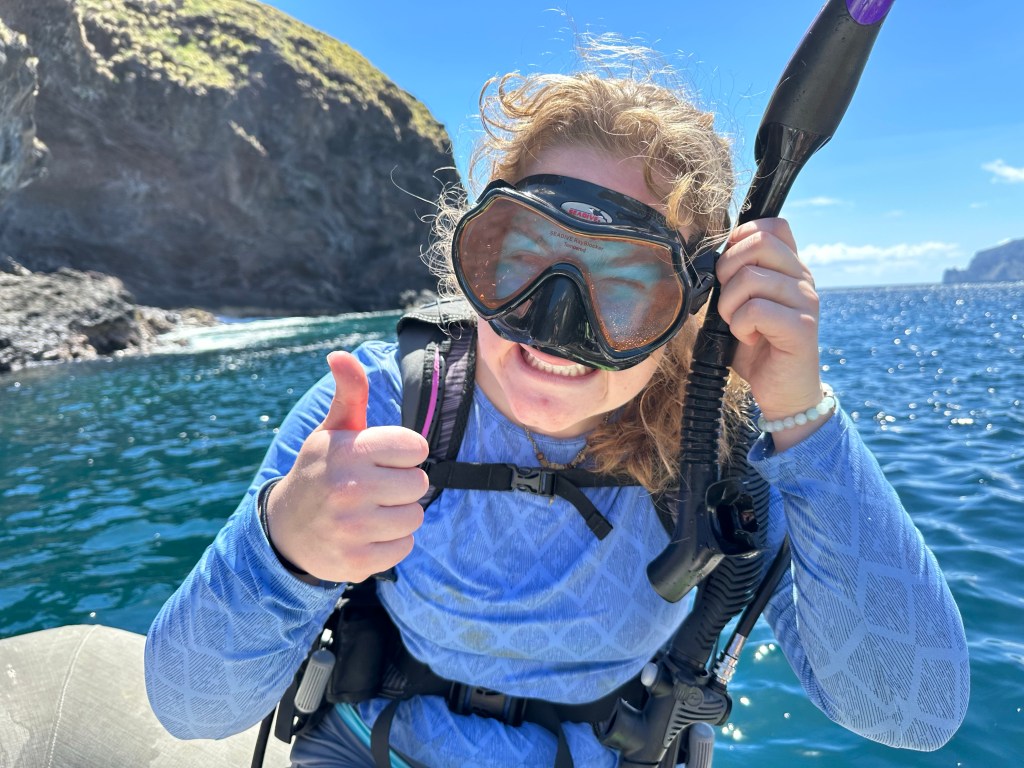
Hopes trip has been a blur of cruising life in the South Pacific. Only 10 days and she had dove with Sharks, swam with mantas, videoed turtles, hiked the Hakatea Bay (Daniels bay) and made an effort to learn how to foil behind the dinghy.
Pictures can’t explain how proud we are of this soon to be 21 yr old college grad!
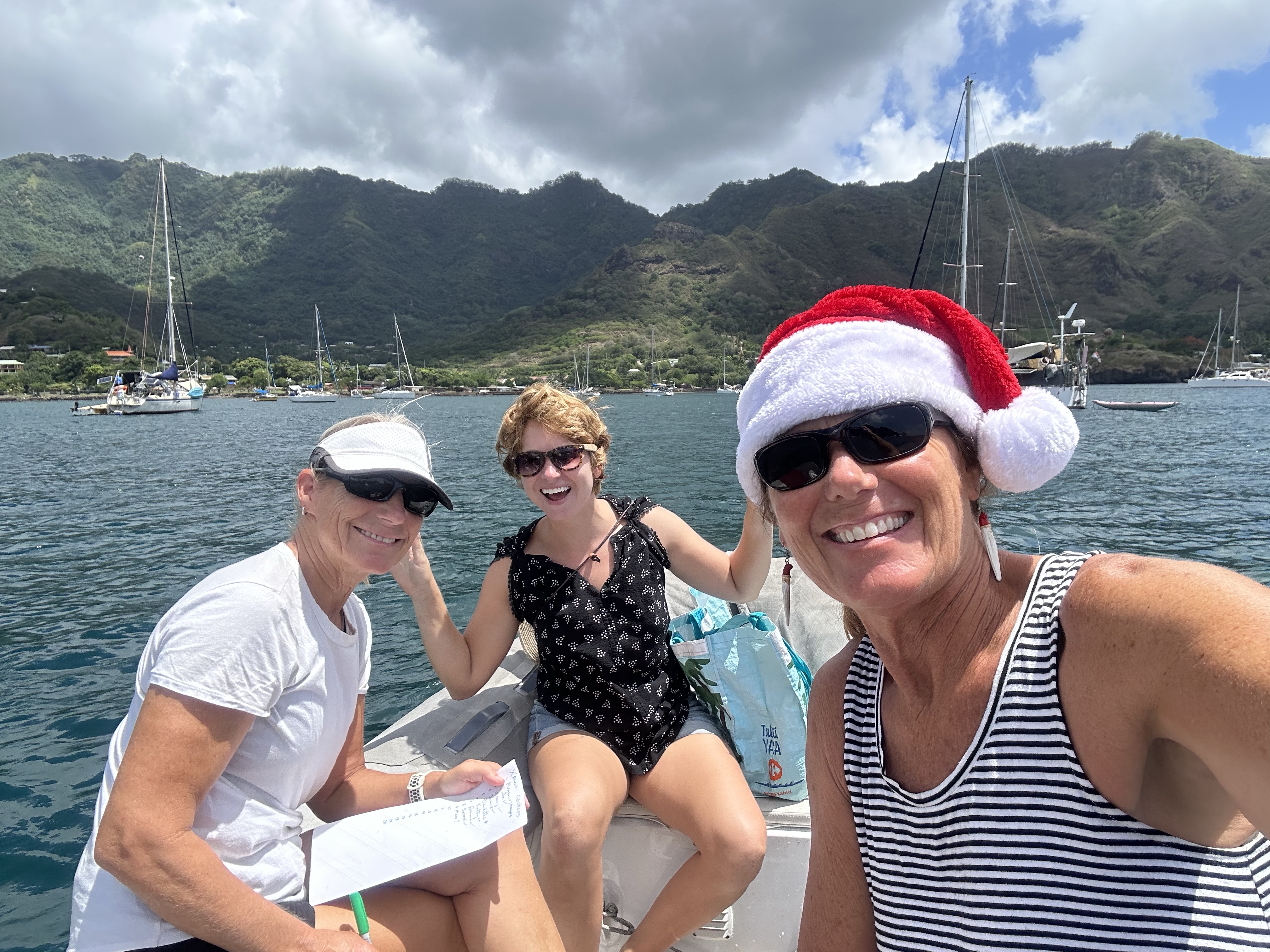
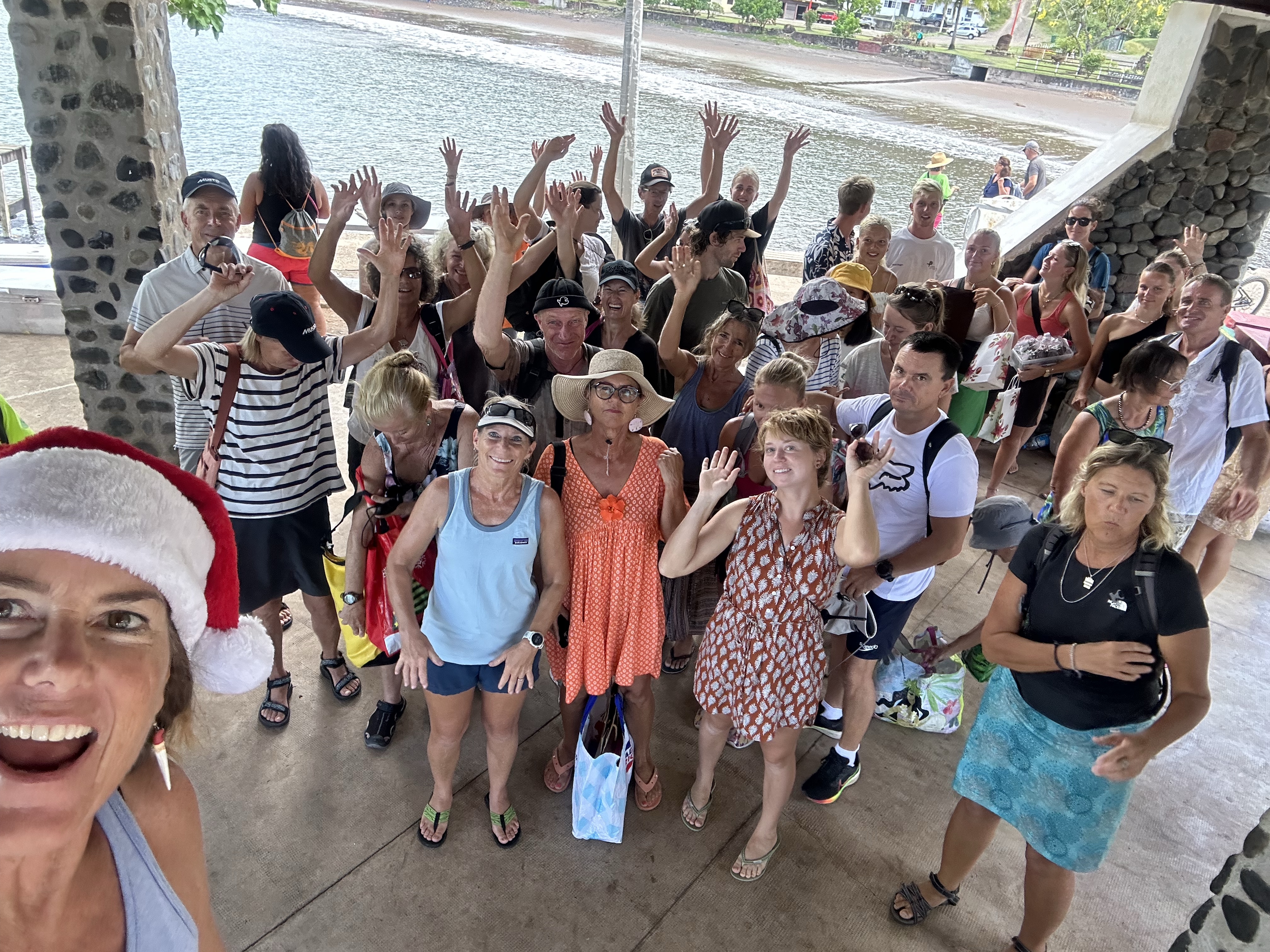
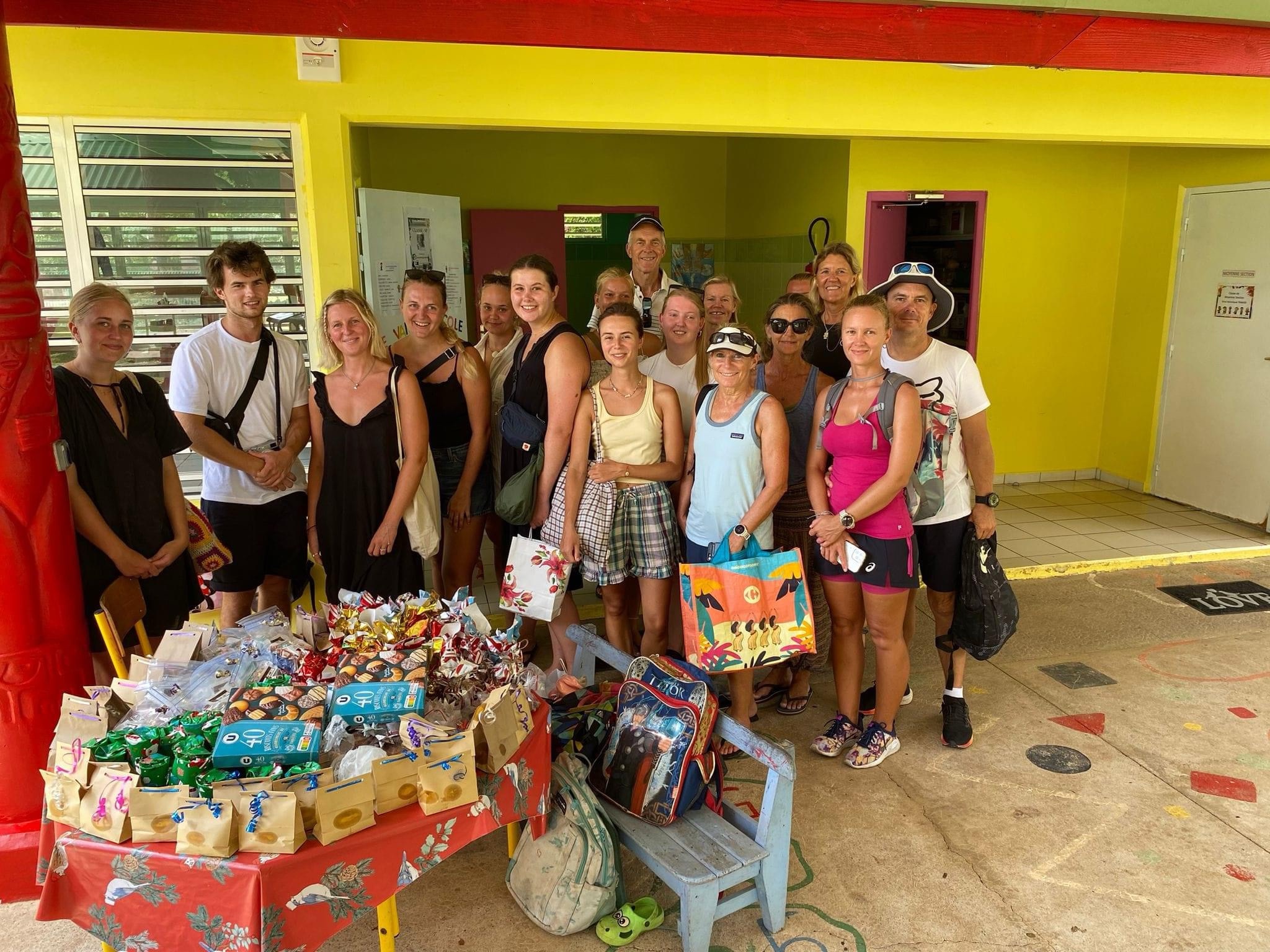
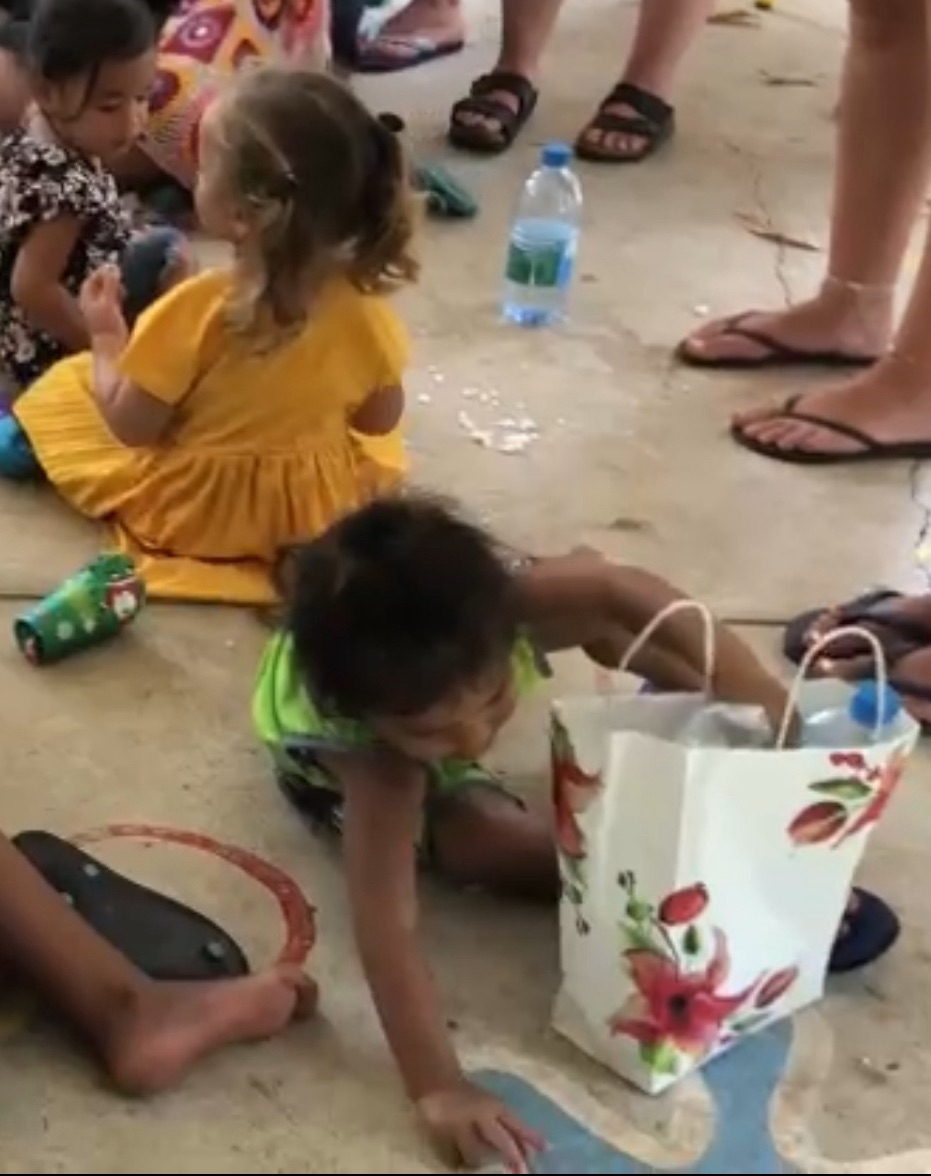
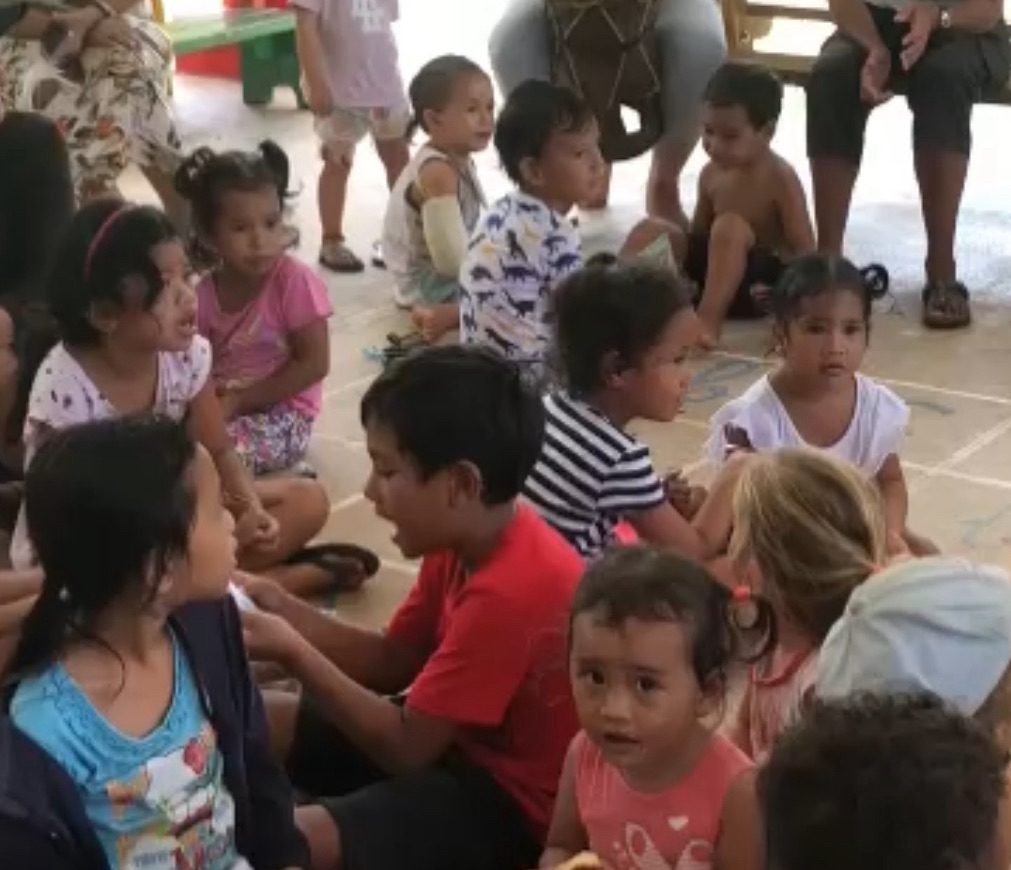
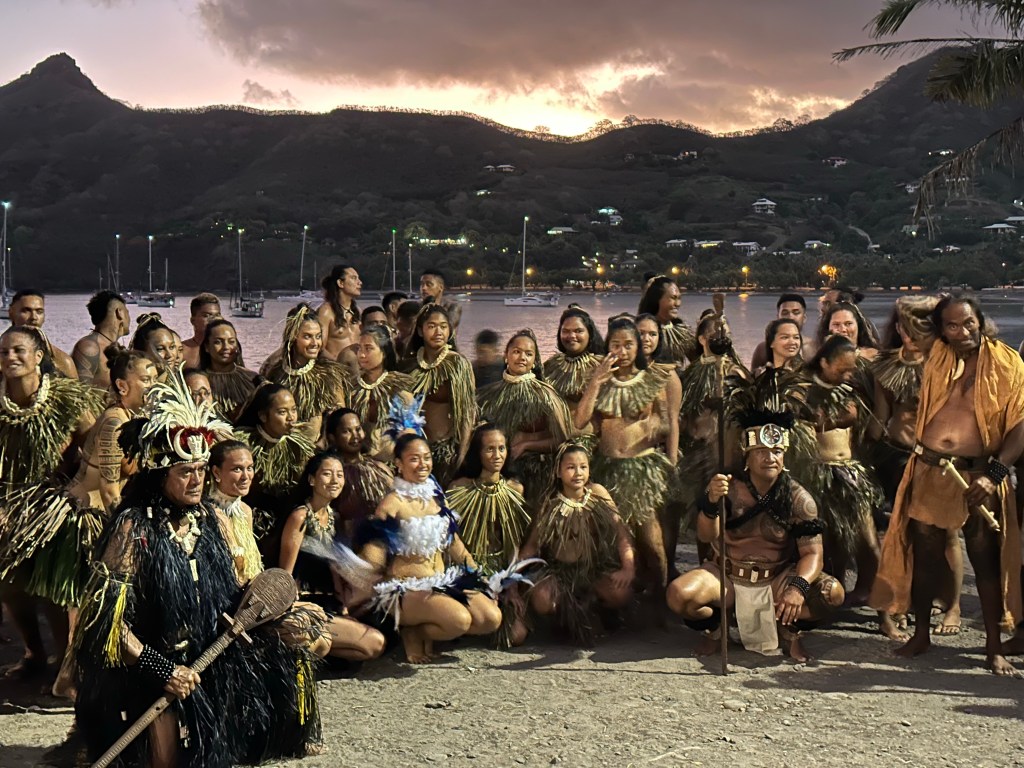
December 2023, a few cruiser friends and I (Emma on SV Margot and Joanne from SV Fundango) thought up a special way to give back to the little town we all are staying in for a few months. Taiohae Bay is in Nuku Hiva, in the Marquesas Archipelago of French Polynesia. I counted 150 sailboats all anchored in the bay, most are staying for the month to see the Festival Traditions of Matavaa. See my other posts. Since we are all just guests of their bay, I thought it would be a caring idea to “give back”, especially since the locals have graciously hosted us all and included us in all the their dances and singing events of the festival.
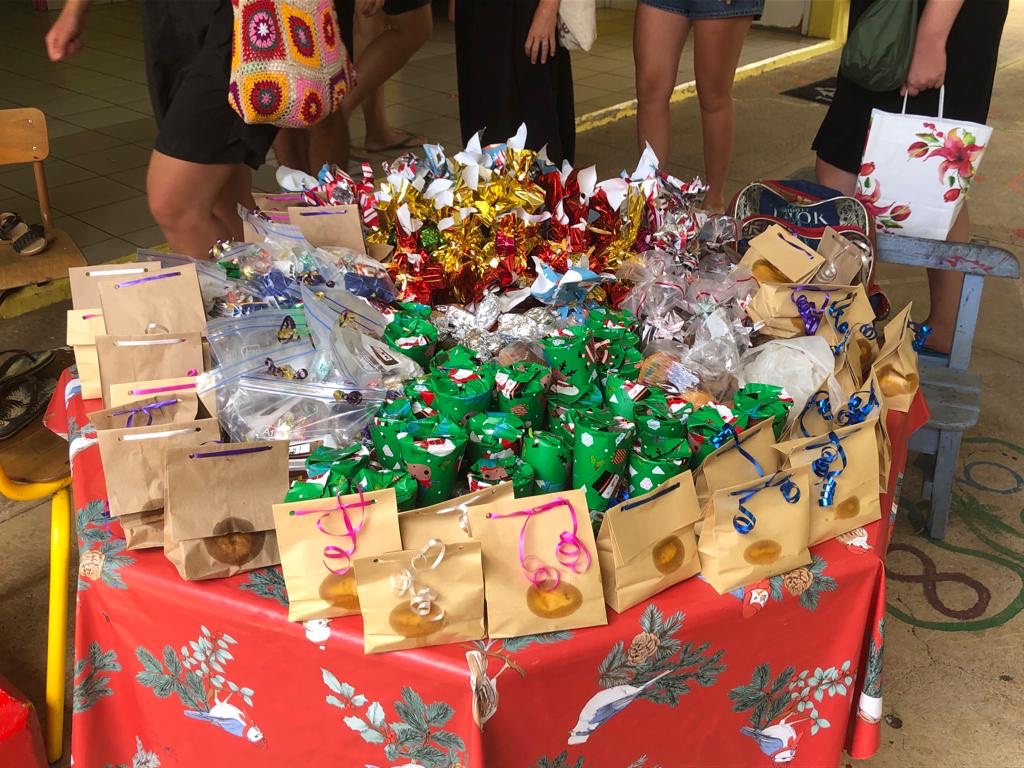
We went to the local Tourism office and inquired about the local elementary schools. We shared our idea of bringing each child of the town a wrapped treat, goodie, or cookie. We were shown gratitude and a sense of appreciation.
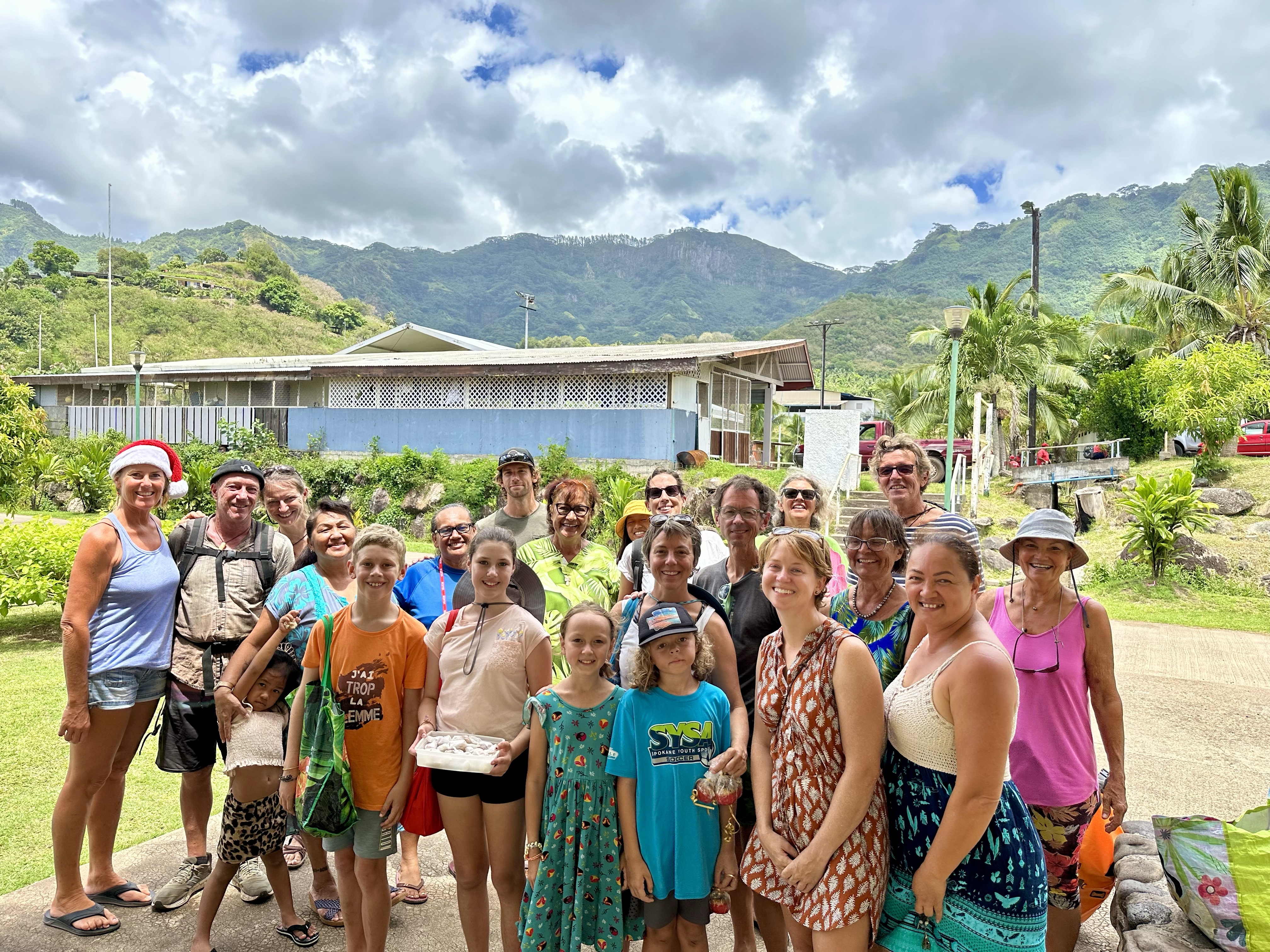
There was a bit of red tape and logistics, with one school being Catholic, but with perseverance and organization the plans began working out well. Once we were approved, we made plans to go to 2 elementary schools, all 40 of us, and hand deliver treats to 320 youngsters, their teachers, food service helpers, principals, the mayor and even a few parents.
A few days beforehand, the three of us zipped around the bay all day asking local cruisers to participate in this “giving back”. Most of them loved the idea and wanted to join us and wanted to go to town to hand out treats.
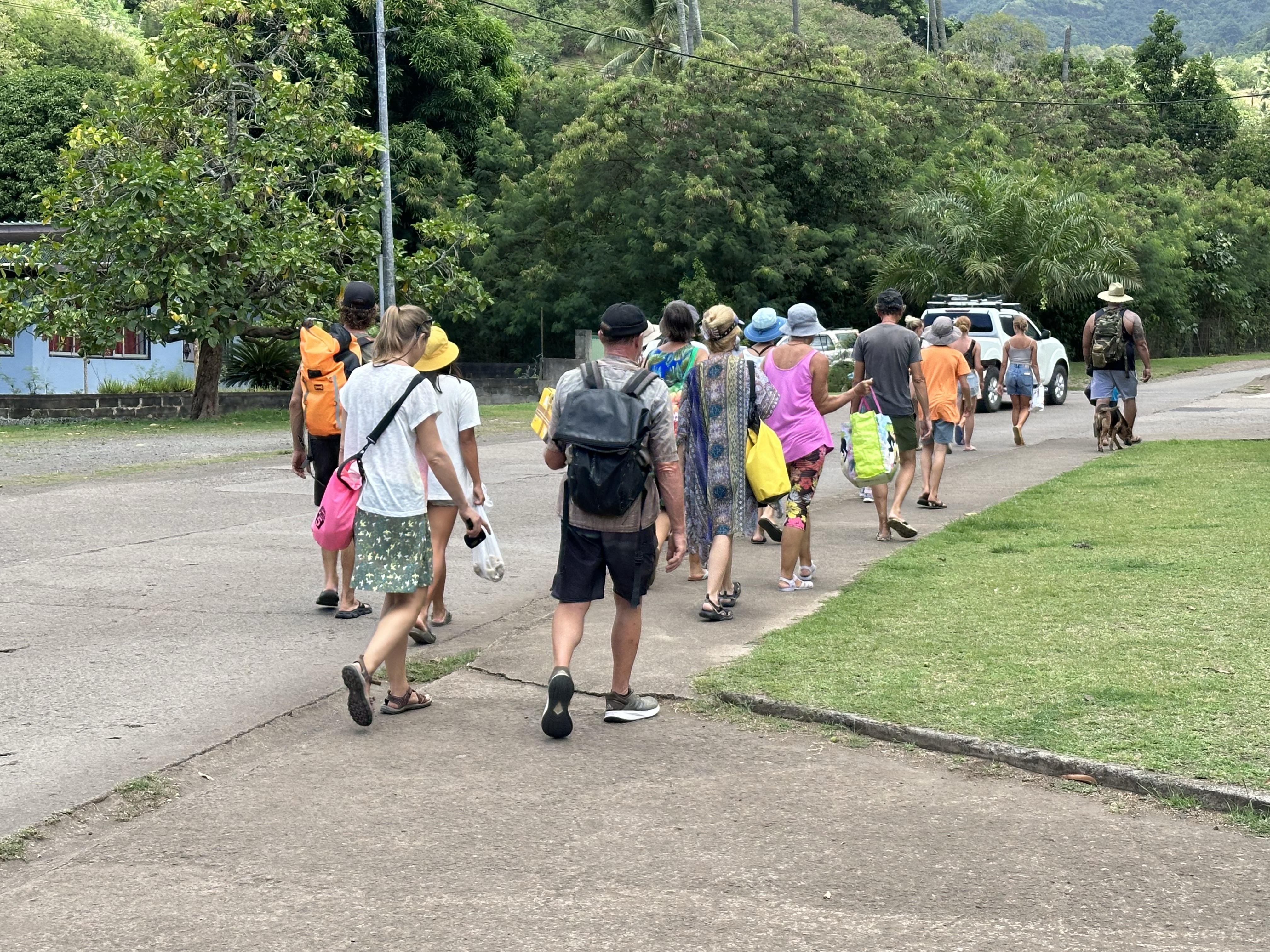
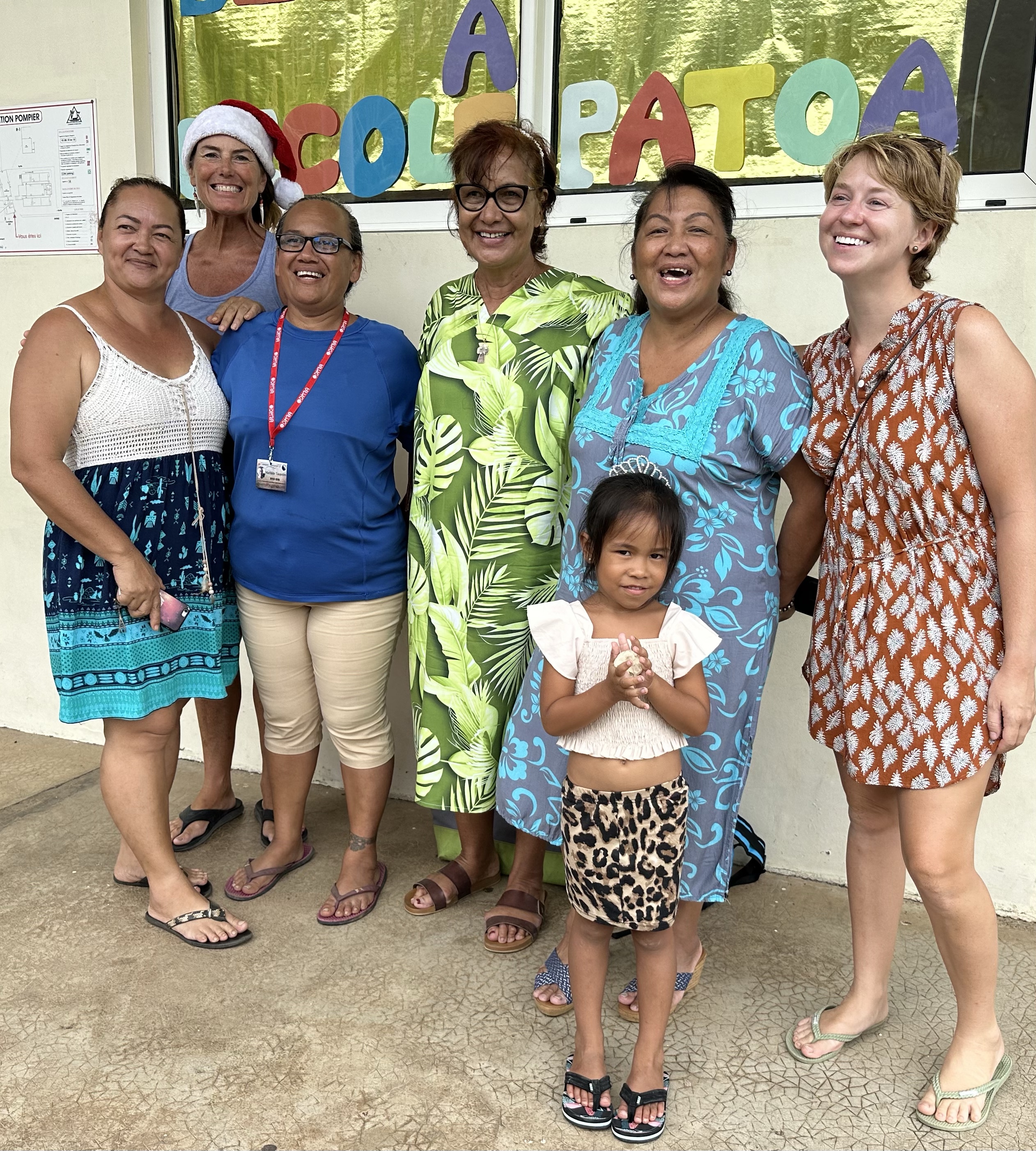
So, the date was set for the last day of school. We gathered at the dingy dock, discussed some logistics (in French and English) and went walking into the town with goodie bags in tote. This was a fun activity for us and an important little treat for the town. The children were so surprised. They haven’t seen so many Caucasian faces ever probably. They treats were a hit. Our photo and story was even posted in the local news.
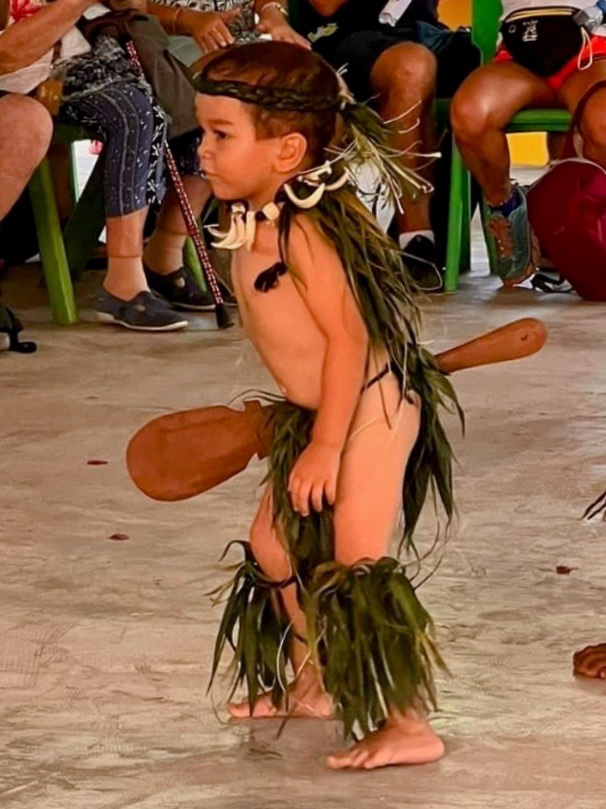
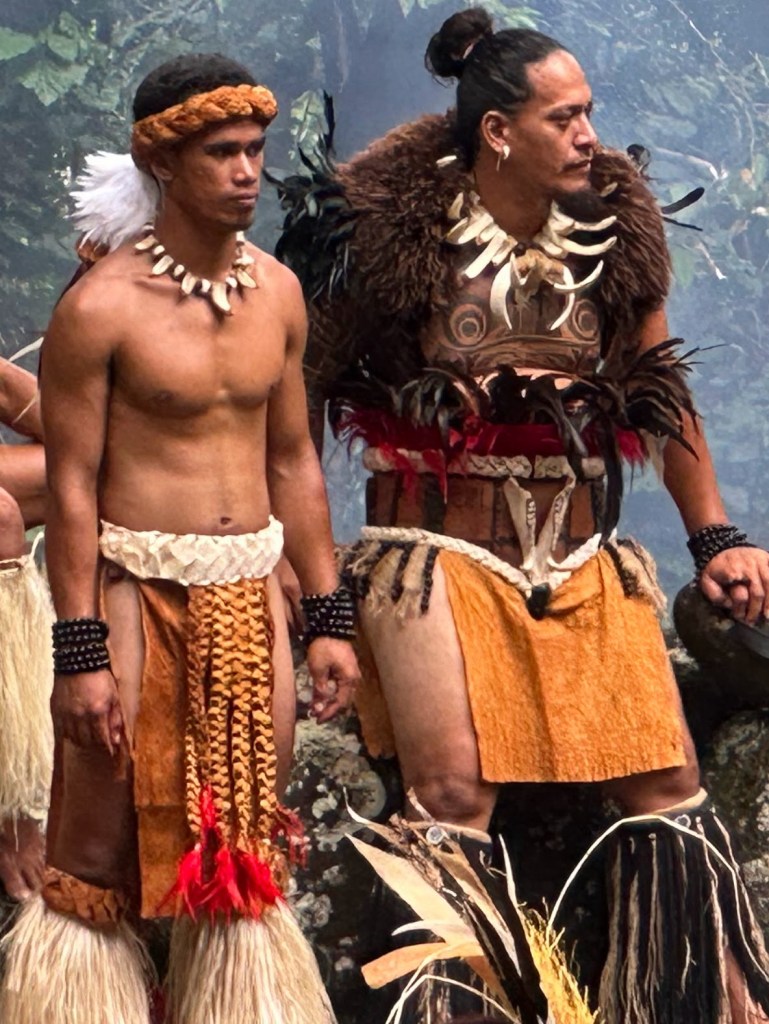
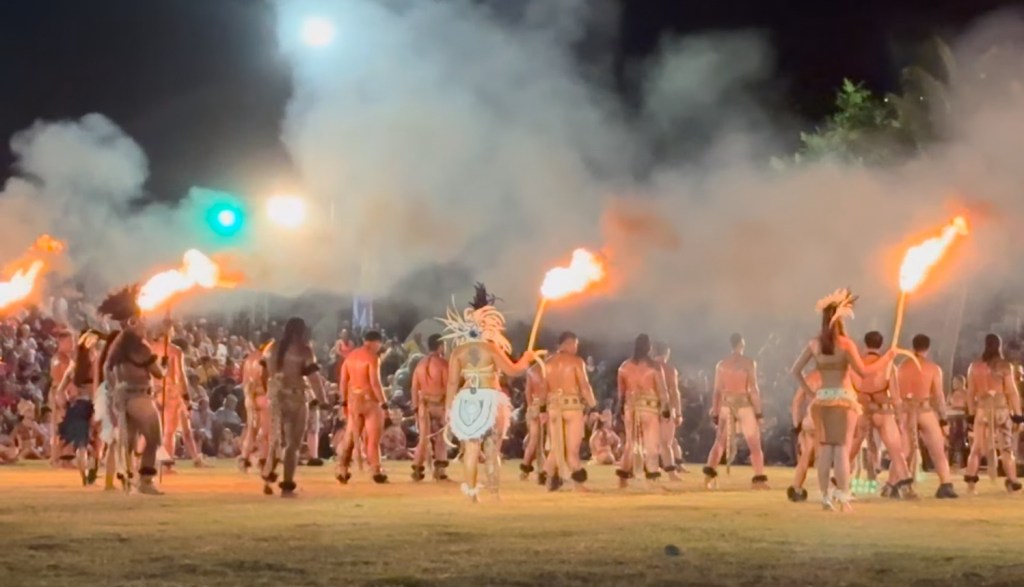
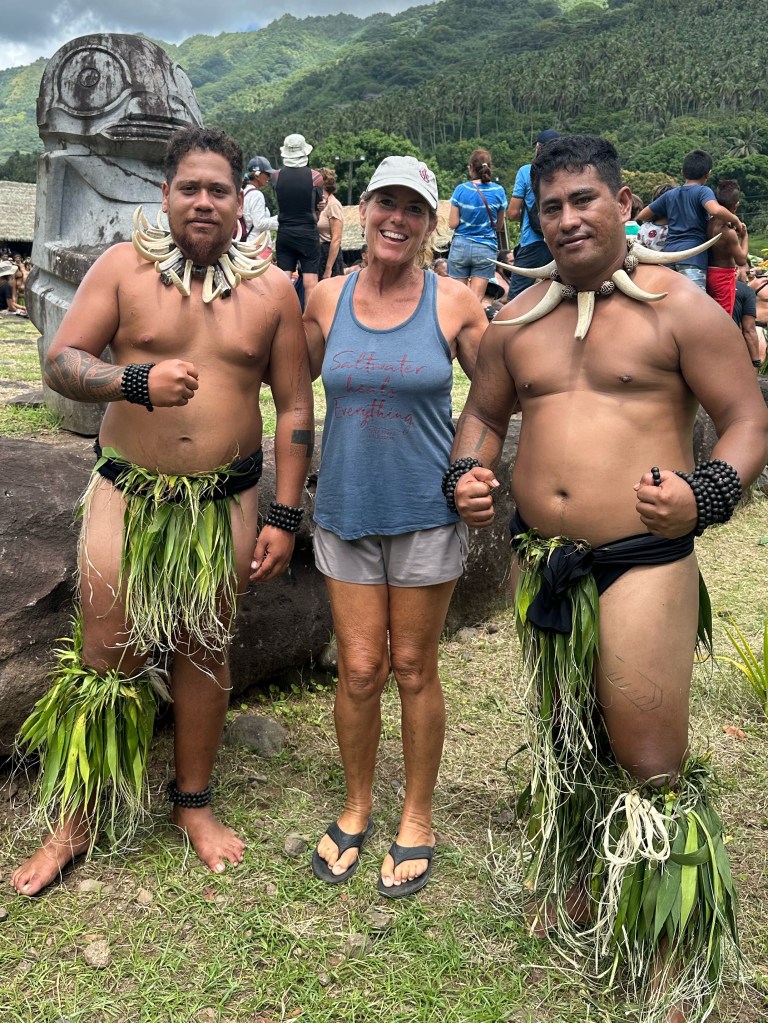
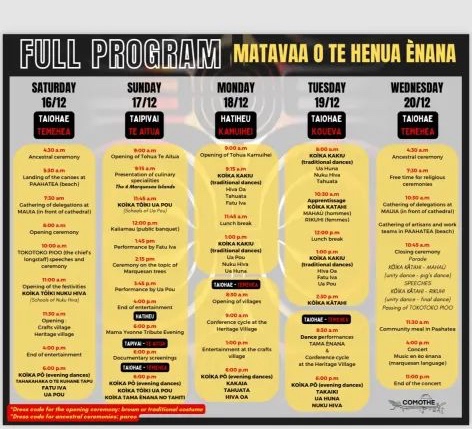
So excited to be here in Nuka Hiva with all the local Marquesan people gearing up and practicing dance, drums, song, foods, crafts, and beautifying the entire town for their big Matava’a Festival. This event is to Celebrate their Cultural Heritage and the last few decades of FREEDOM of artistic expression.
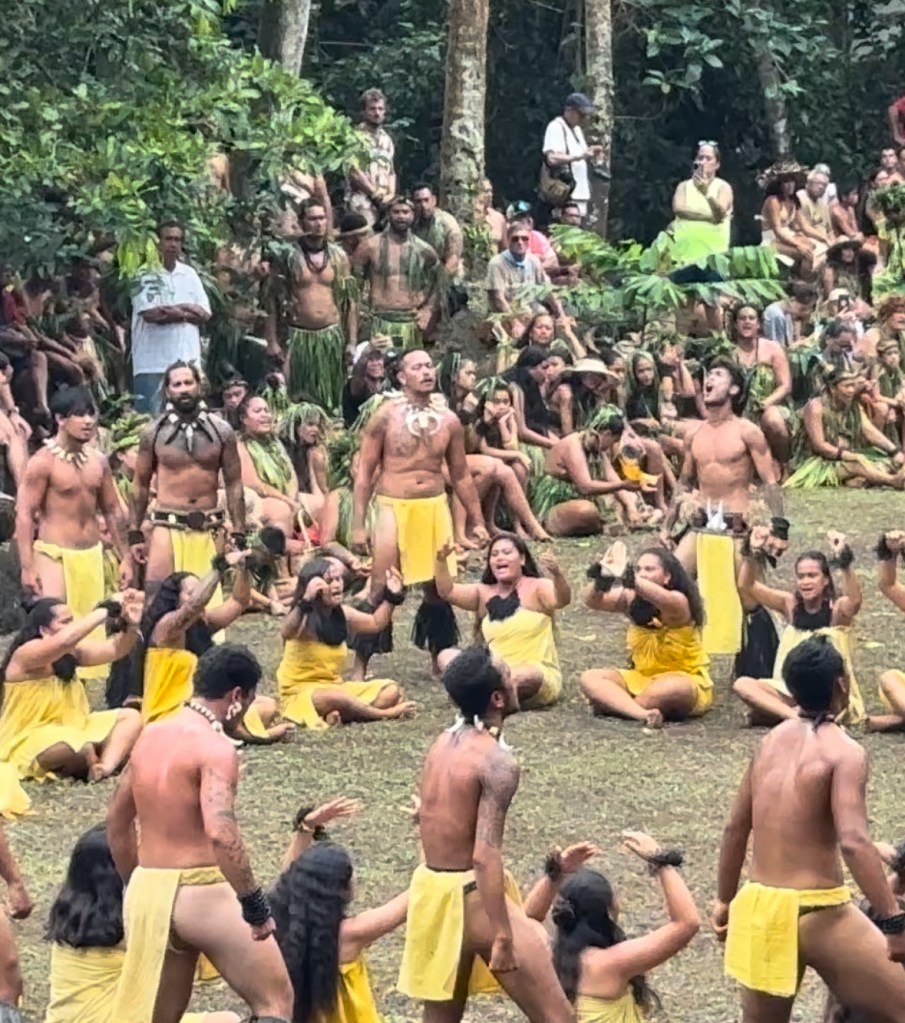
The Meal. This sure was unique, starting with a road trip across the island of Nuku Hiva to Tiapivia village. A 40 minute drive brings us to a beautiful ridge lined valley with coconut trees everywhere. Today we get to share a traditional meal with the islanders after more ceremonial dance. NO TICKETS are sold here, we are guests of the tribes. Each of the six islands prepare foods that have made up their culture in the past. We are served in bowls and plates that we bring that are made of natural island resources. Coconut shells, bamboo hulls and leaf weaved bowls. Then we eat with our fingers.
A few notes: – -The Marquesas island are the most remote island group in the world. -The United States bombarded this valley/village with cannons for three days in 1812. (More on that later). -Yes the tattoos are real. Each tattoo has meaning and symbolism that represents the tribe, history and family of the person it’s on. Marquesas is world famous for their tattoos. -Bread fruit, bananas, pork, beef, coconuts, mangos, other root stock made up most of the food. Some I didn’t know.
The Marquesas Islands Arts Festival is a cultural event created in 1987 but, founded in 1978 by Toti Teikiehuupoko. Its initial goal is to preserve the Marquesan heritage and unite the people around its culture. We noticed a lot of emotion around the events, so we dug deeper to learn more…..
Kakaia is a group, which shakes up the codes and wants to “defend Marquesan culture in an honest way”. Its members feel the need to express themselves in a different way, using unusual, provocative gestures. The story of Kakaia could help us all understand this perception. The troupe is made up of “people who are in search of their identity, who have another way of thinking, or by religion”, explains Kahuetahi Kaiha, its leader. Its members want to be free to think, act and live their culture in their own way.
Deep in their souls, there is a sense of resentment, that of the consequences of European and religious colonization. European colonization led to forced acculturation, bringing with it cultural and identity erasure. The French code prohibited their language as well as their dances, tattooing, and partial nudity. Actually sort of a trauma for these young people in search of their true identity. If the Marquesans are experiencing a real awakening of identity today, for Kakaia, we must not make a clean sweep of the past. This is part of their story and we must continue to tell it. Participating in the festival is a source of pride for many young Marquesan residents. I think this is the right time to share this strong message.
The leader of the Kakaia believes “that there must exist above all for us, and the culture must be experienced and felt in a spiritual, emotional, physical and mental way. We must let ourselves live it as we see fit, with our spirituality. “
It must be said that the Marquesas impress. Coming from a recent Tahiti news article: “Gauguin, Stevenson, Melville, Segalen, Brel, artists, poets and adventurers found in the Marquesas an exoticism to match their dreams. Today, passing visitors or cruise passengers are amazed when robust dancers, barely dressed in auuti leaves, come to perform the pig dance, a distant echo of the warlike dances of yesteryear With the European system, we are exotic. When people come, you have to show yourself, it’s a spectacle. So, the culture itself for the Marquesans is dormant. This festival is not for foreigners, it is above all for us. In any case for Kakaia, we are there for us, to express ourselves. For me, Marquesan culture only has the right to exist in one dimension, that is to say, it just represents exoticism, folklore. People think that putting on necklaces, donning costumes or getting tattoos is enough to be a Marquesan. It’s wrong, spoken by Kahuetahi Kaiha. This is precisely what the leader of the Kakaia from Marquesan Island of Ua Pou regrets.”
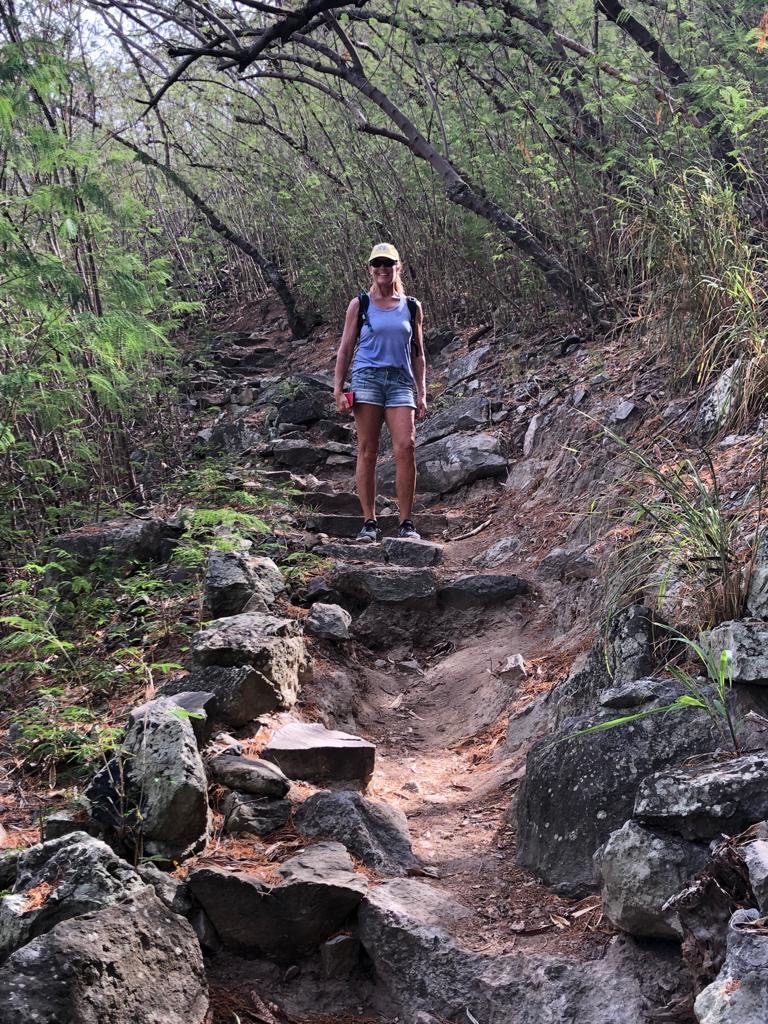
Well, you ask if I’m lonely here in Nuku Hiva? Scott’s been gone 2 weeks and ….I miss him. But, I am never lonely or bored. With so much to do on and off the boat, and with so many past friends, new friends and friends yet to be made, I rarely have time to realize the quiet. (Maybe a bit weird to have all 44 feet of Sea Bella to myself, haha.) I go on hikes everyday, pet the random horses, study for my Yoga Certification, shop for yummy fruit, learn the local history, play chess online, do some sewing projects, and the best part: visit friends. I look forward for Scotts return next week, to share in all this island goodness. He will be here for the big Marquesan festival, Matavaa. And, yes, it will then be my turn to travel to California next month, to see my kids, family and friends, I am so excited about that.
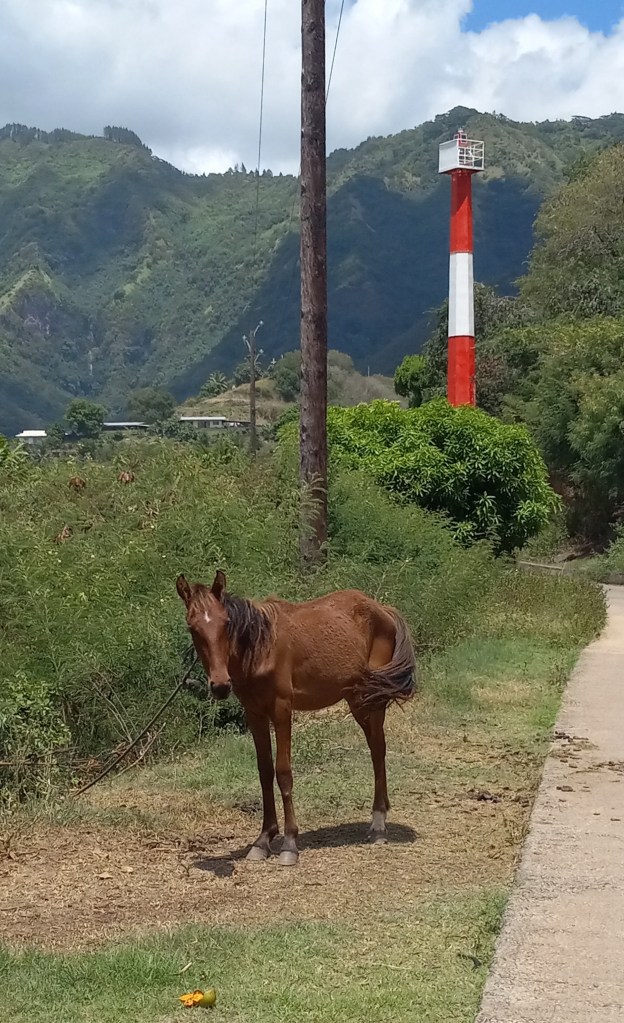
Most horses here are small, young, thin, and tethered to a 20 foot rope. Unfortunately they are also on the menu. 6 countries represented, not counting that we are in FP
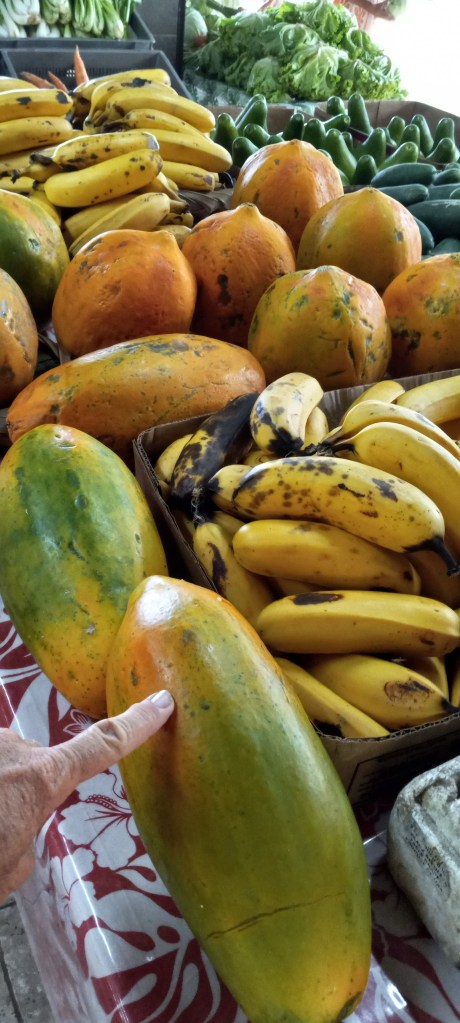
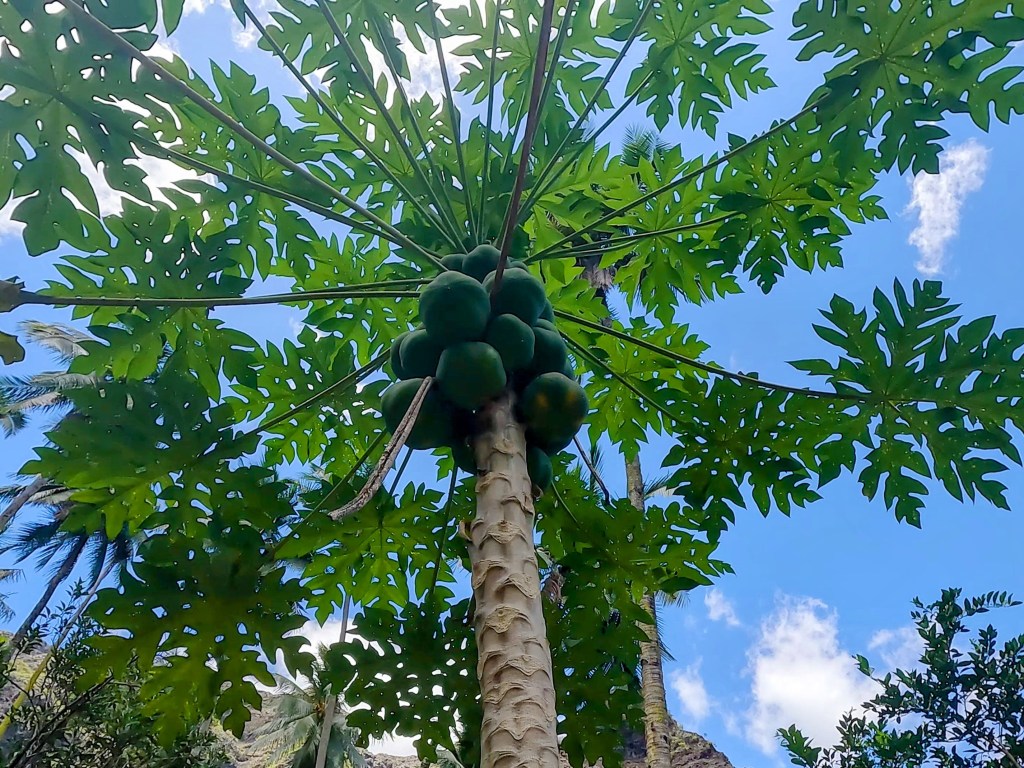
Huge papayas
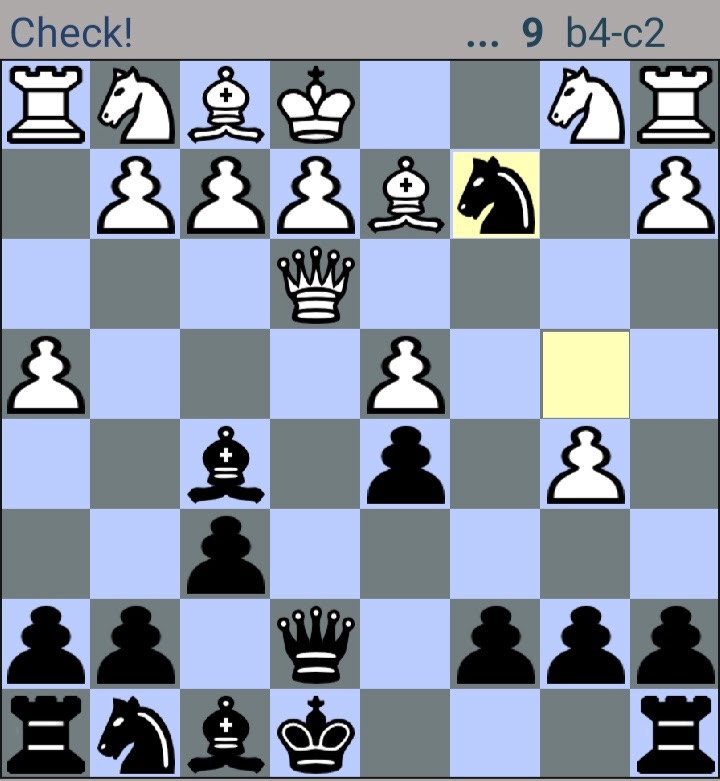
My favorite move to date, I am black by the way.
My latest project, dry bags for cruisers. It rains a lot here.
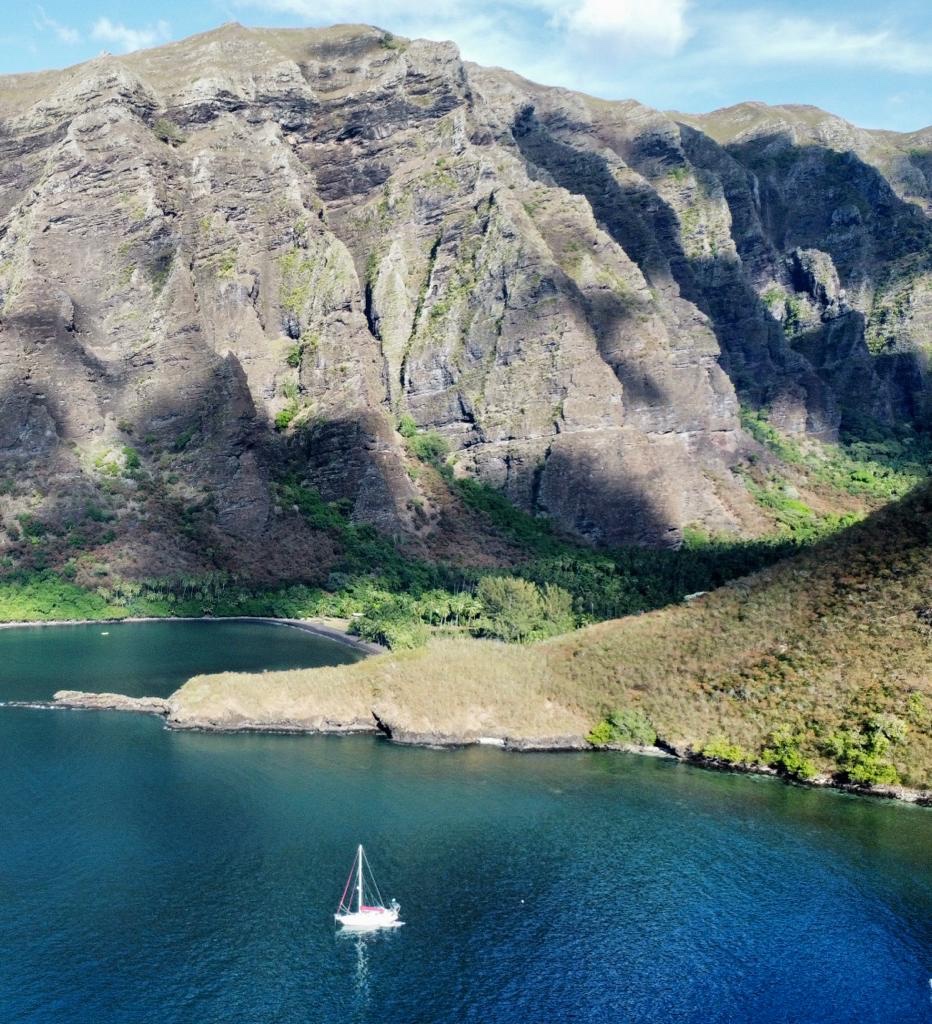
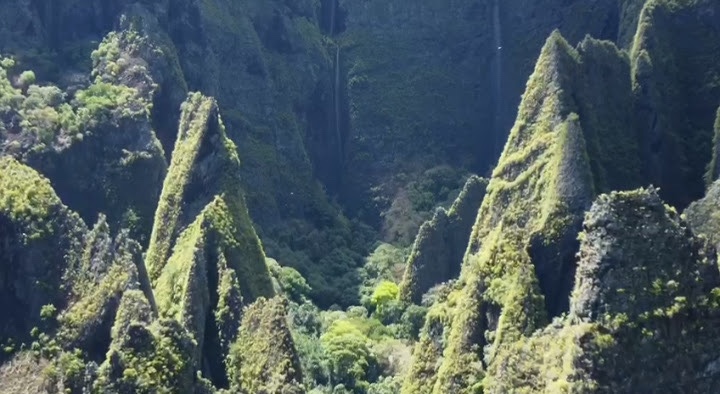
Not just your average anchorage; Hakatea Bay (aka and formerly Daniel’s Bay) Nuku Hiva. (The most remote Island in the world). This is the site of Season 4 of the TV series “Survivor” and also the last known case of Cannibalism in the Marquesas. How recent you might ask? Recent enough that I think the guy is still in jail. lol.
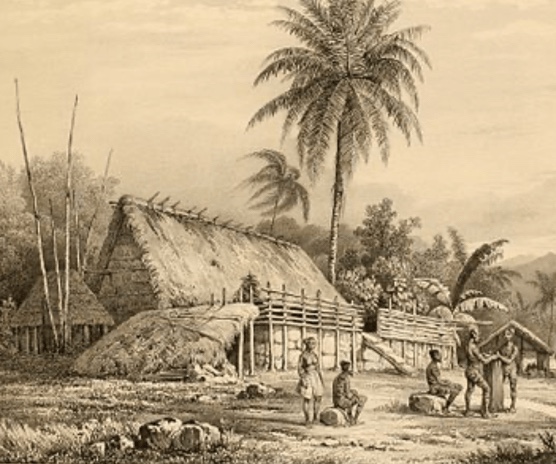
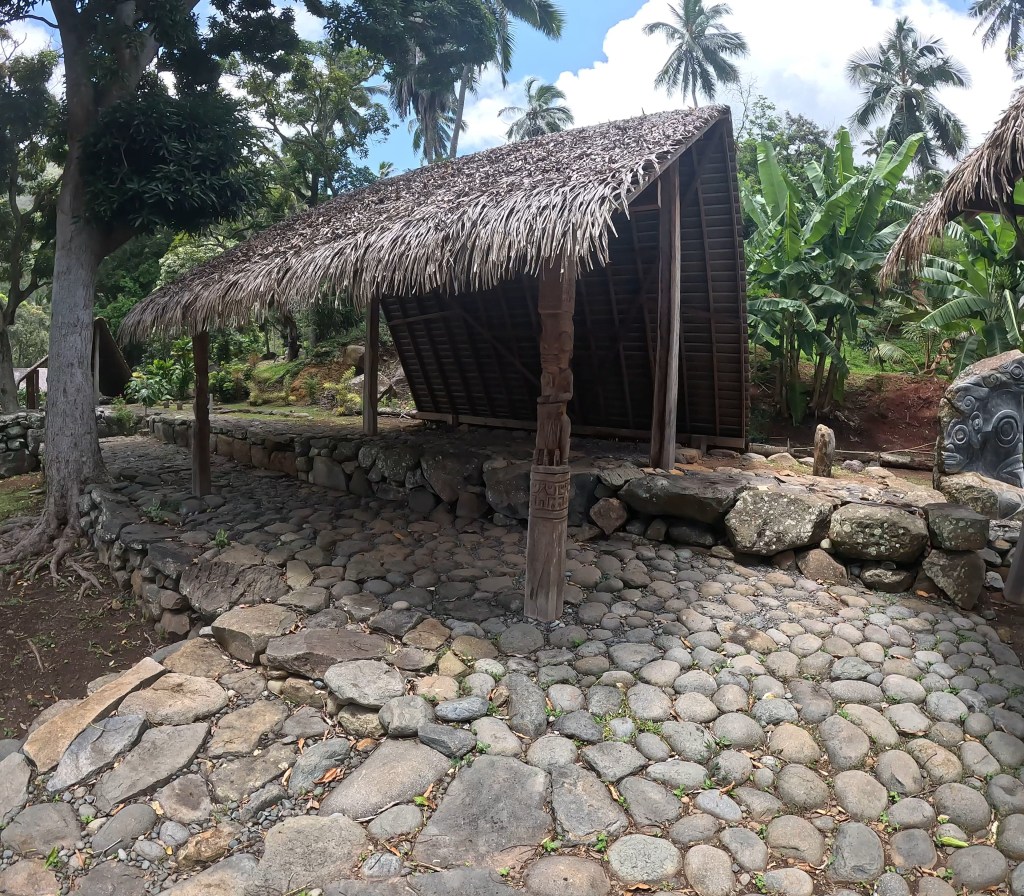
This amazing place was the Royal center of Nuku Hiva for over 1000 years. Up to 20,000 natives lived in this valley until Small Pox and other introduced diseases wiped out thousands, in past centuries. Now and over the past 80 years less than an average of 10 people live in the valley.
Video tour of the Royal Palace
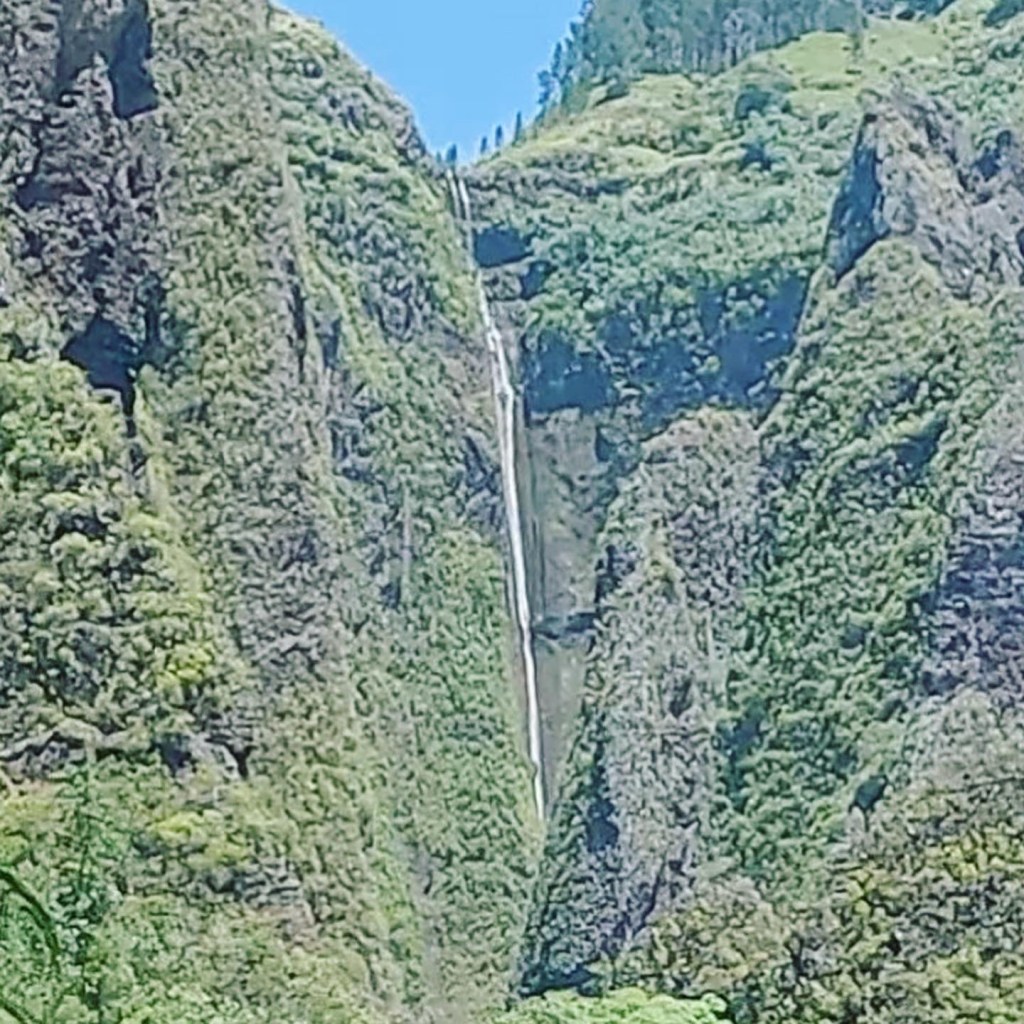
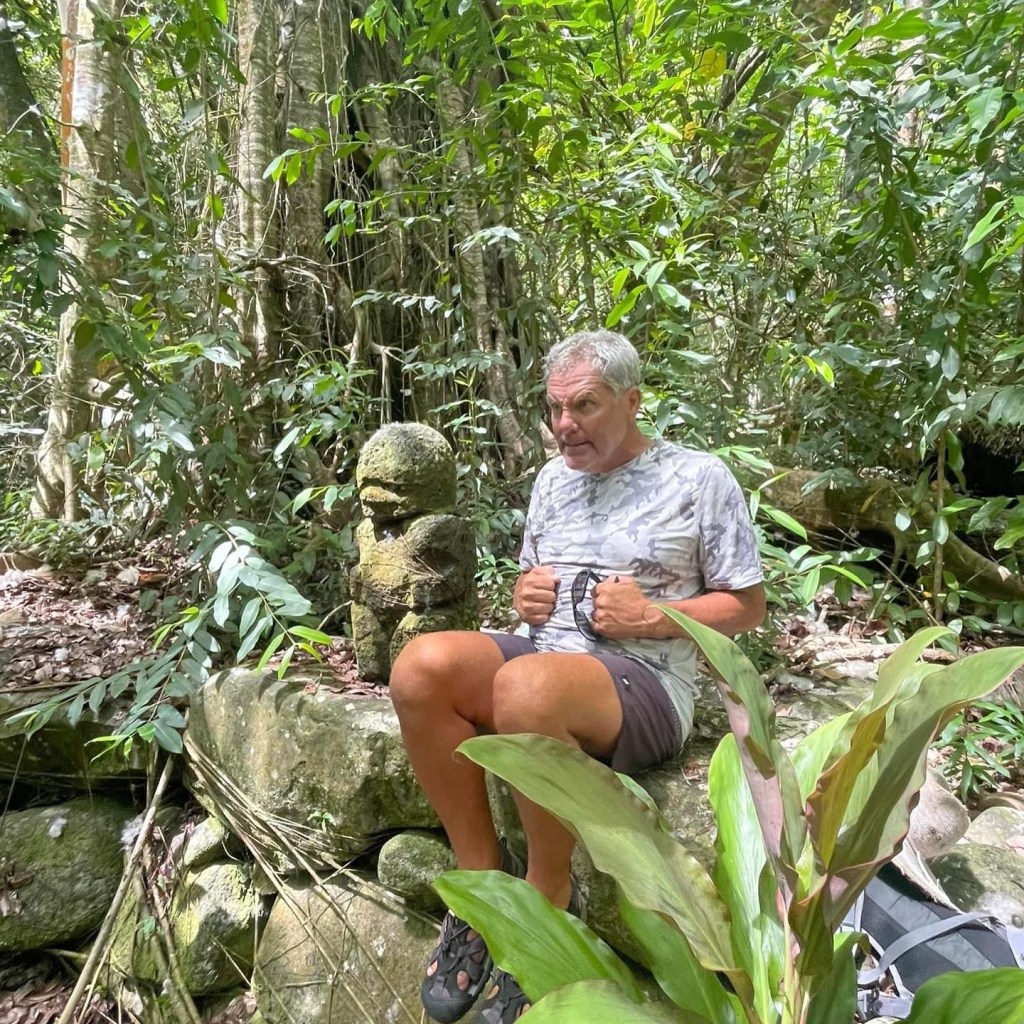
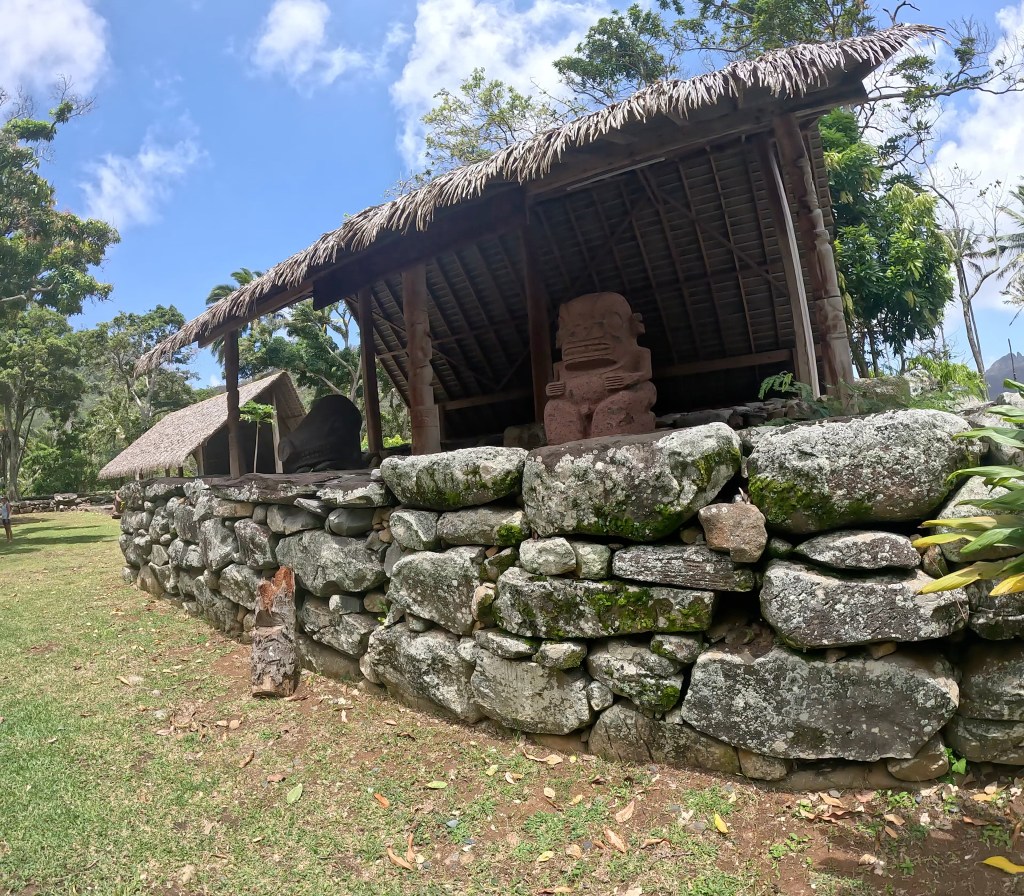
As we hiked up the Royal trail to the waterfall we came across dozens of Pae Pae’s or foundations of ancient buildings. We are amazed that they are basically in the process of returning to earth. Over grown jungle and trees growing through the middle of many of these ruins. Archaeology has shown that in some cases the heads of families members or warriors have been buried under rocks in the Pae Pae’s after the tribe or leaders ate the eyes and brain out of the skulls. (To take their visions and knowledge). We didn’t move any stones!
Boy was that waterfall loud!A rendition of the village a few hundred years ago.2 Tiki’s
The local family that is still in the valley cooked us lunch and filled our bags with fruit upon our return.
It’s very difficult to explain the day and what we saw. All I can say is I can’t believe this place isn’t a museum. Oh yeah, the water fall was cool too. The only way to get here is by boat. Ya have to see it to believe it…..
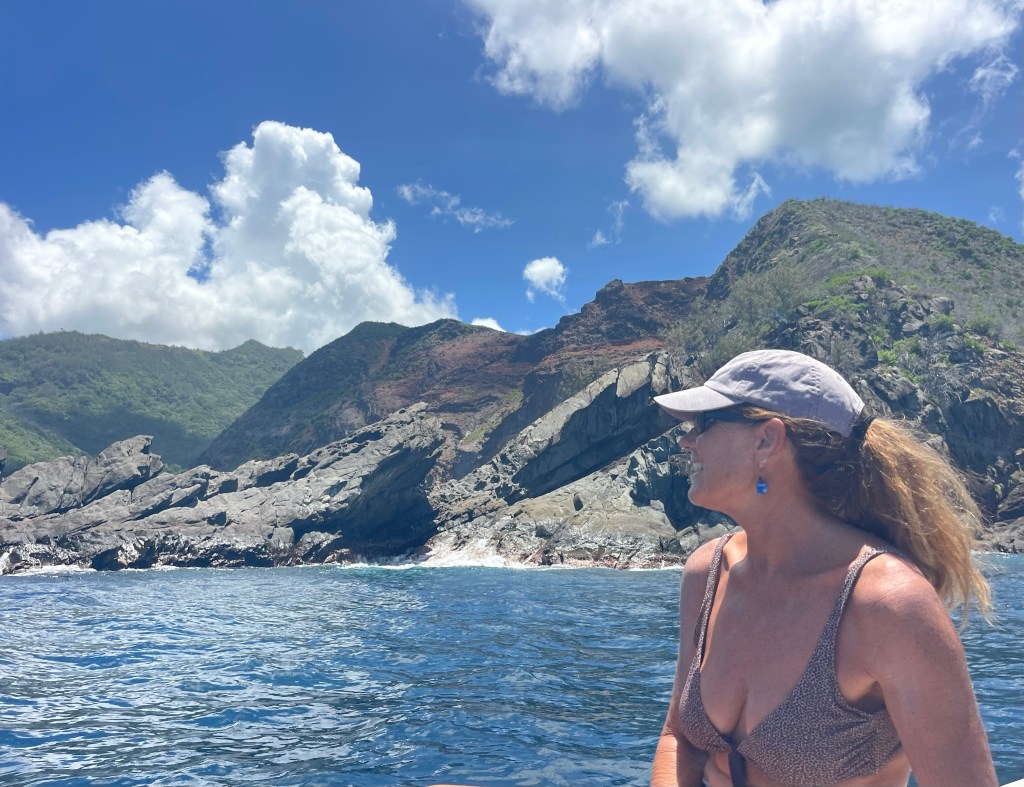
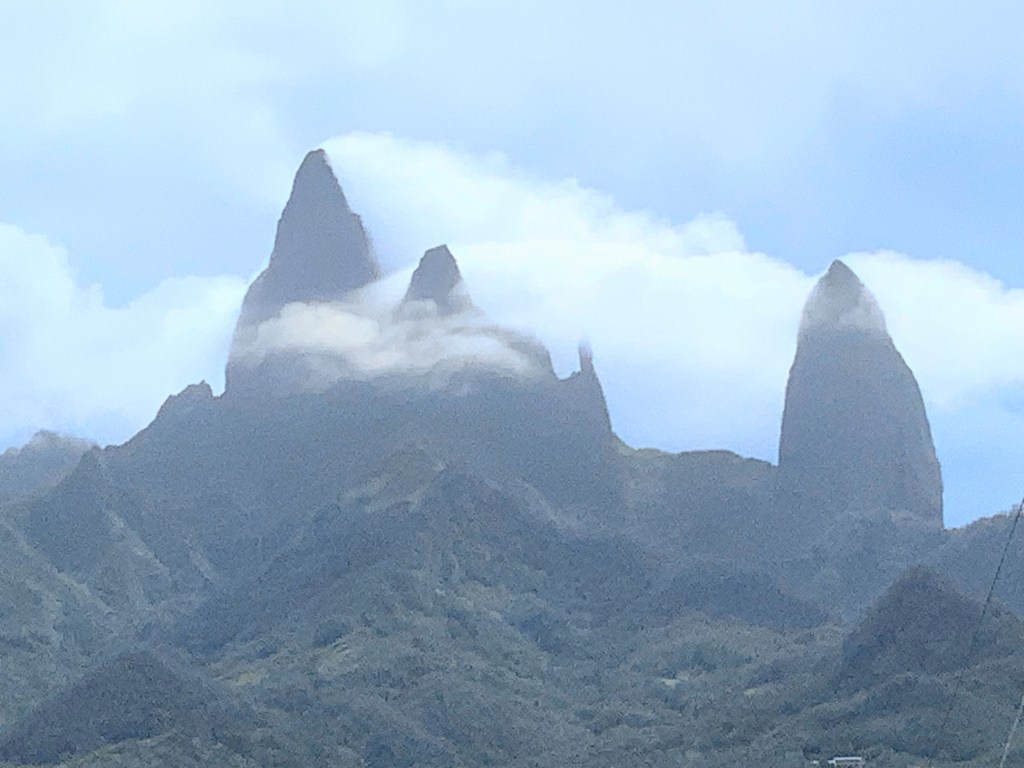
Our 15th island here in FP and it sure didn’t disappoint. Oa Pou, on the most isolated archipeligo on the planet; Marquesas. We sailed back her to spend the off season, the hot summer months, and the well known cyclone seasons. It is so peaceful and friendly here that we stayed 2 weeks. Daily walks through The village of Hakahau and up the hill to Restaurant/Inn Pukuee for a cold beer and great view of the bay was a treat.
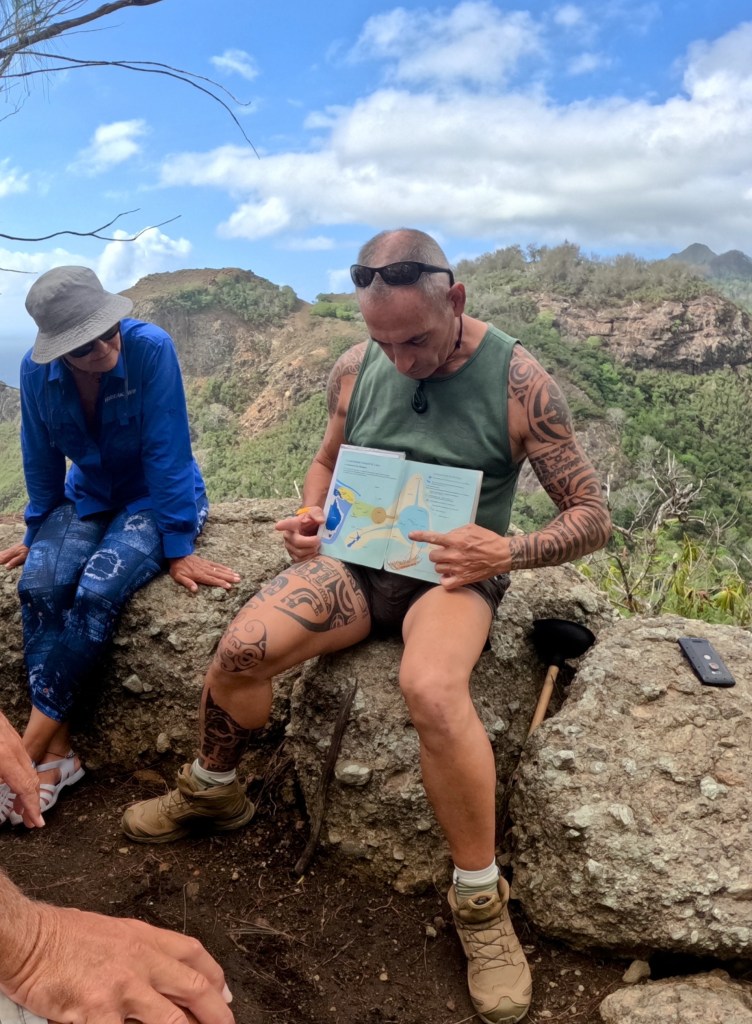
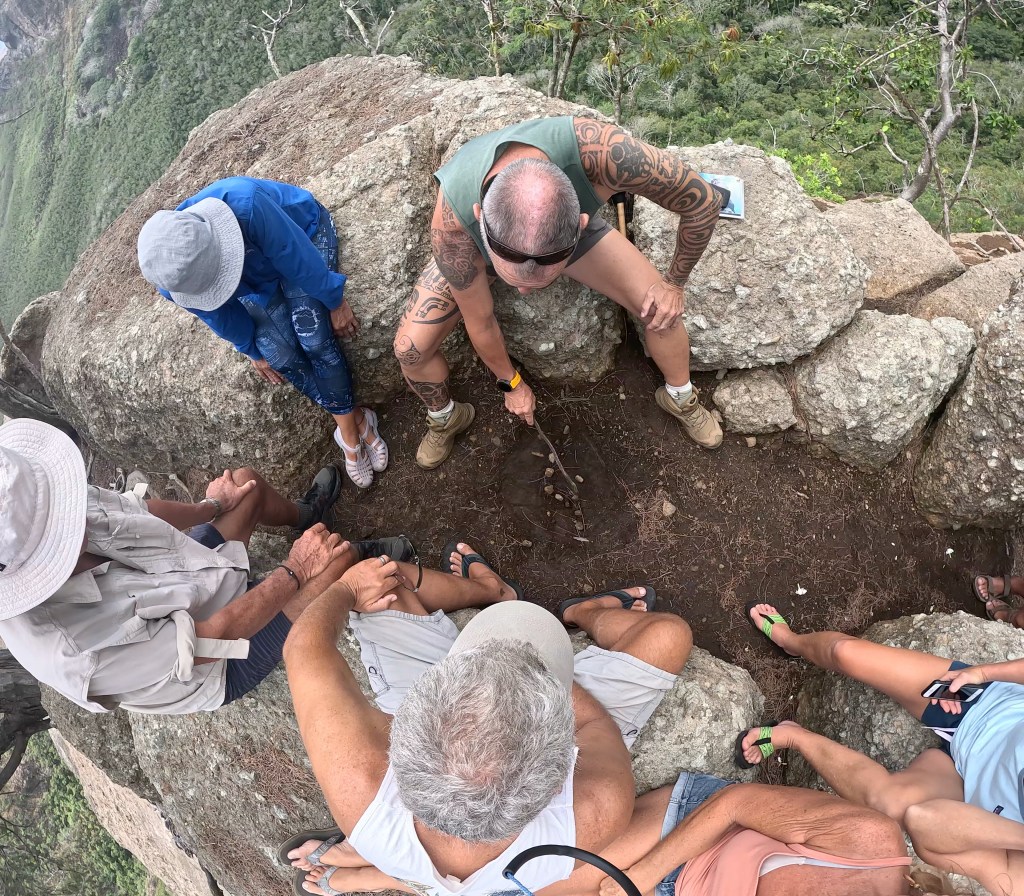
We hired the owner Jerome for a well guided Jeep tour of this majestic island. We visited the largest ancient archeological site here, examining the floors, homes, quad area, dancing platforms, and temples. I looked closely for the ancient skulls buried in the rocks, but found none. We learned that hundreds of these Pae Pae grounds are buried up here in the high jungles of the island. The Tavaka Tribe was around 1,500, living on the highest peaks of Marquesas.
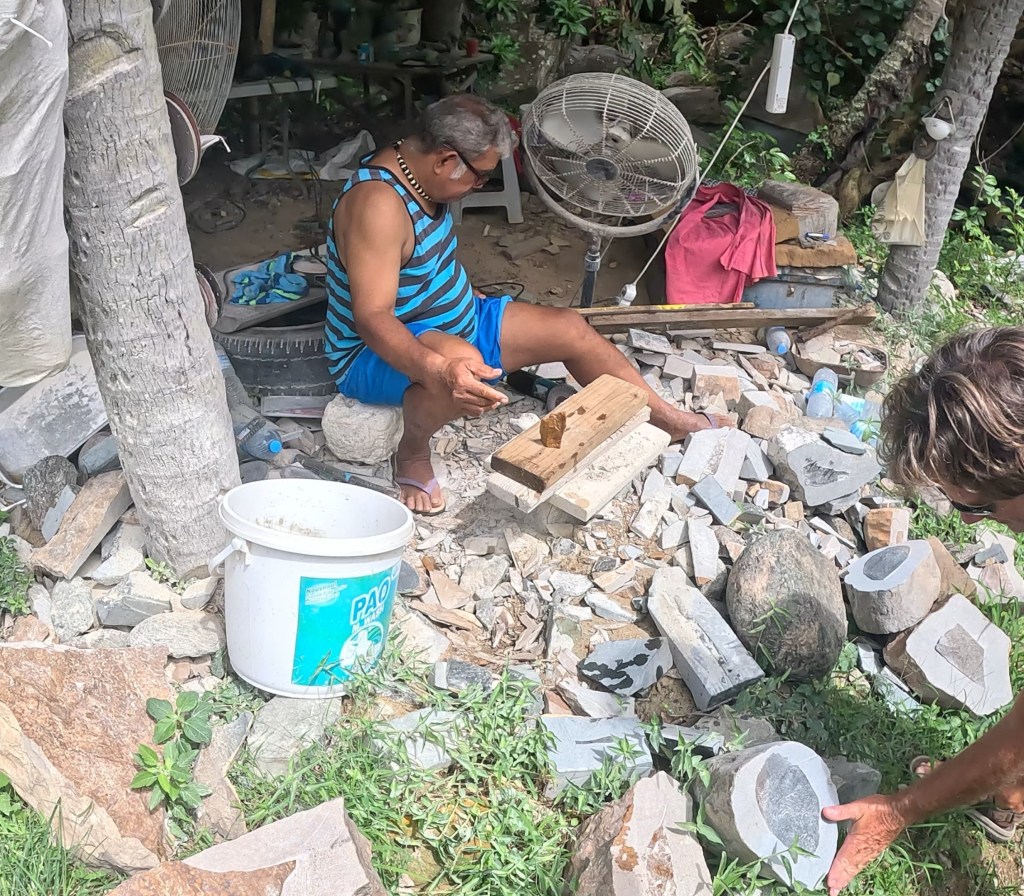
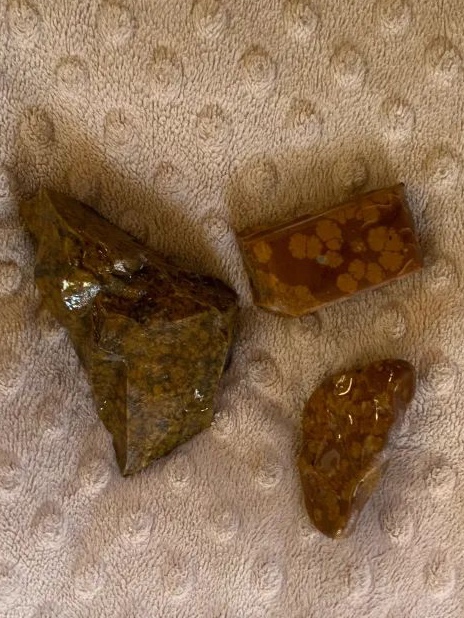
But, what Ua Pou’s is most famous for is the very rare “flower stone” in a north bay. Certain minerals formed when the volcano here was alive and molten. The cooling process created what appears to be miniature gold flowers in the stone. (See photo) We watched a local stone carver at his work bench.
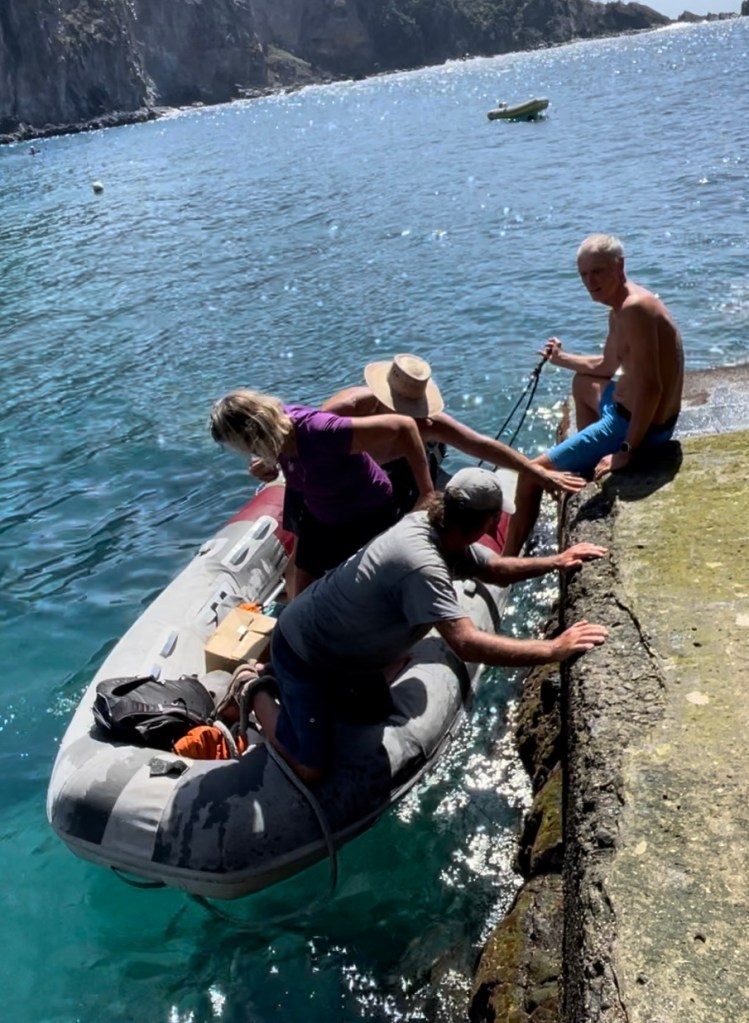
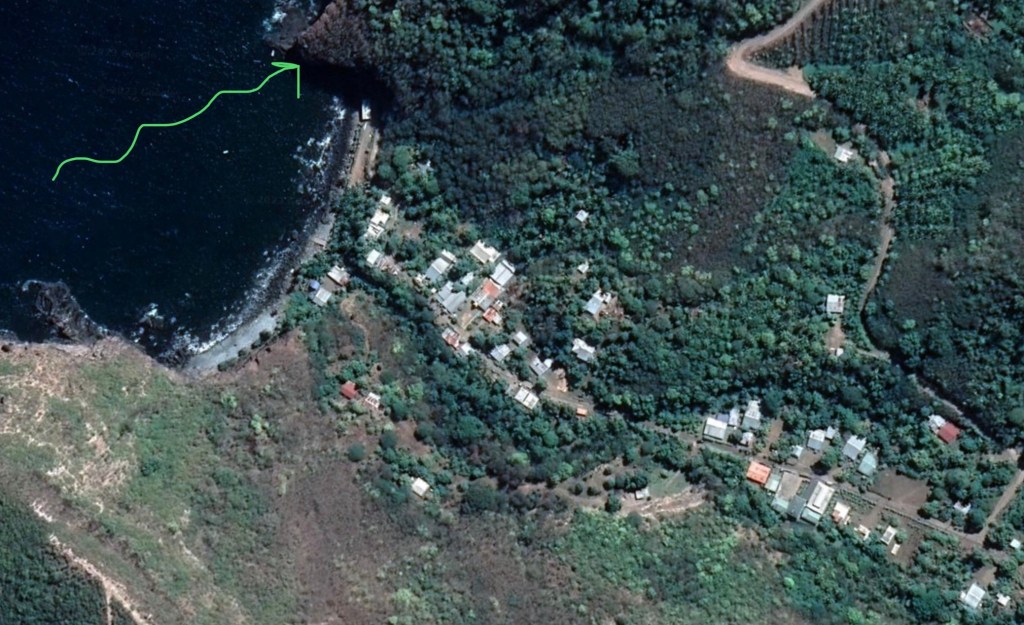
Shopping trips come in all varieties when you live on a boat on an island. This one was sure unique. We heard from other cruisers that there may be a little store open in the neighboring village, Haakuti, in Ua Pou. So 6 friends took our dingies and kind of crash landed on the mossy wall.
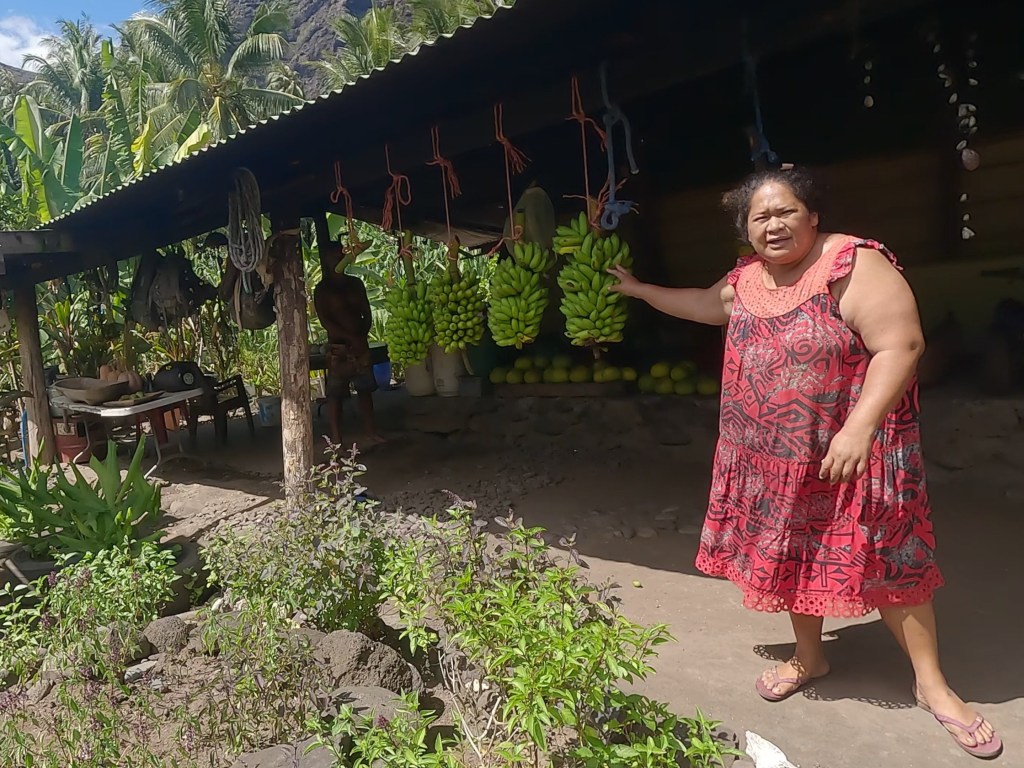
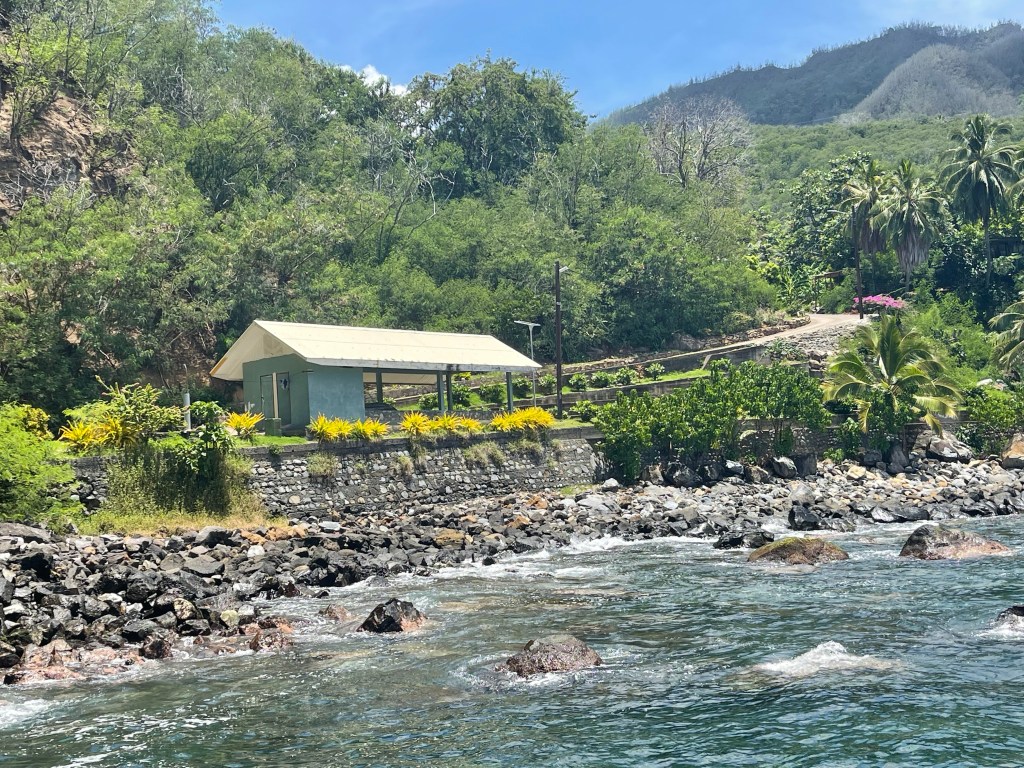
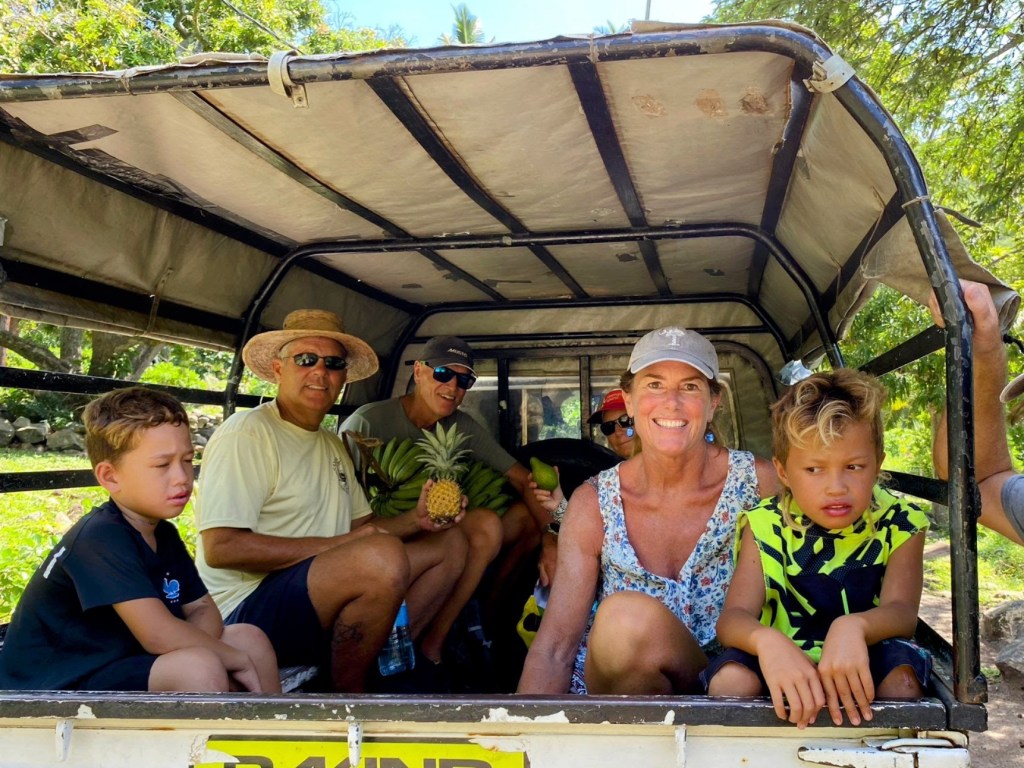
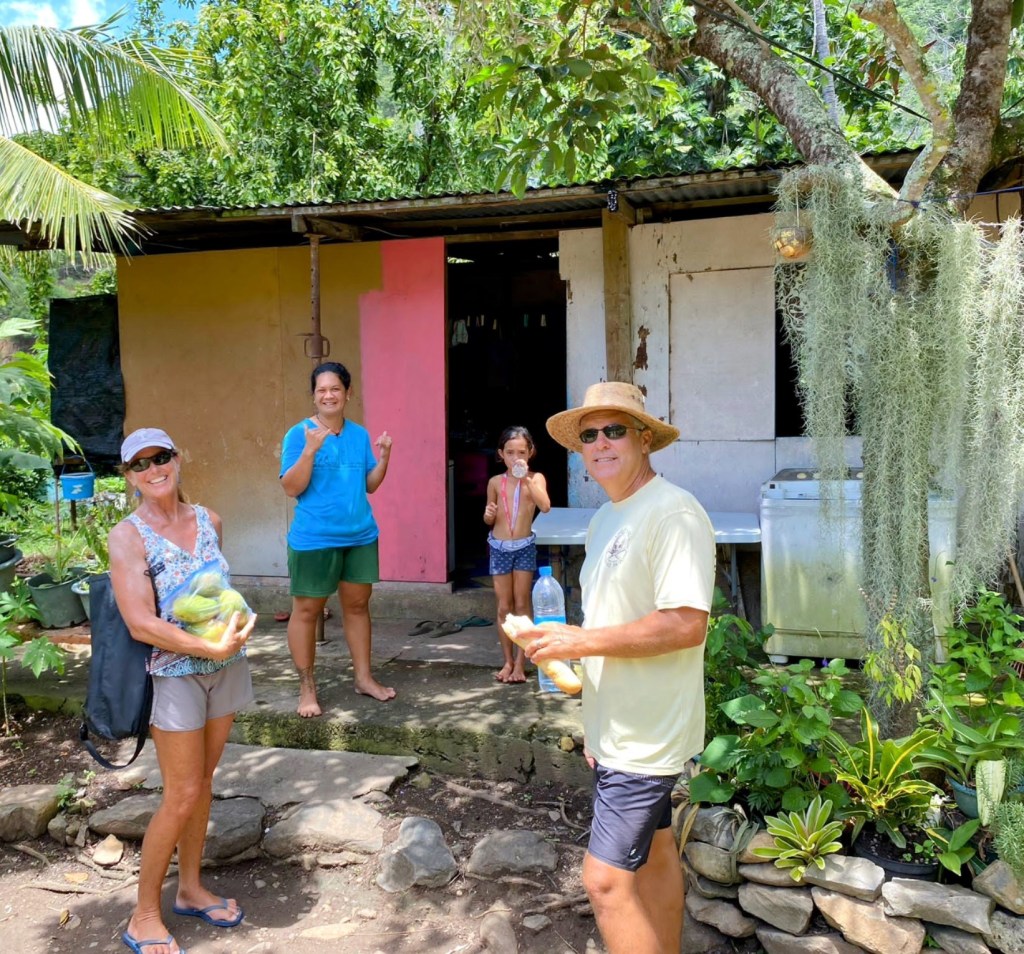
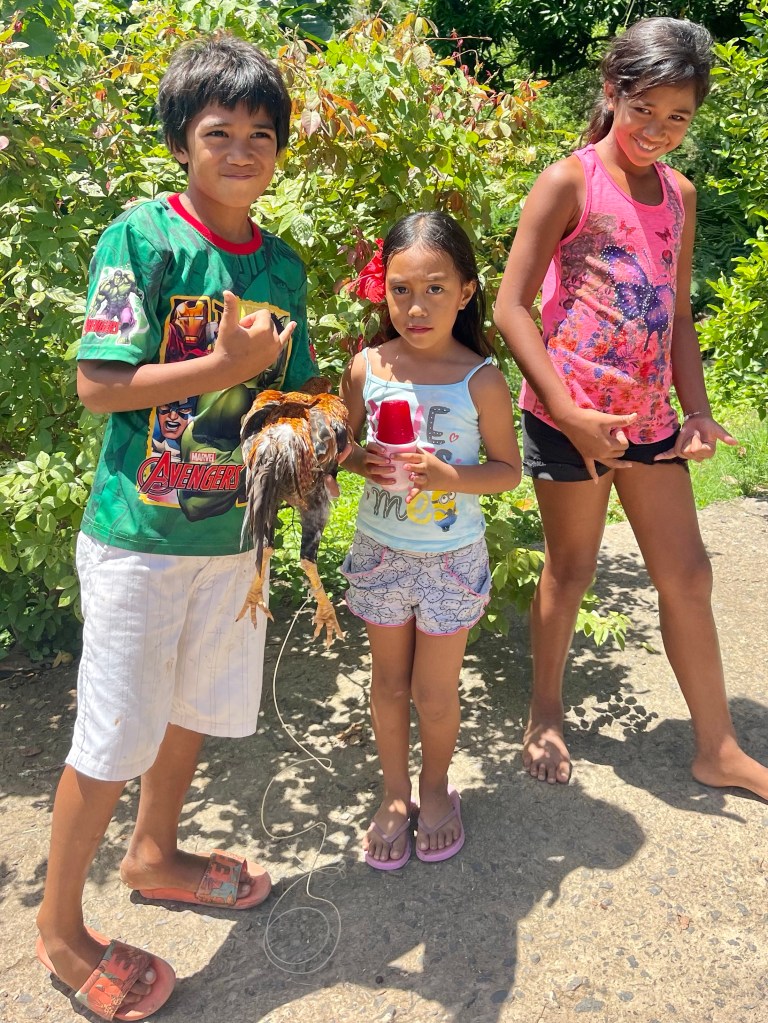
The surge had highs and lows, making the dingy exit and entrance tricky. Funny that we had to anchor the dingies out a ways and swim to shore. We walked about the village and met some very kind locals. The children here were shy, one boy had a pet rooster on a leash. We explored the church and cemetery, then asked around for some bananas. A sweet mother of 3 gave us some mangos, pomplemouse and oranges as she had way too many. On our way back, we bought a box of limes from this darling family. They even served us delicious limeade and gave us a ride back to the rocks.
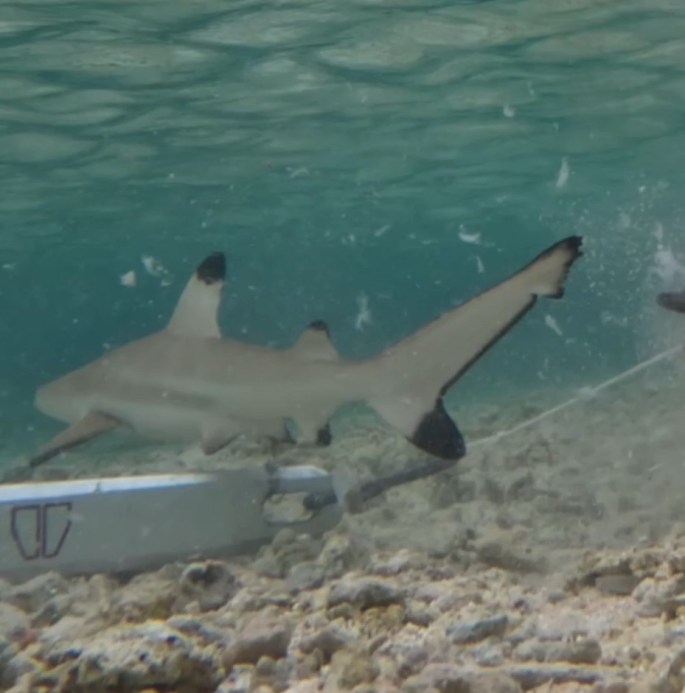
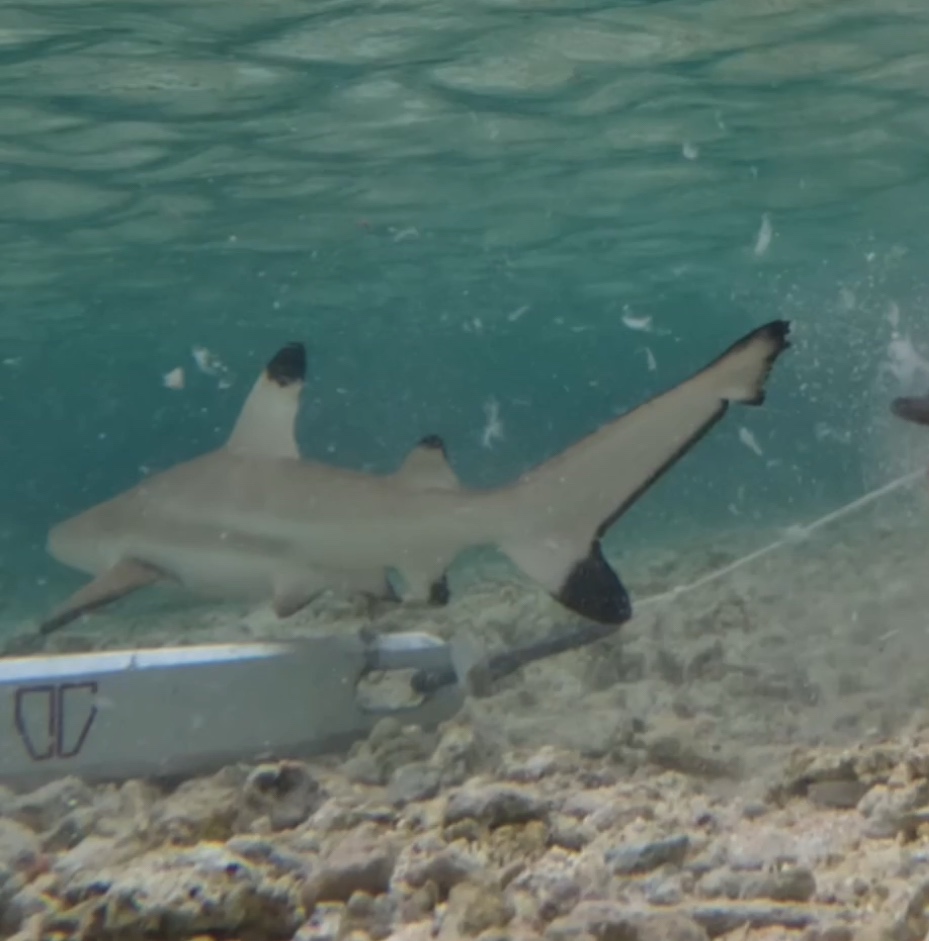
Fun with Sharks! Okay, we had a little time waiting on the weather, so let’s play! We gathered (chummed in) a few sharks in the back bay with some day old fish (no hooks) and did some filming with the GoPro(s). Big learning experience!!!! We thought there were only 10-12” babies in the back bay.
The first fish we put out was tied to a 5 lbs dive weight and worked just fine with the small sharks……well…..let’s just say that weight is gone…😳 The next fish we put out was attached to our bucket full or coral and sand. That didn’t last long either. I finally just put my foot in the bucket to keep the sharks from taking the fish. The next round, we got the stern anchor off Sea Bella and that worked great! These are all Black Tip Sharks btw……some much larger than the 12” we were expecting.
Hungry Baby.
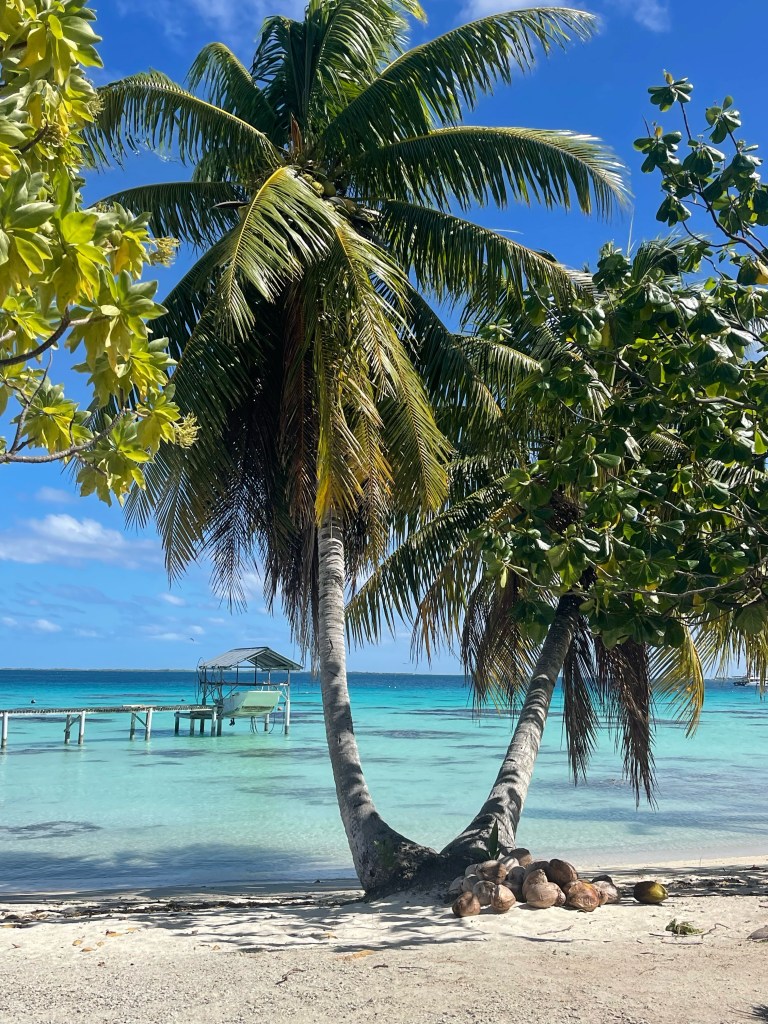
Raroria was the last of the atolls we visited. For many cruisers it’s the first one to sail into from the Marquesis. Our highlights were exploring the Kon Tiki monument with our great cruising friends on Fundango, the huge pearl farm and of course our silly fun with the baby sharks. Our good cruising friends on SV Breakaway found these great Octopi:
Sailing through the Tuamotus was an amazing experience, but it was time to say goodby. Thank you for joining Scott and I online these past 6 months in 8 atolls (and Tahiti for repairs). It’s such fun to share our experiences with friends and family. We went on a sporty 3 day sail back upwind to the Marquesas for cyclone season (and for yummy fruit and fun mountains to explore!)






 Our World Adventure