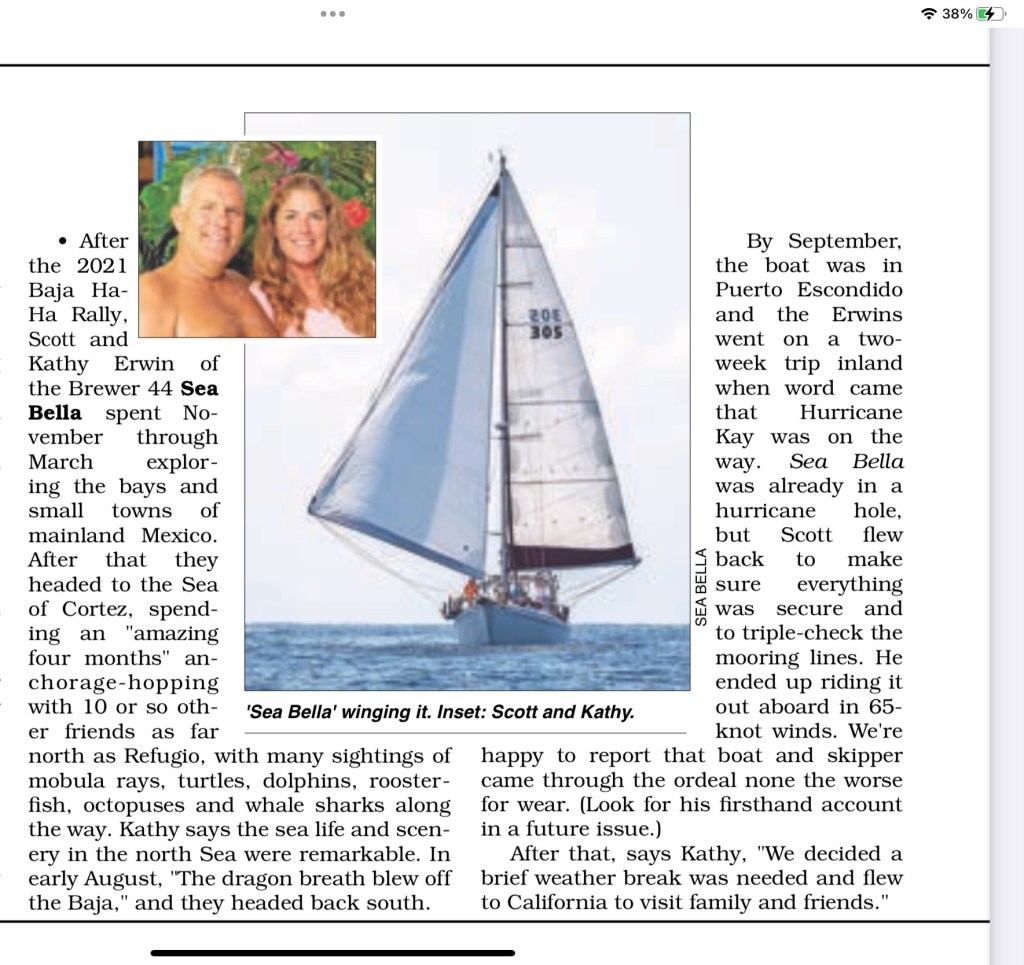
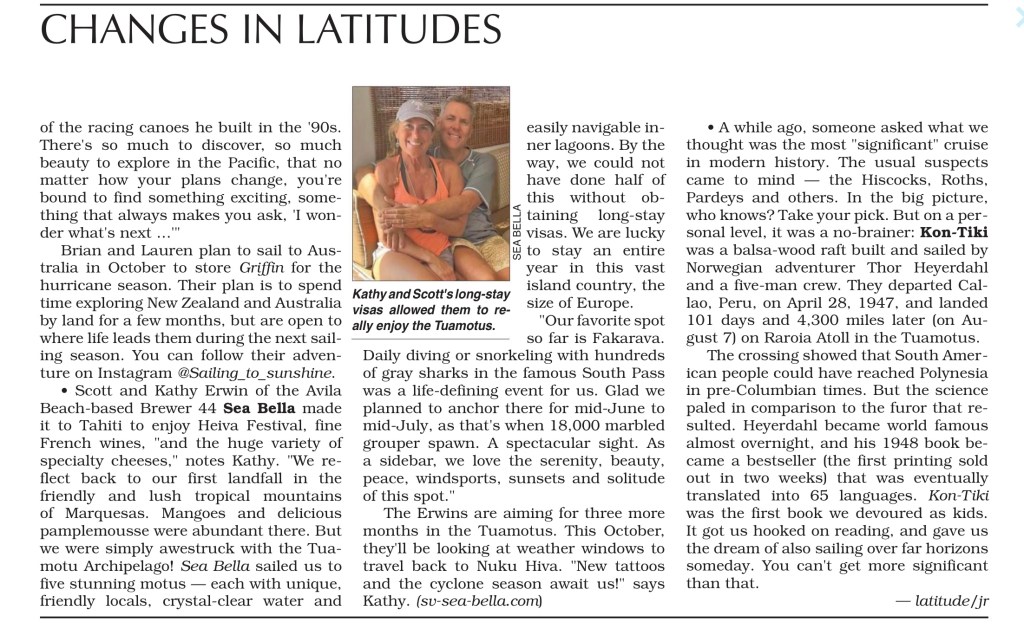
Our sailing home takes us, Scott and Kathy Erwin to travel the world one island at a time. Come along on this adventure to learn, or join Kathy’s Yoga, and explore and see the world.
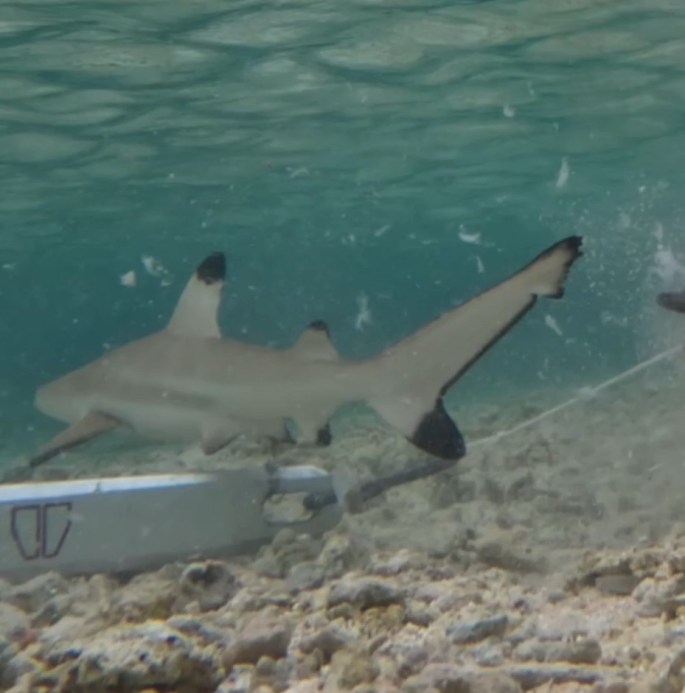
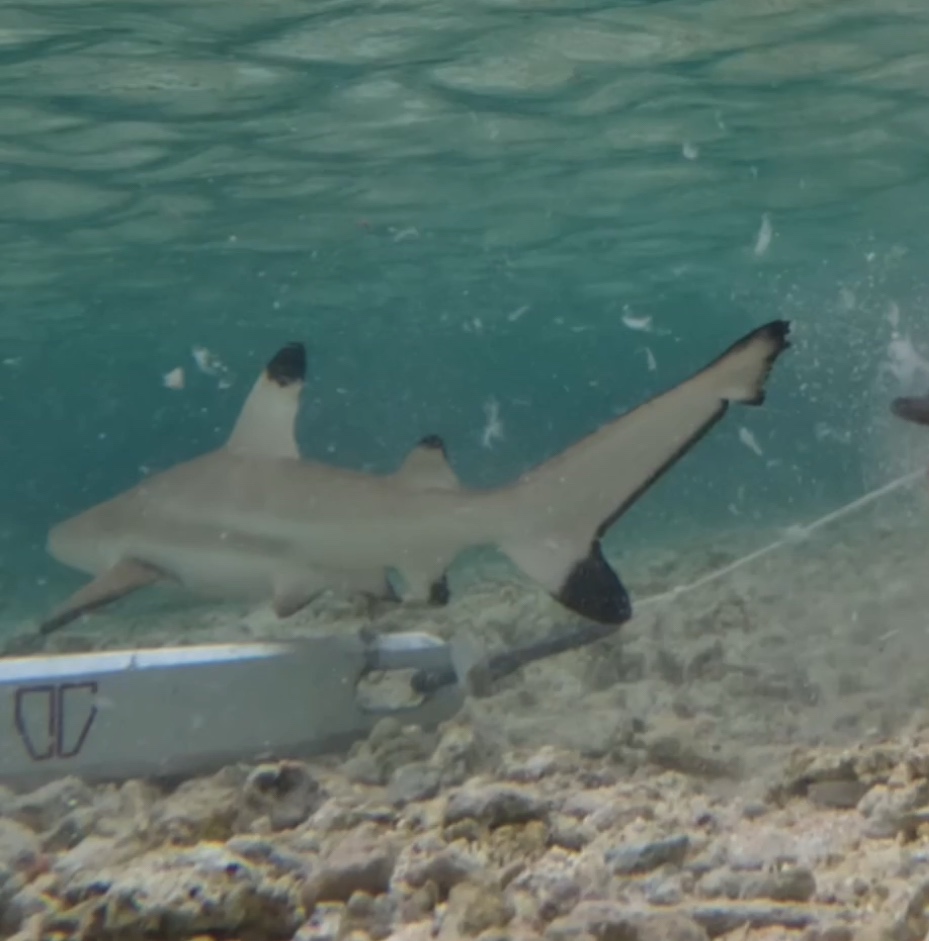
Fun with Sharks! Okay, we had a little time waiting on the weather, so let’s play! We gathered (chummed in) a few sharks in the back bay with some day old fish (no hooks) and did some filming with the GoPro(s). Big learning experience!!!! We thought there were only 10-12” babies in the back bay.
The first fish we put out was tied to a 5 lbs dive weight and worked just fine with the small sharks……well…..let’s just say that weight is gone…😳 The next fish we put out was attached to our bucket full or coral and sand. That didn’t last long either. I finally just put my foot in the bucket to keep the sharks from taking the fish. The next round, we got the stern anchor off Sea Bella and that worked great! These are all Black Tip Sharks btw……some much larger than the 12” we were expecting.
Hungry Baby.
Raroria was the last of the atolls we visited. For many cruisers it’s the first one to sail into from the Marquesis. Our highlights were exploring the Kon Tiki monument with our great cruising friends on Fundango, the huge pearl farm and of course our silly fun with the baby sharks. Our good cruising friends on SV Breakaway found these great Octopi:
Sailing through the Tuamotus was an amazing experience, but it was time to say goodby. Thank you for joining Scott and I online these past 6 months in 8 atolls (and Tahiti for repairs). It’s such fun to share our experiences with friends and family. We went on a sporty 3 day sail back upwind to the Marquesas for cyclone season (and for yummy fruit and fun mountains to explore!)
Since Scott and I chose to stay one year in French Polynesia, in early April ’23 we headed from the Marquesis directly to the Tuomotus. We sailed Sea Bella from Fatu Hiva, aiming as high on the wind as possible, sailed 3 days and landed in Atoll Amanu, a darling sleepy village which had the youngest Mayor in all of France. Two highlights; the children were so playful and engaging and the small reef in the middle known as Star Island was a colorful dream.
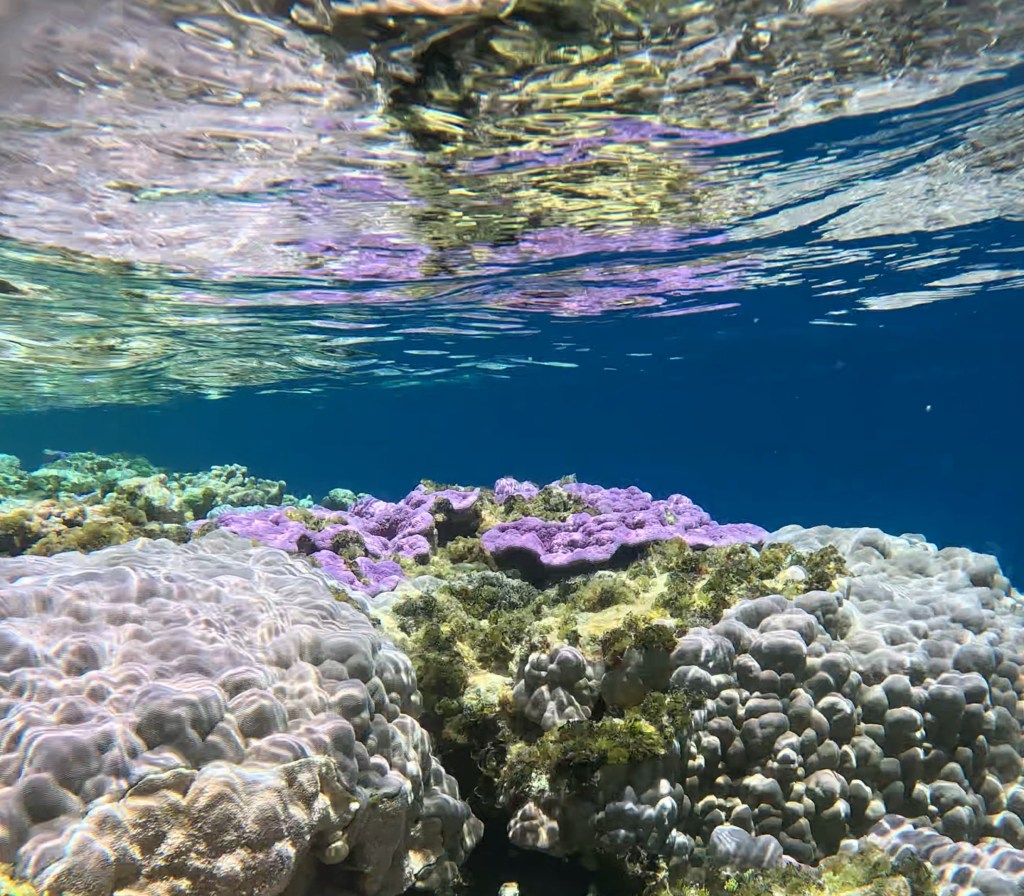
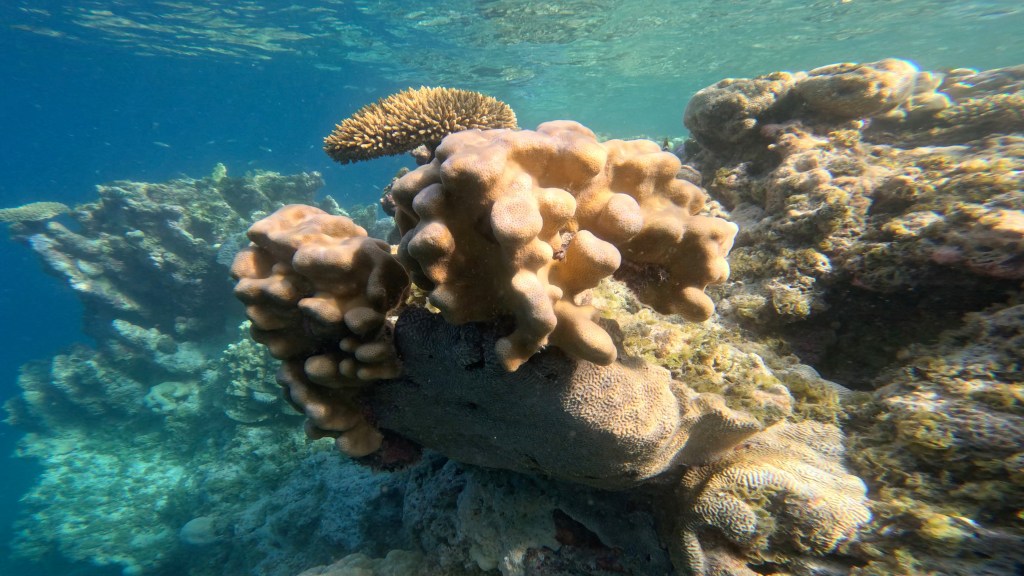
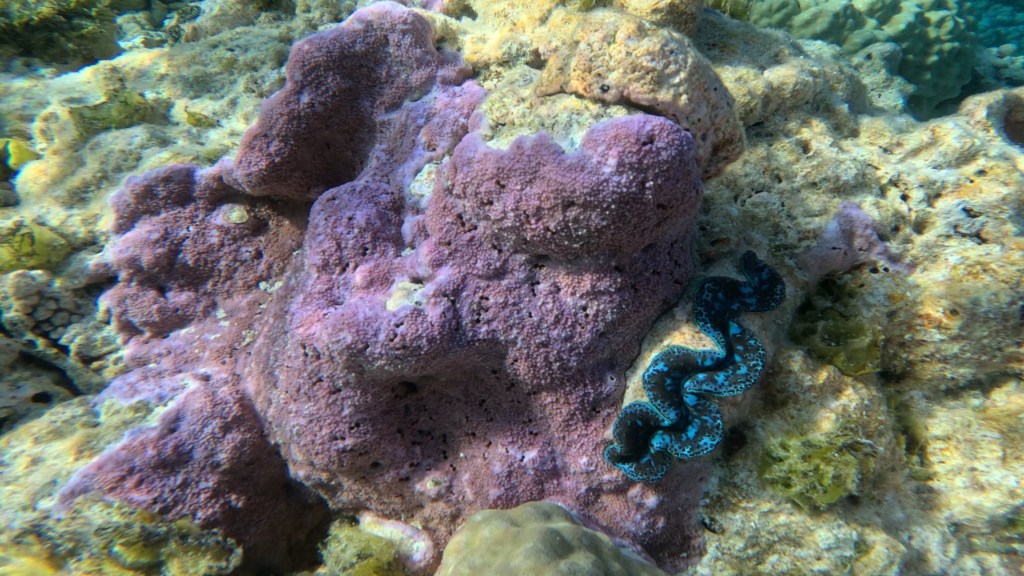
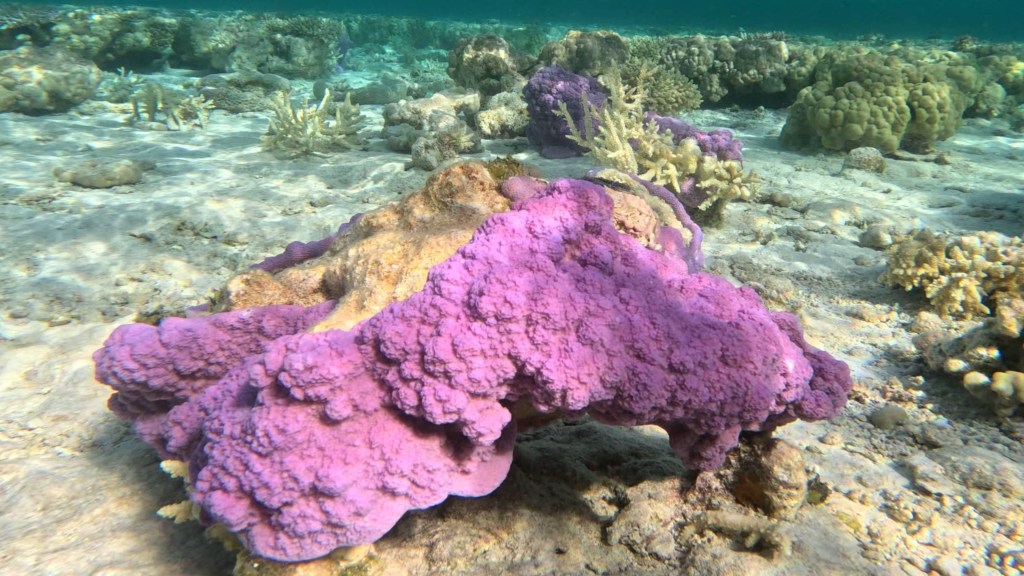
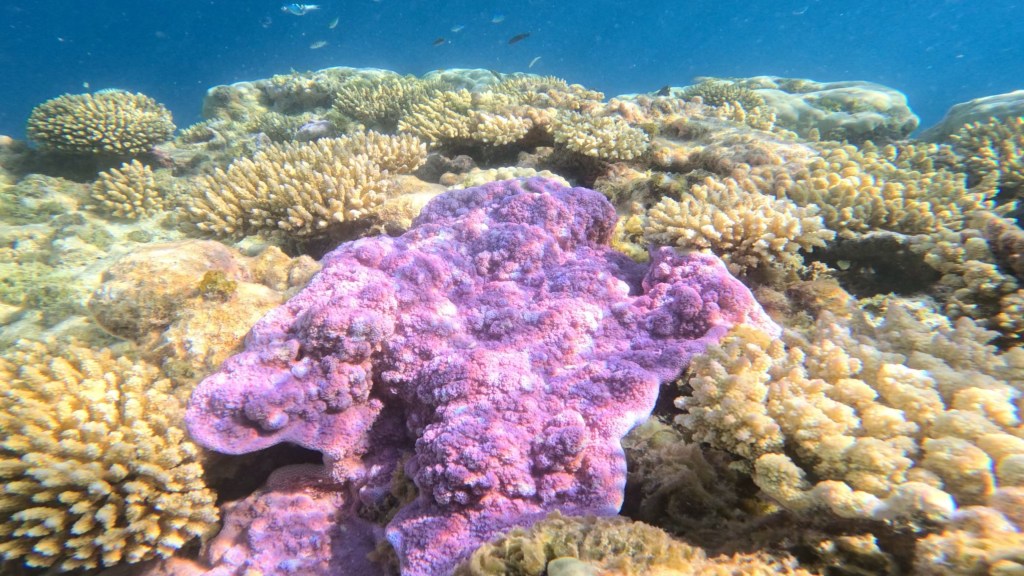
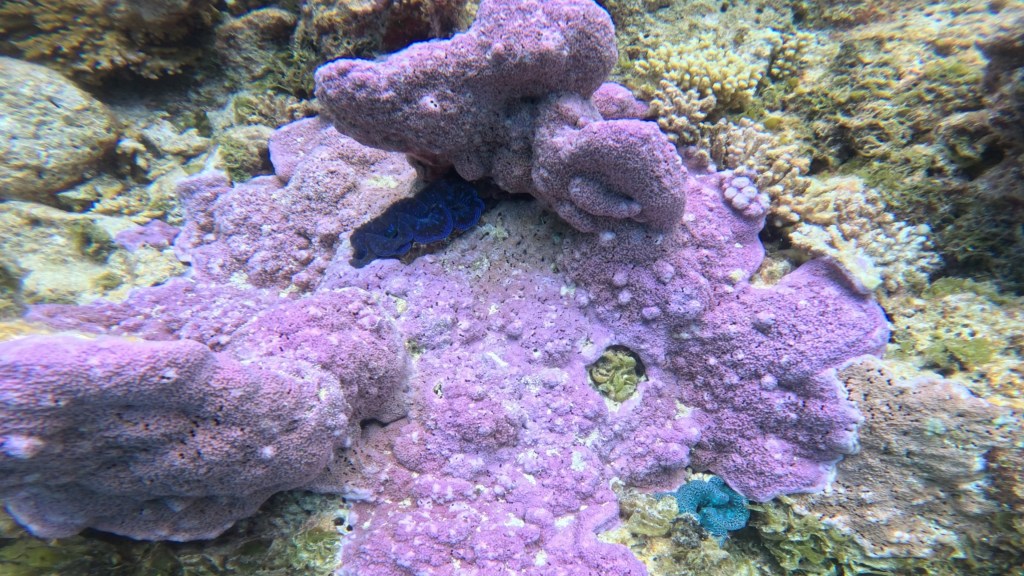
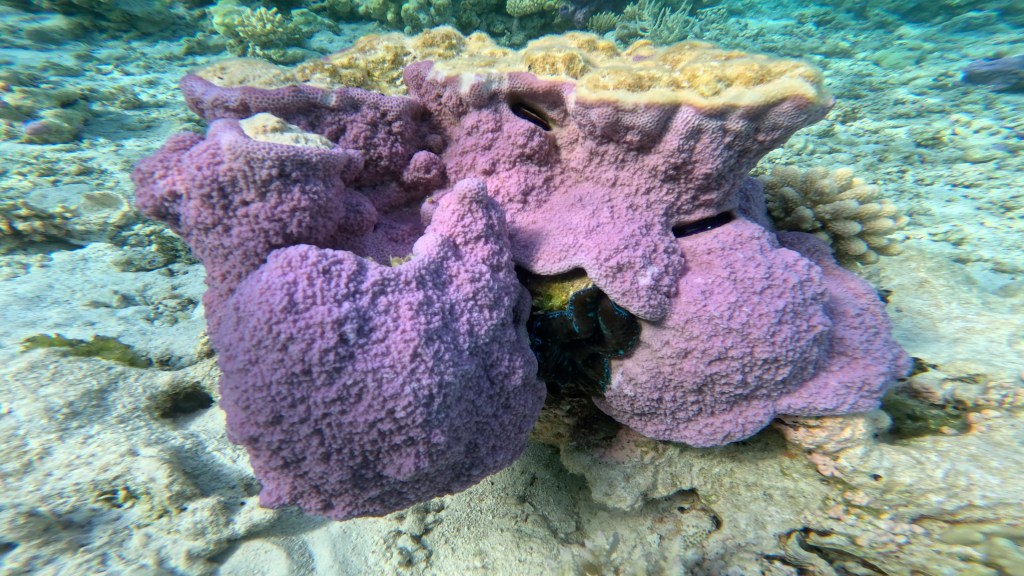
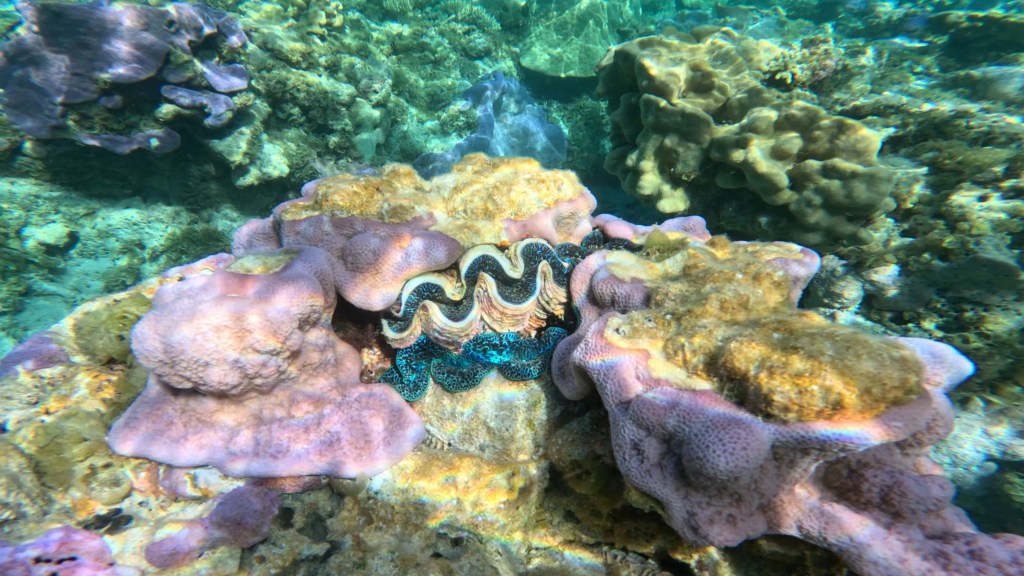
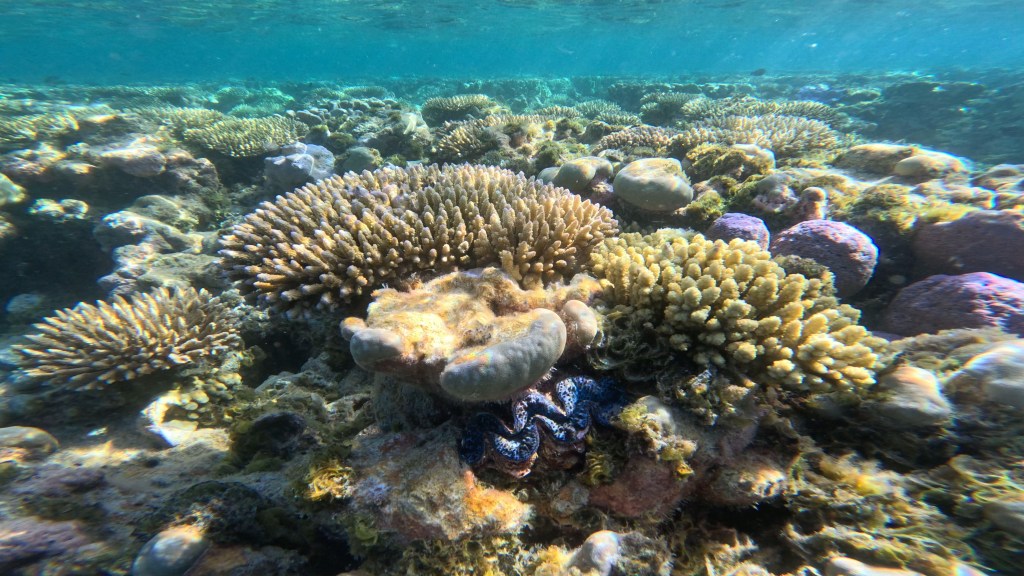
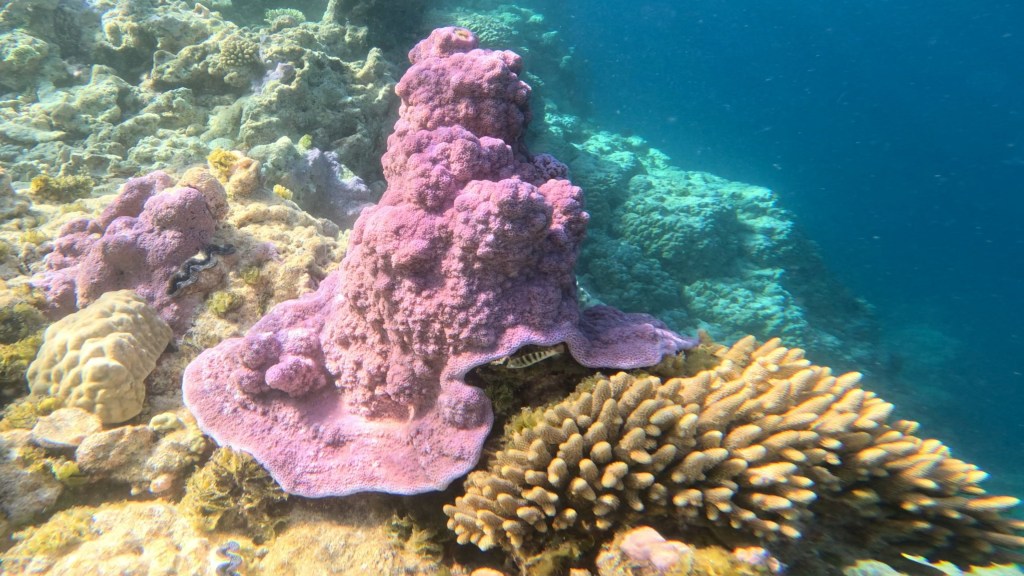
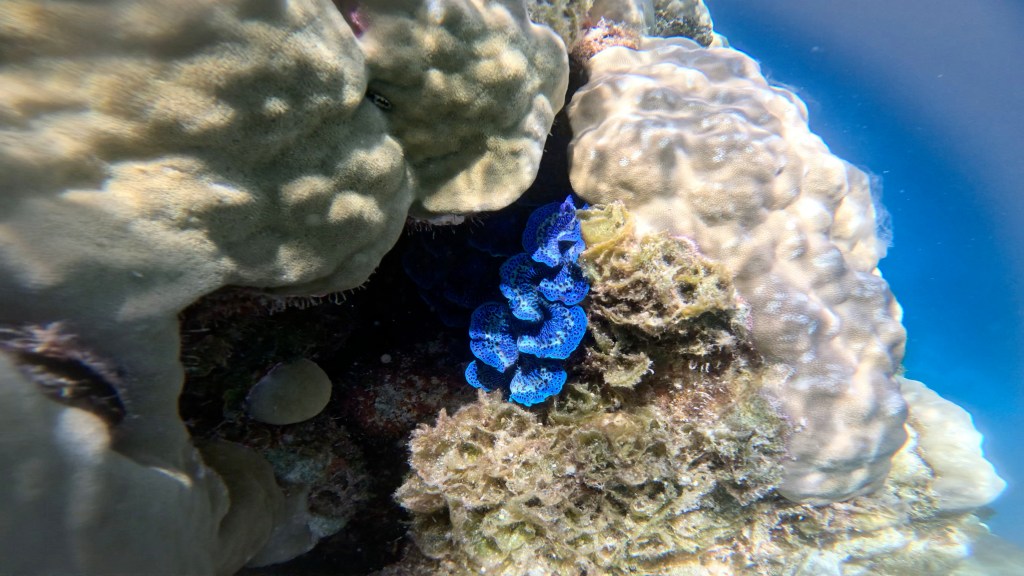
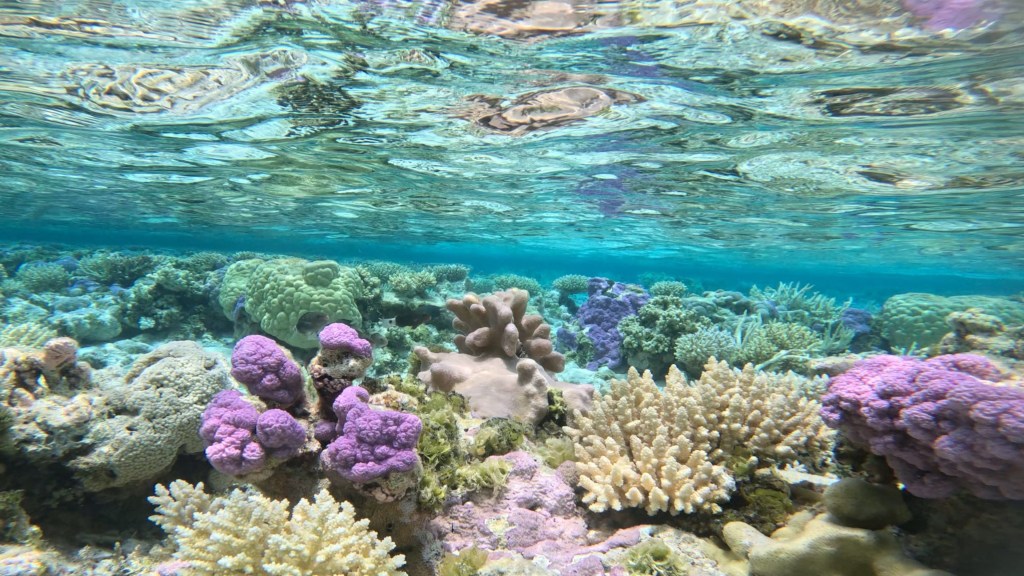
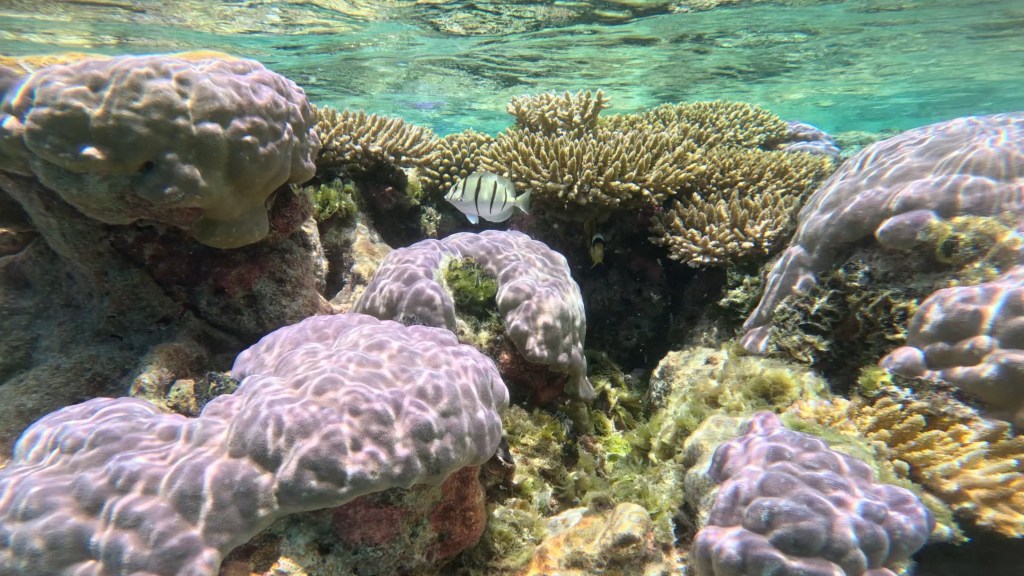
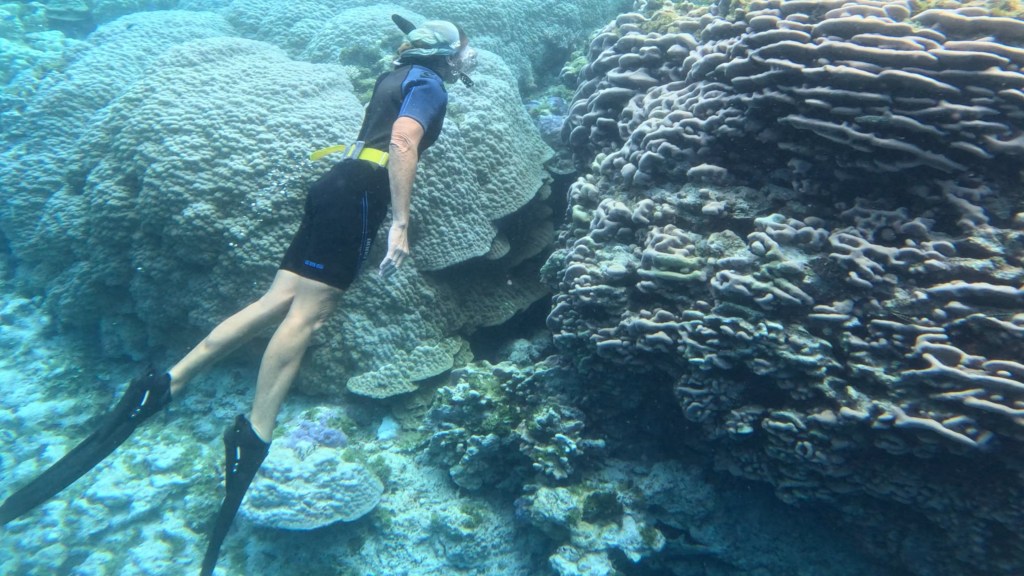
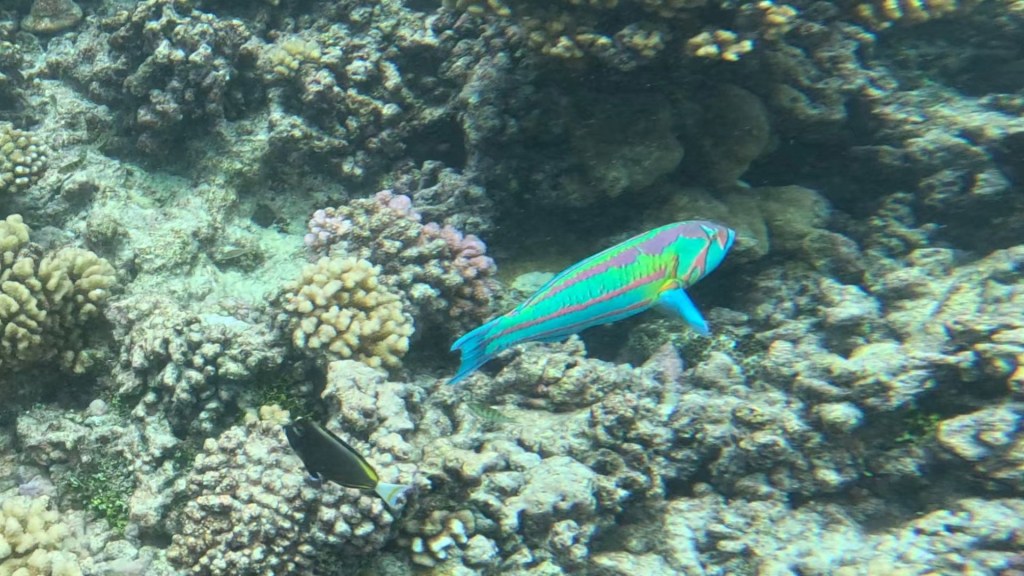
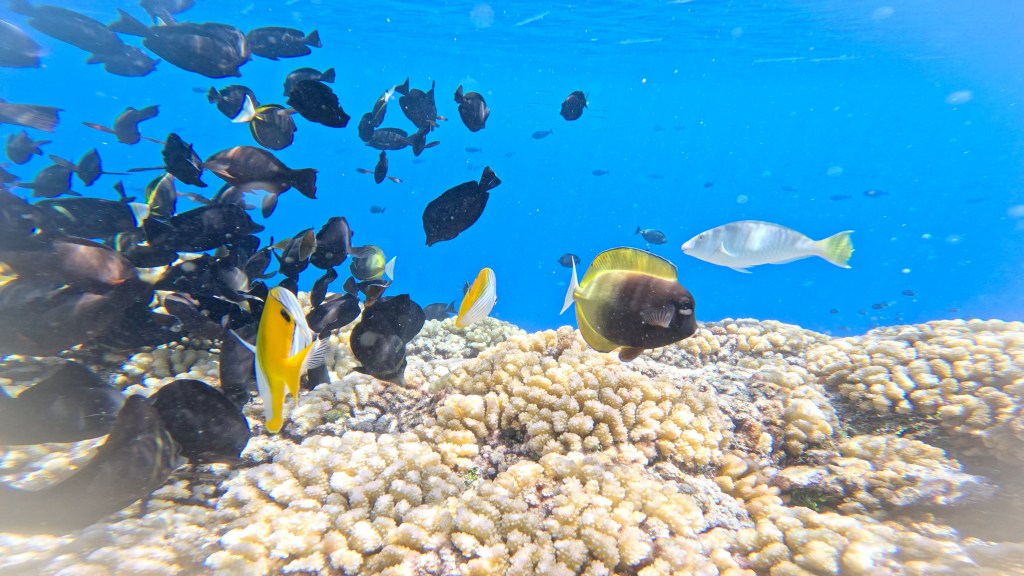
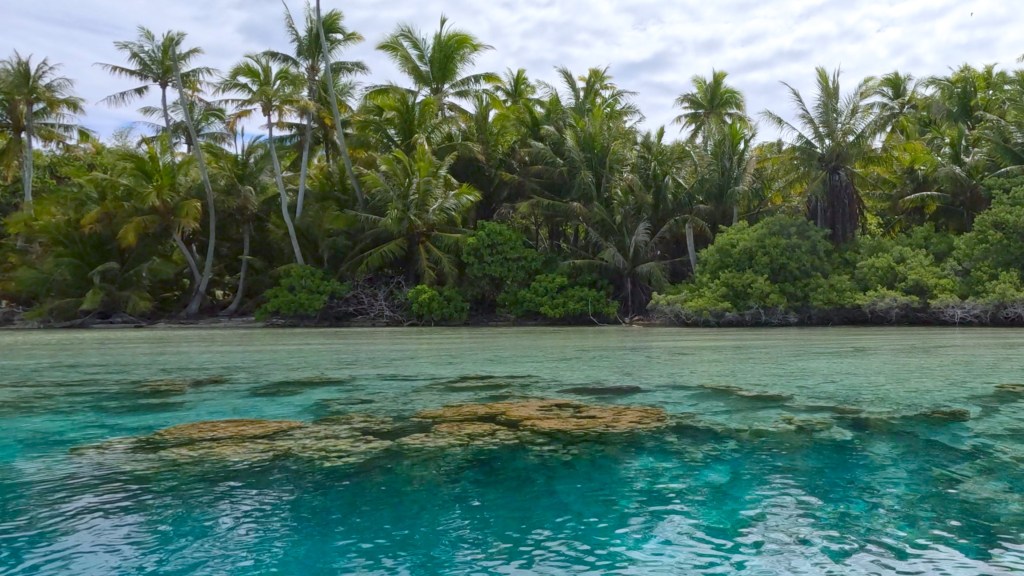
After a few weeks and not much for provisioning, we headed to the atoll Makemo, which also has a quaint happy town. This is our favorite atoll for snorkeling the many coral heads. Their colors and formations are vivid and just so healthy, not to mention the intense blues and purples of the clams. A quick change in weather had us running to a safe anchorage at the most south corner, but the fetch and craggy bommies were still an issue. Some boats’ had their windless’ break and others’ bridles broke, not to mention some lightning damage.
Ready for change, we had an excellent downwind sail to Tahanea with a few boat friends. What an amazing atoll for diving or drift snorkeling all 3 passes. The coral reefs were healthy and such fun to snorkel daily in. Its very important to always note the tides in the passes and snorkel on slack to incoming only. Enjoying the quiet anchorages with just 4-5 boats was pure bliss for us nature lovers, but it’s not for every cruiser since there is no support, village or local people to be seen.
Needing some fresh vegetables and fruit we headed next to the atoll Kaeuhi, which had a tiny market but nothing fresh. We stocked up on canned and frozen goods and found most of the basic essentials. This is typical in these remote islands with only one village of a few hundred locals, maybe 1 market, a bakery and 1 small restaurant. They don’t grow vegetables here because its all sand or rocky coral. A supply boat will come every week or two, but often that is not when you are at the village. Wind shifts occur weekly, possibly making cruisers take cover many miles away from town.
So, although breathtaking, we chose to move on to Fakarava, a well known dive spot of the Tuomotus. We spent 4 weeks at a must see anchorage Hirifa and a must do scuba dive spot at the South Pass. Most cruisers have their own dive gear, and its simple and cheap to refill your tank at the dive shops. Small guided boat dives are also available daily. Hanging out with 30-40 other International cruisers; diving, snorkeling, beach games, bonfires, wind sports all was an excellent time.
Again, needing fresh foods and since we had some lightning damage, we needed marine services in Tahiti, so went to the docks for a month. We found the mechanical services and supplies to be excellent. But, we did not care for Tahiti much, kind of a big city, pricey, very spread out with confusing bus schedules. After provisioning for another 4 months, we stopped over at marvelous Moorea and back to the Tuomotus.
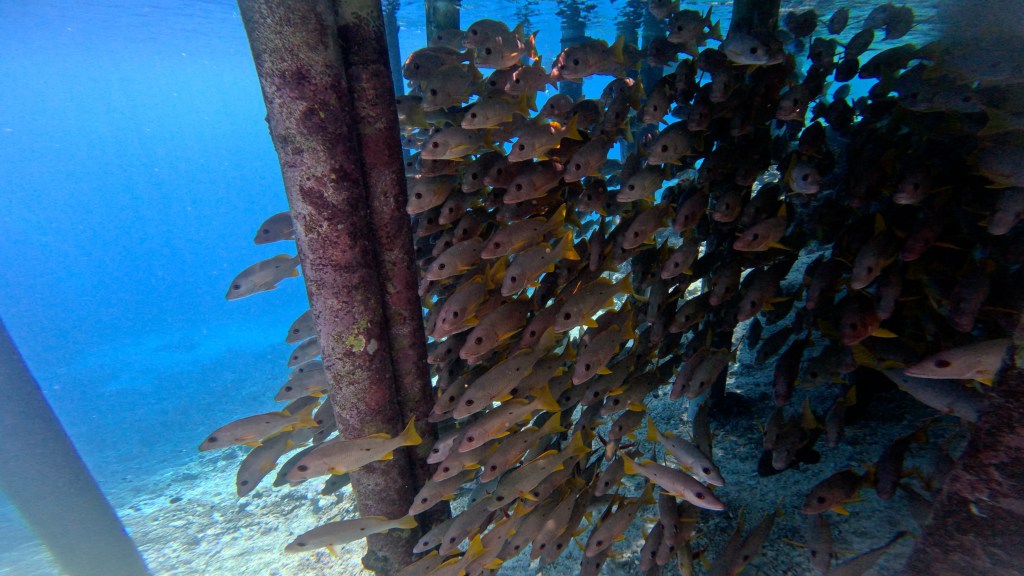
Our first stop was Tikehau for a week, unfortunately it was upwind, so we motorsailed. There are two must see spots, but possibly seasonal. One is a snorkel spot where the graceful reef mantas get their mouths cleaned by little blue fish. The other is an amazing group of thousands of fish just outside the pass. The best advise with finding the special secrets on the Islands is to ask a local, they are thrilled to help or even take you there.
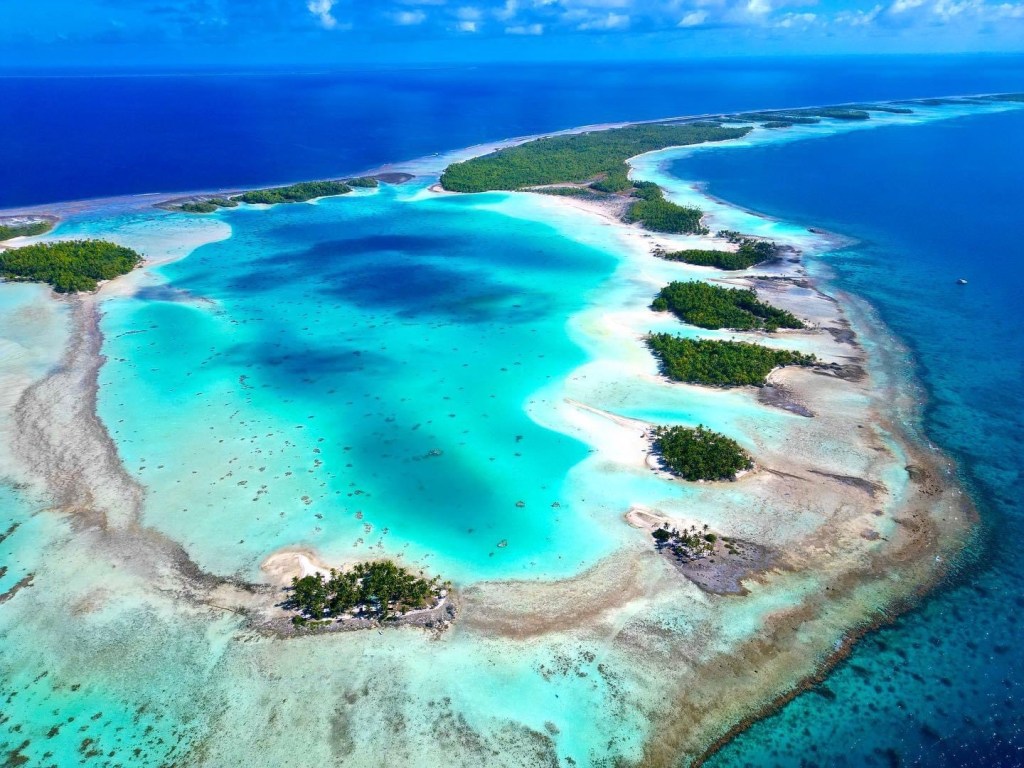
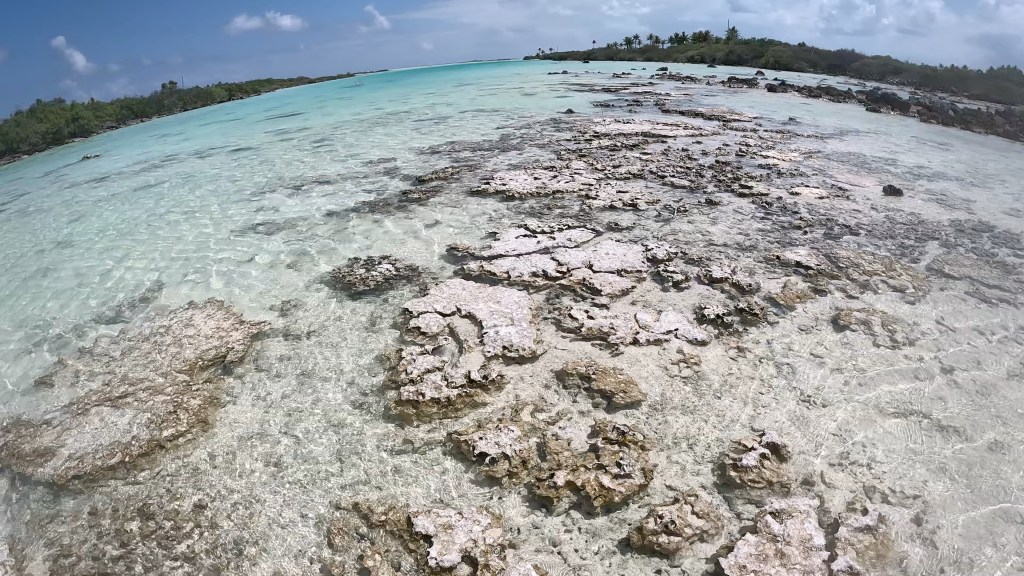
The next atoll on our list was Rangiroa, well known for its excursions. The majestic Blue Lagoon (below) was stunning and a dive with dolphins, who playfully jump in the waves of the passe. Again, we found the people, village, anchorages, beaches all a peaceful delight.
After a few weeks, we sailed upwind to Toau, pleasant, small, and simple. If you glance at a map of the atolls, you will notice they are mostly in a line that follows the trade winds. Good for going NE but more tricky to go SE. If a cruiser is planning on heading back to the Marquesas for storm season (which seems to be the most popular and safest option) route planning and weather watching is a must. Which is exactly why we island hopped back upwind to Fakarava (3 weeks), Tahanea (3 days) Makemo (2 weeks ) and Raroria (1 week).
Overall, these sandy atolls were very similar and we thoroughly enjoyed the slow pace, meeting the locals, swimming daily in 80 degree waters, and communing with the cruisers. Since the sailing season ends in October, it seems that most boats had either hussled on to Fiji or circled back to Marquesis for cyclone season. I learned that you can either cruise slowly or fast through the Tuomotus, but no medium speed due to their remoteness and the strong trade winds.
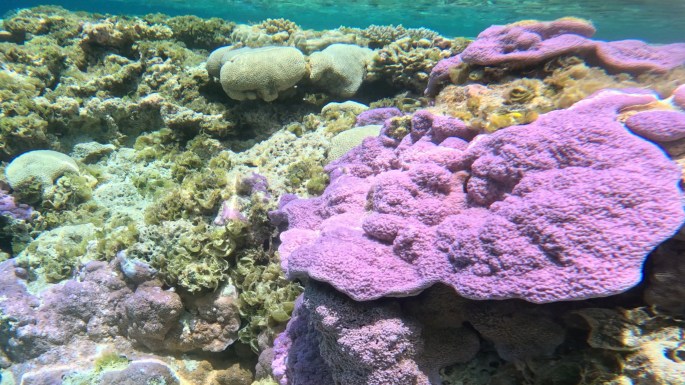
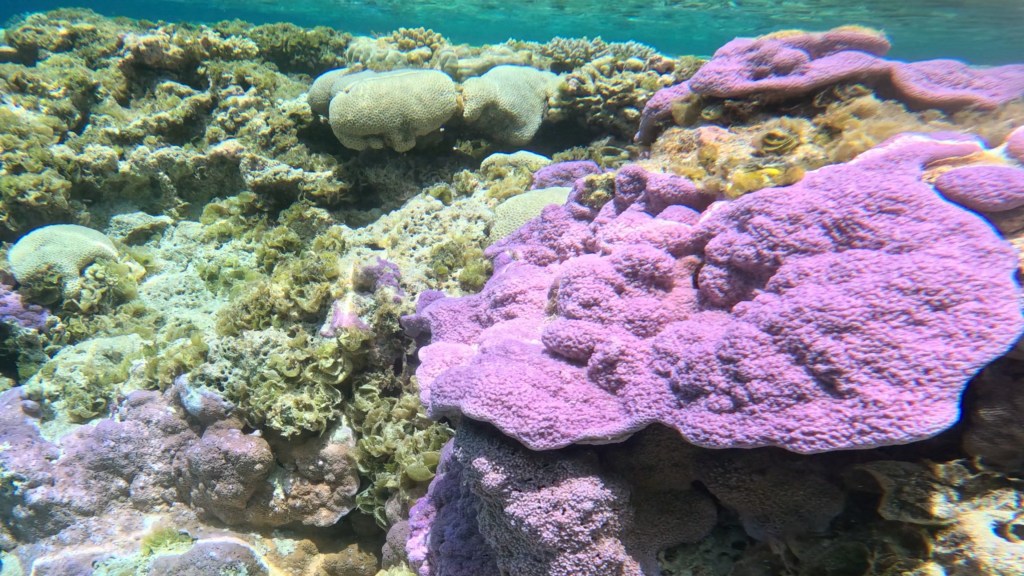
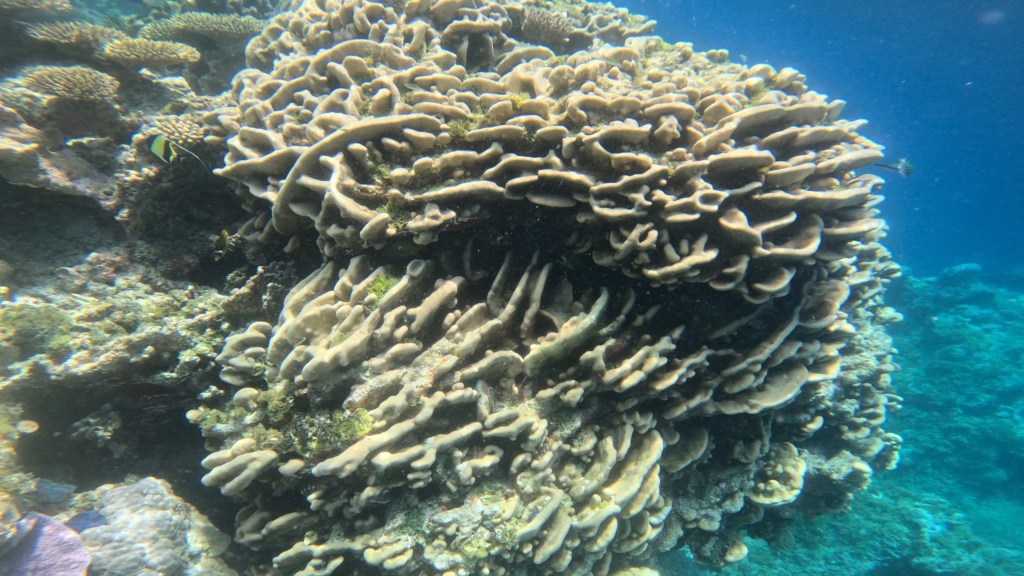
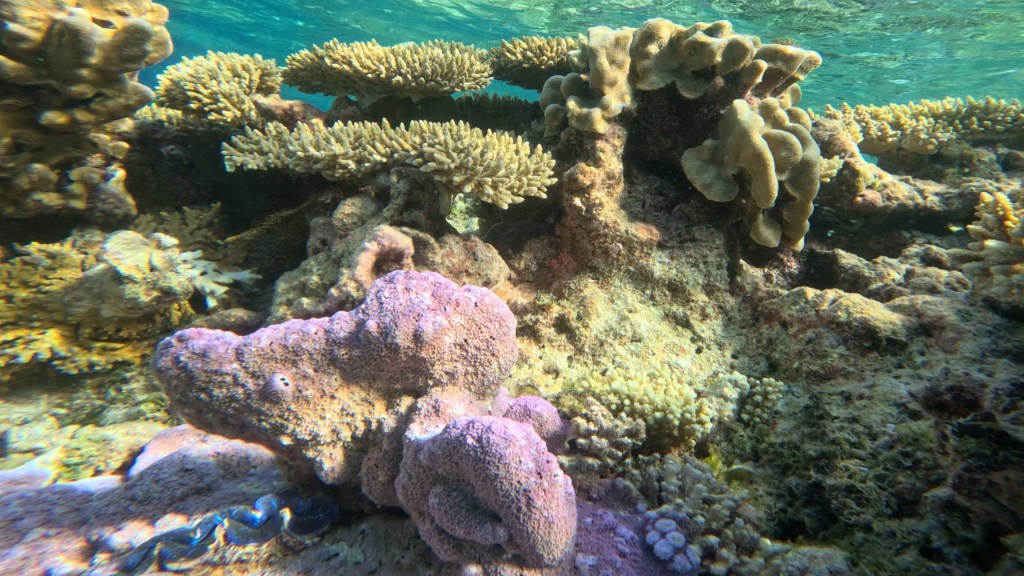
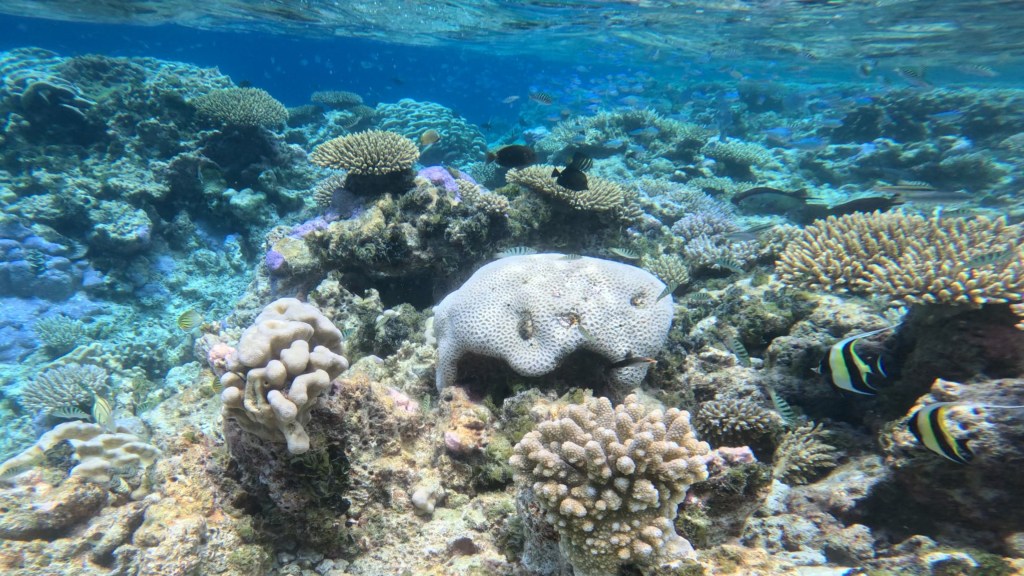
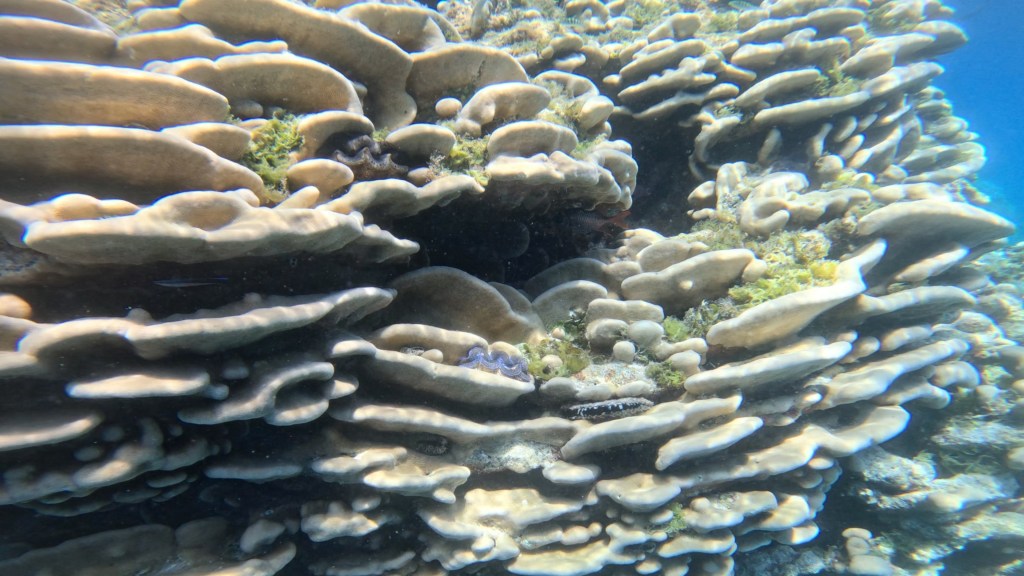
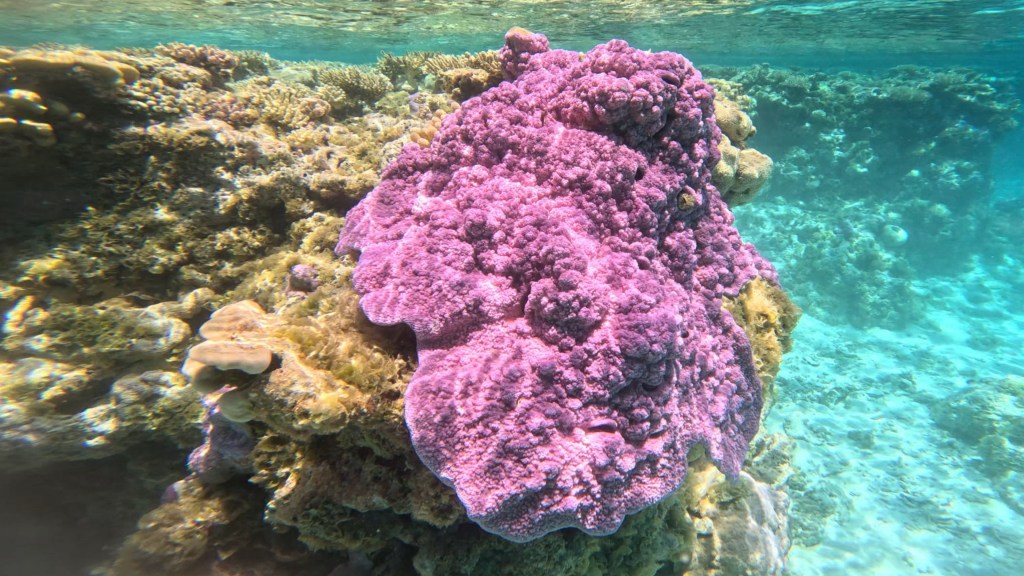
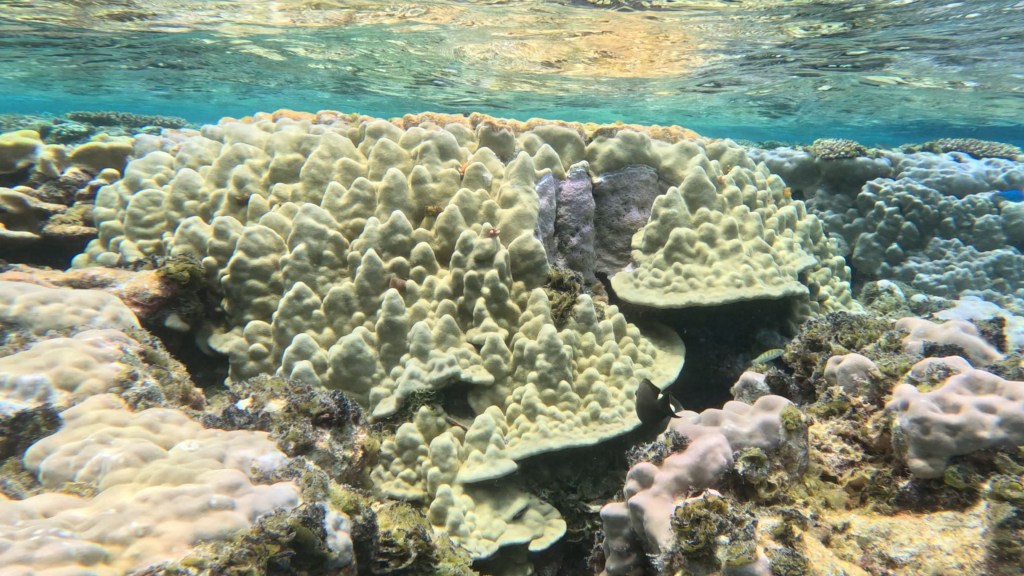
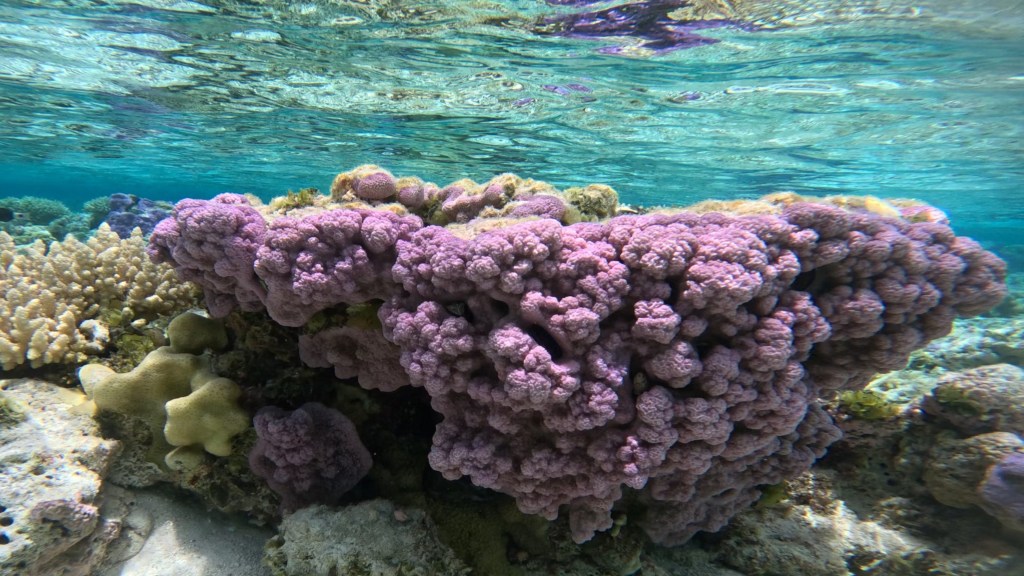
There is one special coral head in the center of the Tuomotu Archipelago Makemo that we were mesmerized with. We kept going back, again and again. Not sure why this one had so many more colorful and shapely corals, and huge clams than we have seen in the 17 islands that we have been to this sailing season. Below our video is (the photo dump).
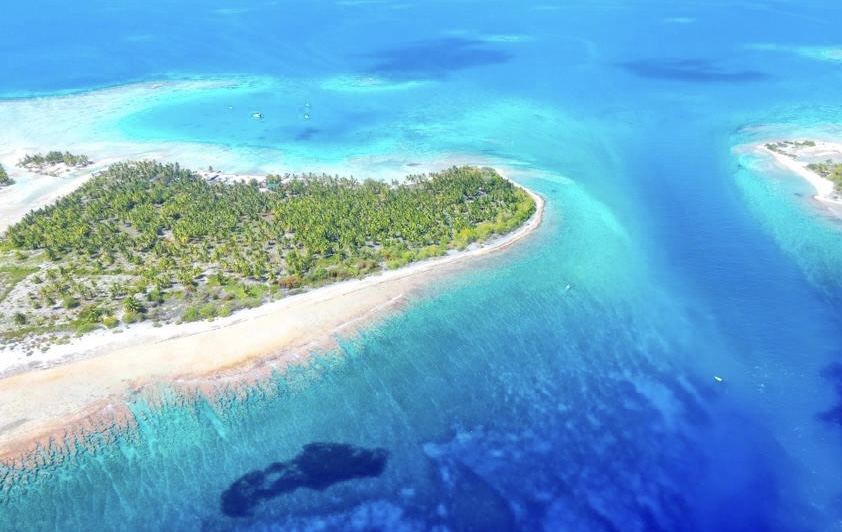
This feels like our Little Private Island…diving the wall outside the pass was breathtaking. We Sailed from Moorea and enjoyed a beam reach sail for over 175 miles. Beautiful, relaxing and pretty simple. Tahiti and the big city feel were nice for views, boat work and a bit of tourism, but we are now back in “our” sweet spot. Tikehau has about 500 residents, some of the best snorkeling in the Tuomotus…….and less tourists. Thank you friends on Idefax for the drone pictures. See the black blob? It’s the gigantic bait ball we dive with…take a look at the video!
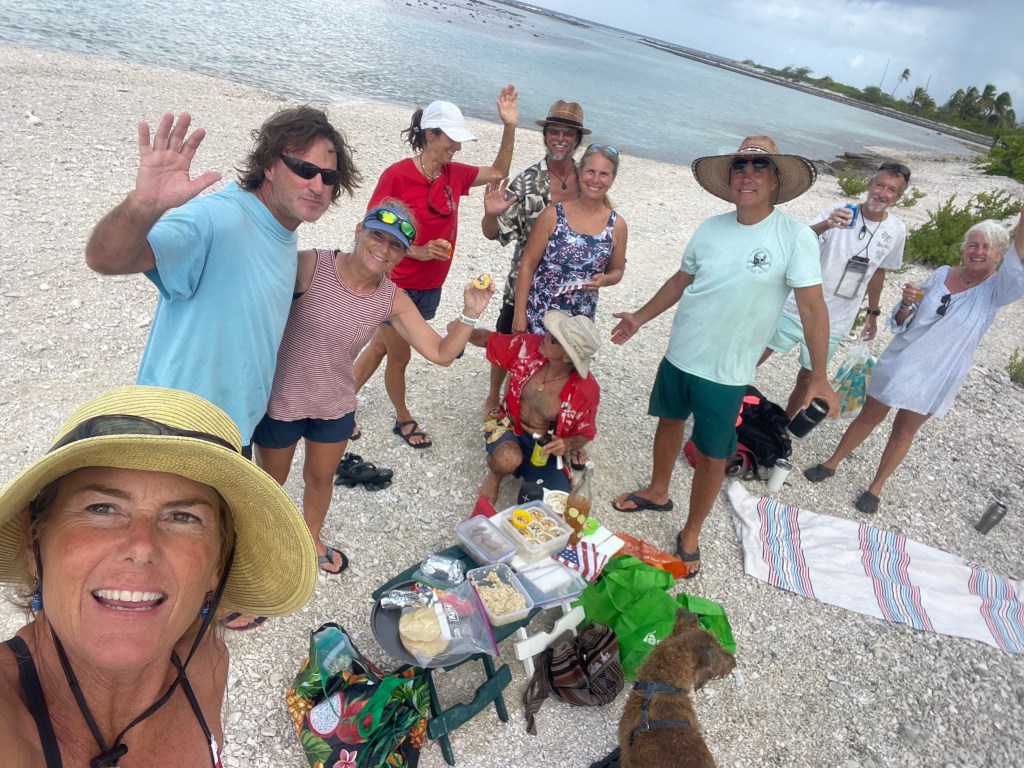
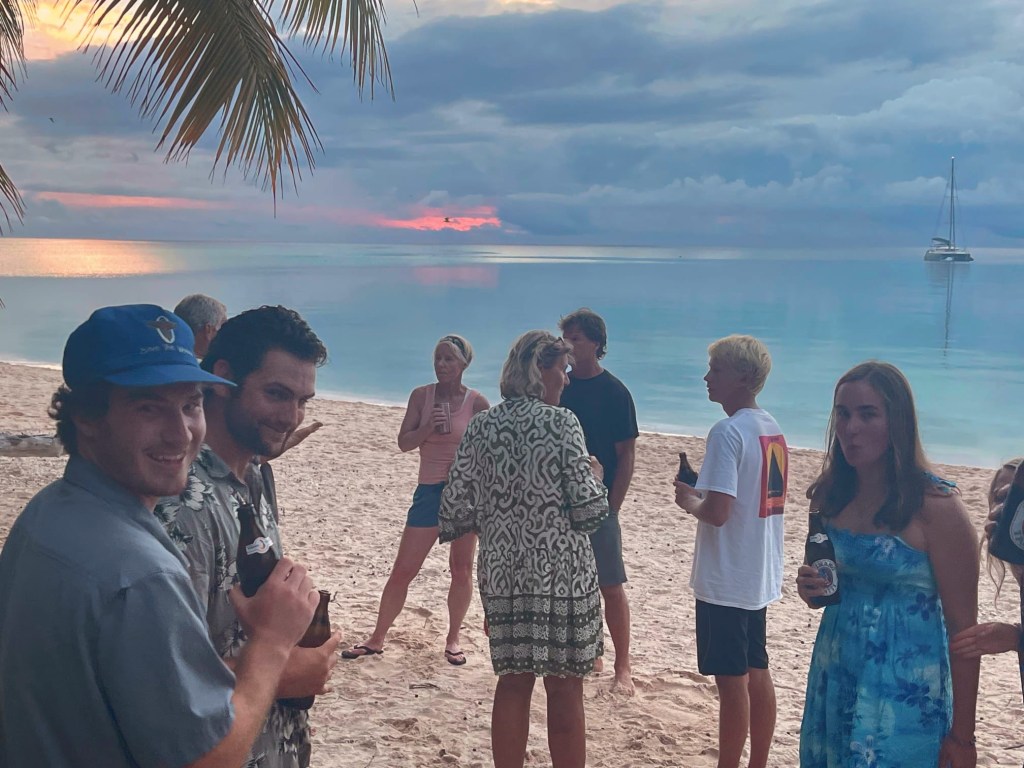
What are typical boat chores in the life of a Sailor in French Polynesia? At this beach sundowner the other night, I asked this question to a group of new and veteran boat neighbors.
A very typical schedule is ‘early to bed early to rise’. They report that most mornings, (unless sailing) folks do morning reading, research, family/friends communications, breakfast… Mid morning usually holds regular boat chores, homeschooling or maybe jumping on the “fix it” list of repairs or projects. Boat chores are jobs like varnishing woodwork, vinegar wipedown, polishing stainless, water making… and of course provisioning, cooking, cleaning, laundry (which take twice as long on a boat) Some “fix it” projects should require a marina, but that’s only if you are in Tahiti and French Polynesia is the size of Europe. A flat anchorage, with no big wind shifts, has to do. Hopefully, a sailor will have all the spare boat parts, knowledge and tools to DIY. Reaching out to others’ anchored near for friendly advise is always welcome.
Starlink is a huge help, for the ease of researching the web or making a call to a mechanic. By noon, most sweaty sailors are ready for a jump in the ocean, nap or time to explore. By about 5 pm cruisers (from around the world) are ready to gather up for social hour, to meet new friends, sharing stories, drinks and snacks, discussing weather, sailing, projects, local news, travel ideas… So, I gather from these cruisers and others, that every day is kind of the same, but the people and places make it quite a unique lifestyle. Now for some fun shots and a video of Fun Times on our afternoons this month.
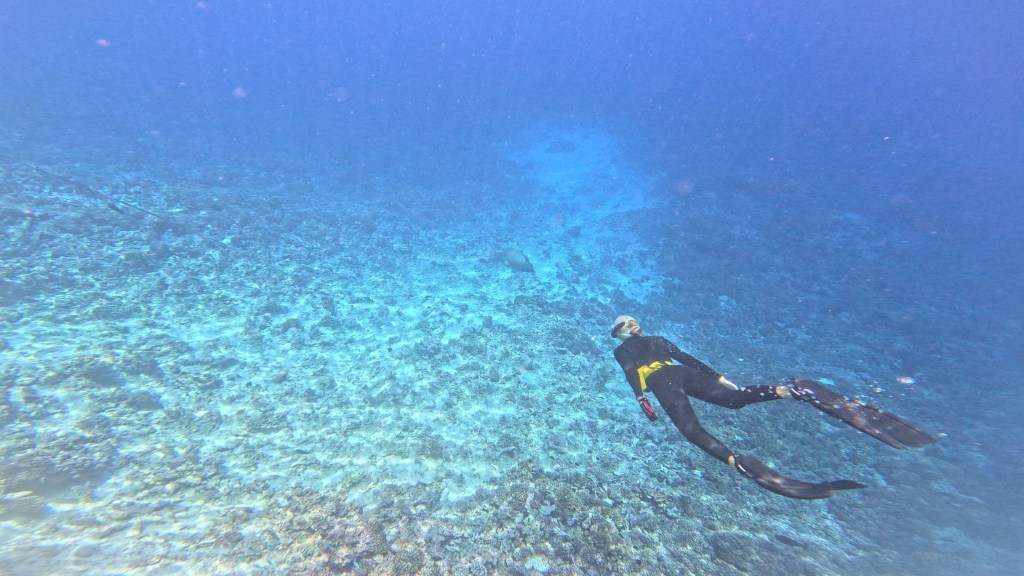
This beautiful green sea turtle just woke up from her nap, and, wow, what a graceful morning flight she had. She glided effortlessly in the incoming currents of Fakarava South Pass without any worries or fears. The grey sharks are her neighbors and the warm waters is her haven. All that glitters is gold for sure! (Turn up the volume) The favorite find is the octopus,
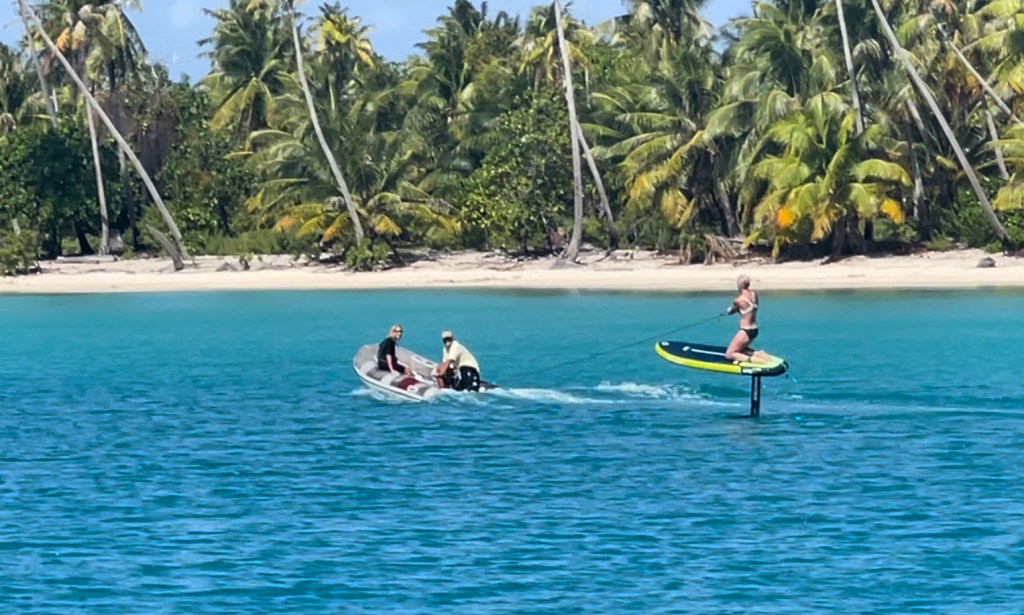
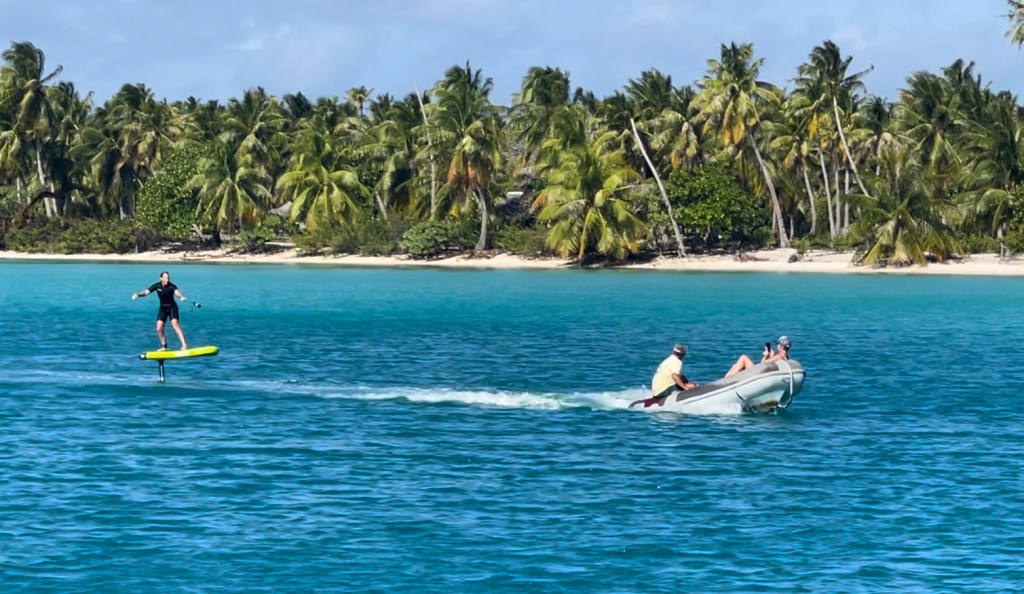
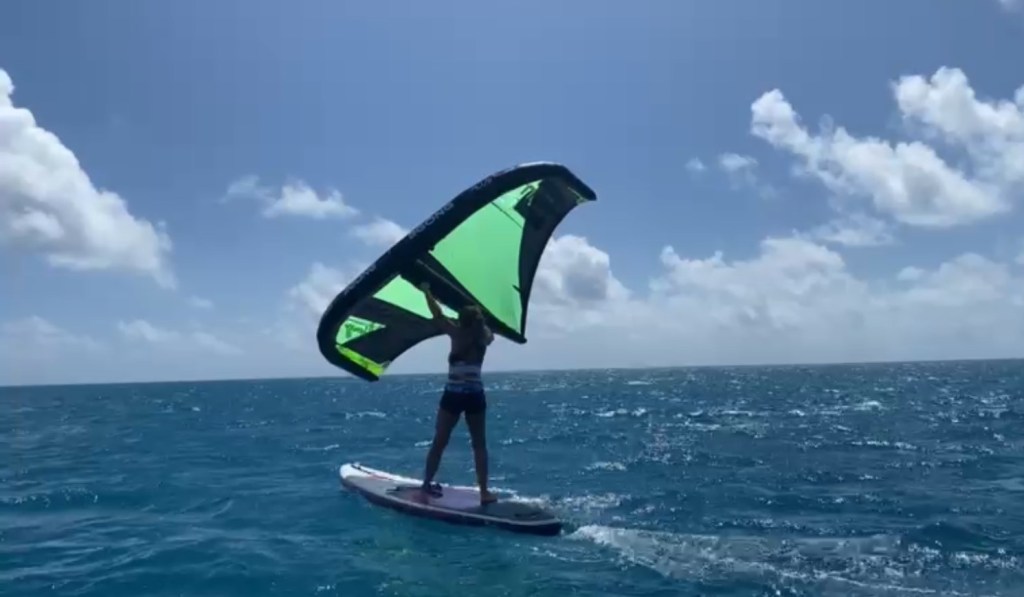
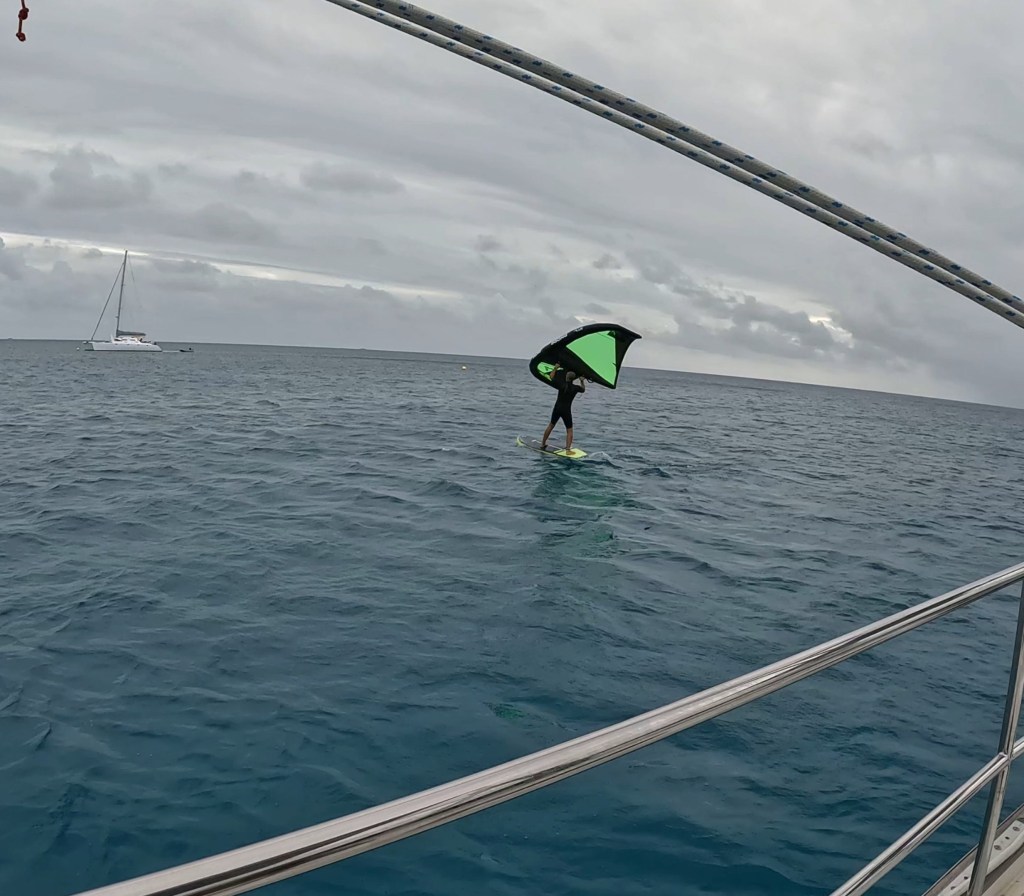
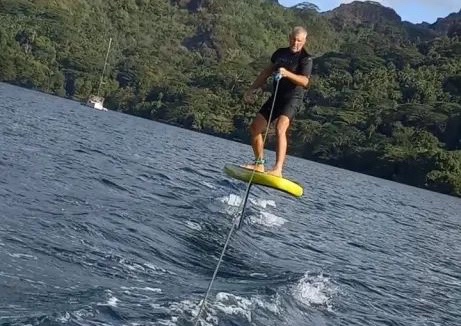
We had a good time in the atoll Toau. Pretty island, but it wasn’t too sunny. Plenty of wind for our new sport of wing foiling. It seems a bit safer than kite boarding, but tricky to learn.
This actually a shot from Moorea
We also invited a sweet local copra farmer out to the boat for crab and pasta dinner. He is 30 yrs old, lives alone and beach walks with his dogs a few miles to the neighbors hut up the way. Marten’ also often goes out lobstering at night which is still on our ‘to do’ list. I her it’s tricky on the outer reef with sharp coral. He said he would carry the lobsters back in his backpack.
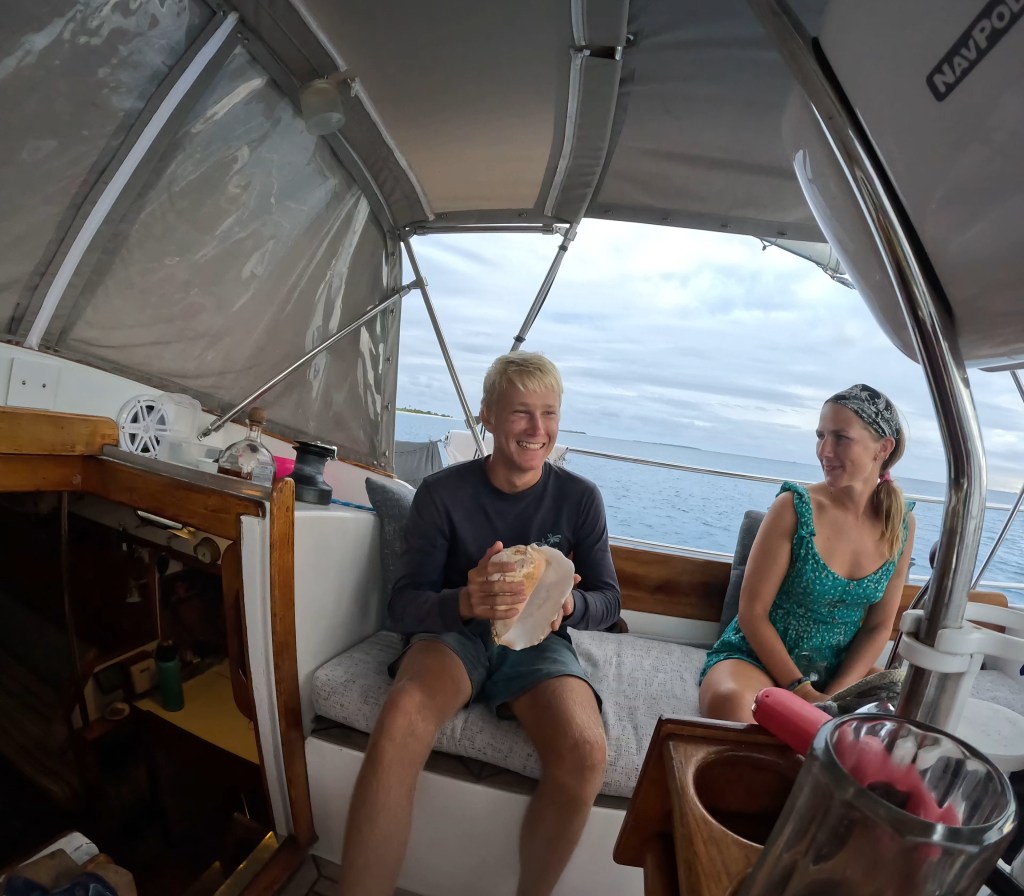
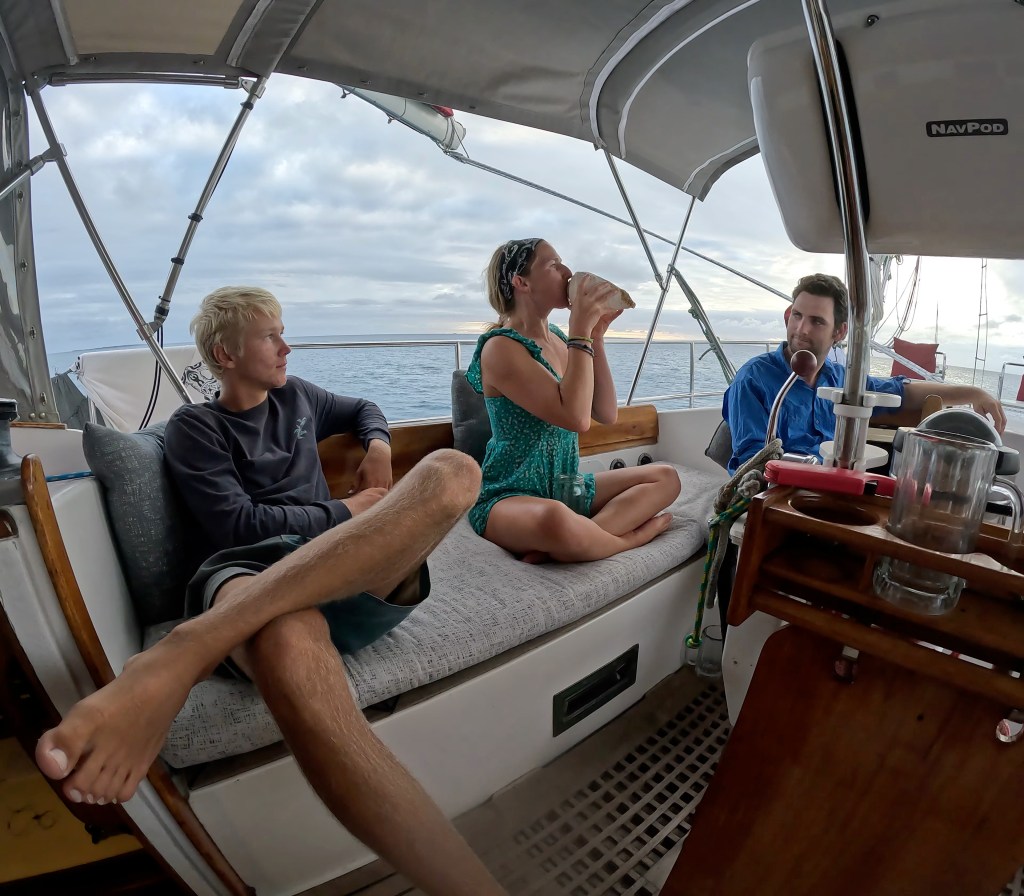
It was also very cool to meet young sailors on SVGenesis and Garrett on SVHulligan both sailing here from Hawaii. We had them over for sunset conch blowing and spaghetti dinner. We always like to share our Mexican cruising traditions.
Garrett in front and Ky and Noah in the stern.
Garrett is 19 years old. He recently sailed solo 30 days/2300 miles from Hawaii to Tahiti on a 27’ boat. At 16 he had saved enough money to buy his boat and then spent 18 months getting the boat ready to sail. After learning how to sail it around the Hawaiian islands he made the “big jump”. His last 3 videos have had quite a few views (1.9 mil) and now he enjoying French Polynesia on a few YouTube dimes. We hope to see him often as we have a similar plan to sail west in the next year. No goal is too big!
Here is link to one one of his videos below. A bit raw and unproduced compared to many YouTube publications but he’s keeping it real.
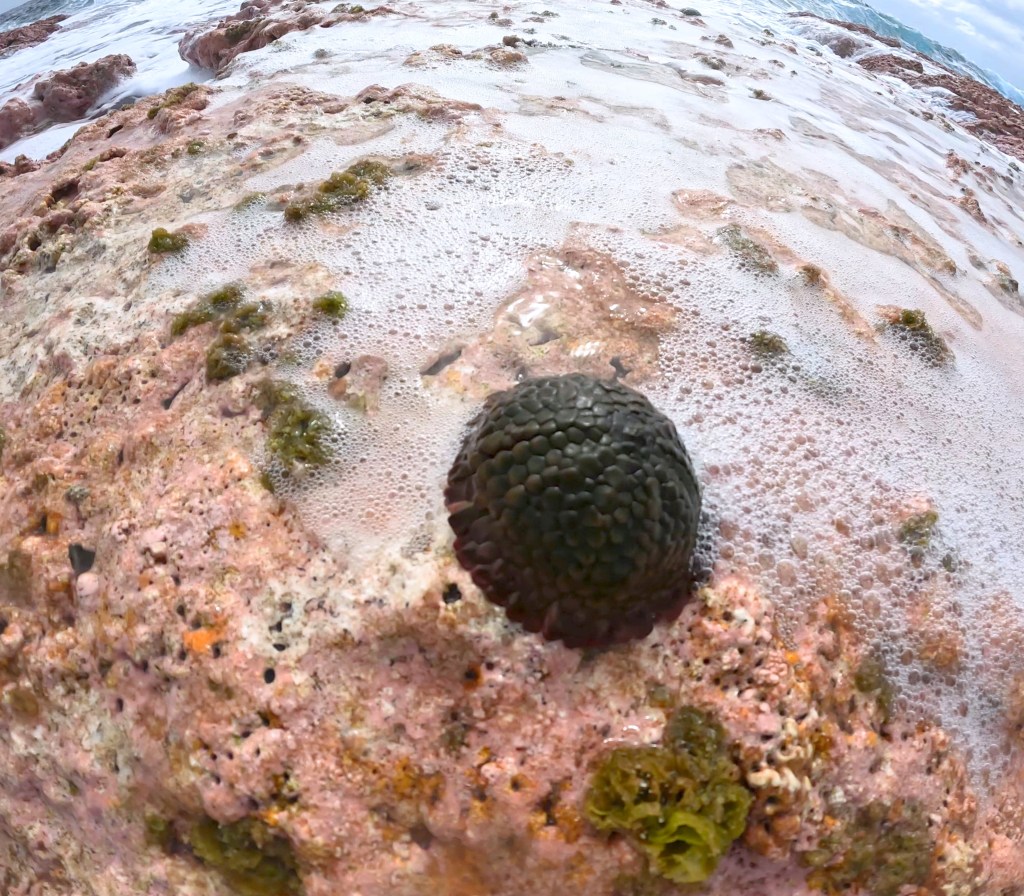
And, of course, we took many beach walks, it’s always fun to try to identify the strange new creatures. The black worm looking things are actually sea cucumbers. The second photo is yet to be determined. Both were found in the coral tide pools on the outer reef. Kathy’s favorite shelling place.
Navigation at its most extreme in these parts. There are no paper charts, no depth soundings and no navigational marks in sailing apps such as Navionics. In and aound all these atolls, you can see coral heads or “bommies” as they are called out here in Polynesian waters. You can clearly see the coral heads all about.
In and aound all these atolls and anchorages you can see coral heads or “bommies” as they are called here in Polynesian. A respectable and necessary practice here is to float your anchor chain, floating above these bommies, with 4-5 floats. Also important, most cruisers download files called OpenCPN for the coral heads and a crew is always on lookout (best if it is sunny and daytime). Satélite imagery is the key to sailing in the Tuomotus Atolls, since it’s some of the most remote place in the world. Cruisers rarely, if ever, traveled these atolls until recent years when satélite imagery was married to GPS positioning.
We use downloaded files called OpenCPN and of course our eyes. Satélite imagery is the key to sailing in some of the most remote places in the world. This location was inside the east side of Rangiroa, French Polynesia. Cruisers rarely, if ever, traveled these atolls until satélite imagery was married to GPS positioning. We travel areas like this only when the sun is at its highest so we can see the coral heads and white reefs. If it’s an overcast day, it’s a no go. Thank you friends on Fundango for the drone shots. Sea Bella will be getting her own drone later this year.
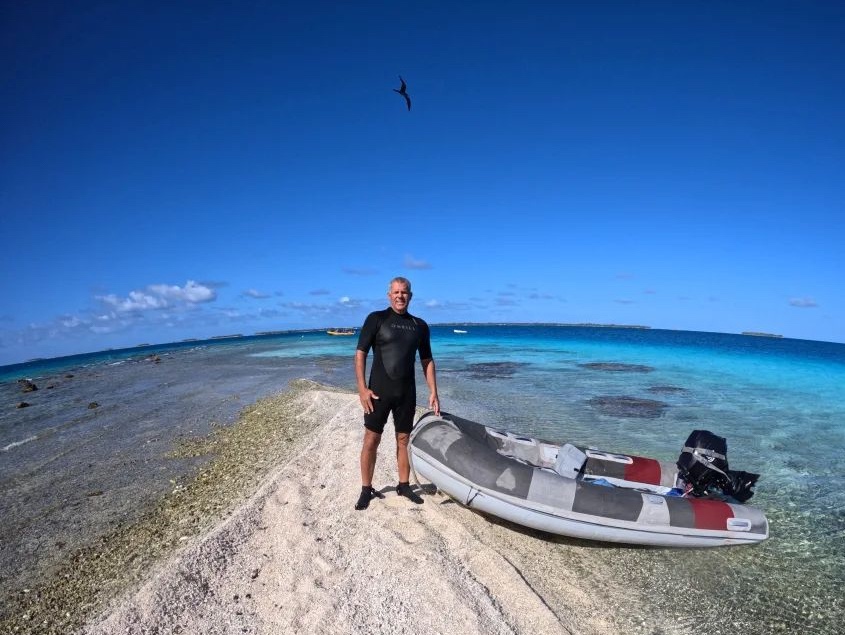
When we go exploring about in the dingy, we both are on a keen look out for these bommies, but also for the shallow waters and sand bars that are in front of the Motu inner islands. The outboard motor can be lifter into 3 different positions, when at its highest working position we draw about a foot. This is when one of us gets out to walk ashore.
We had shorty wetsuits for our long afternoon of snorkeling.4th of July beach party, Fakarava.
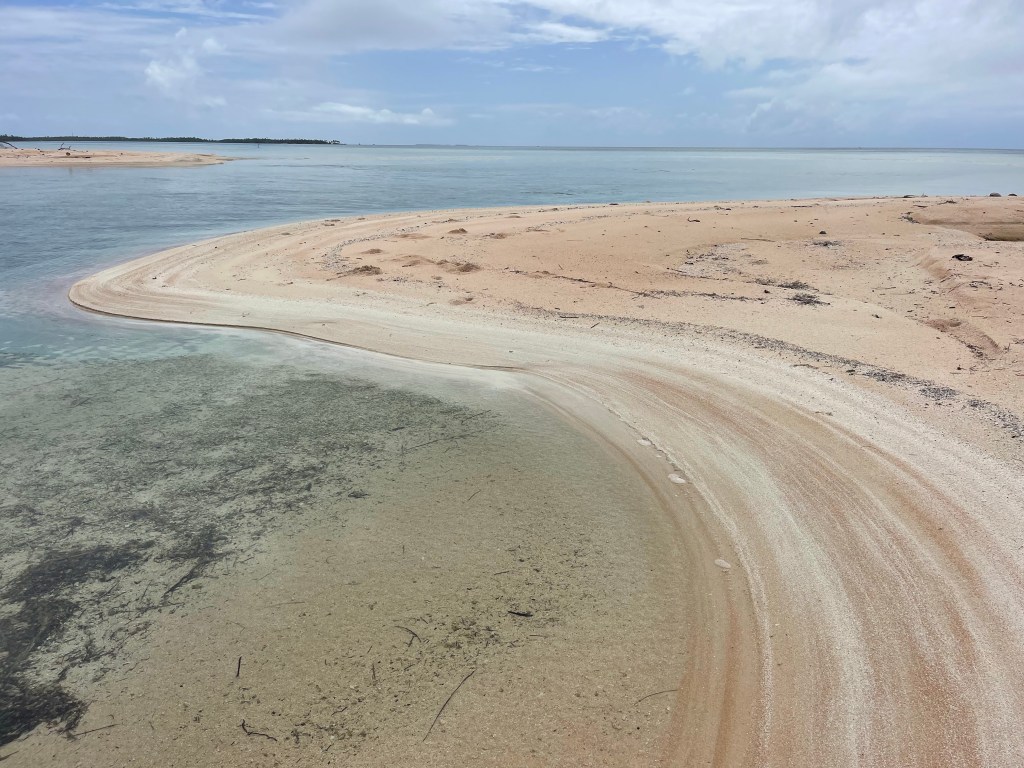
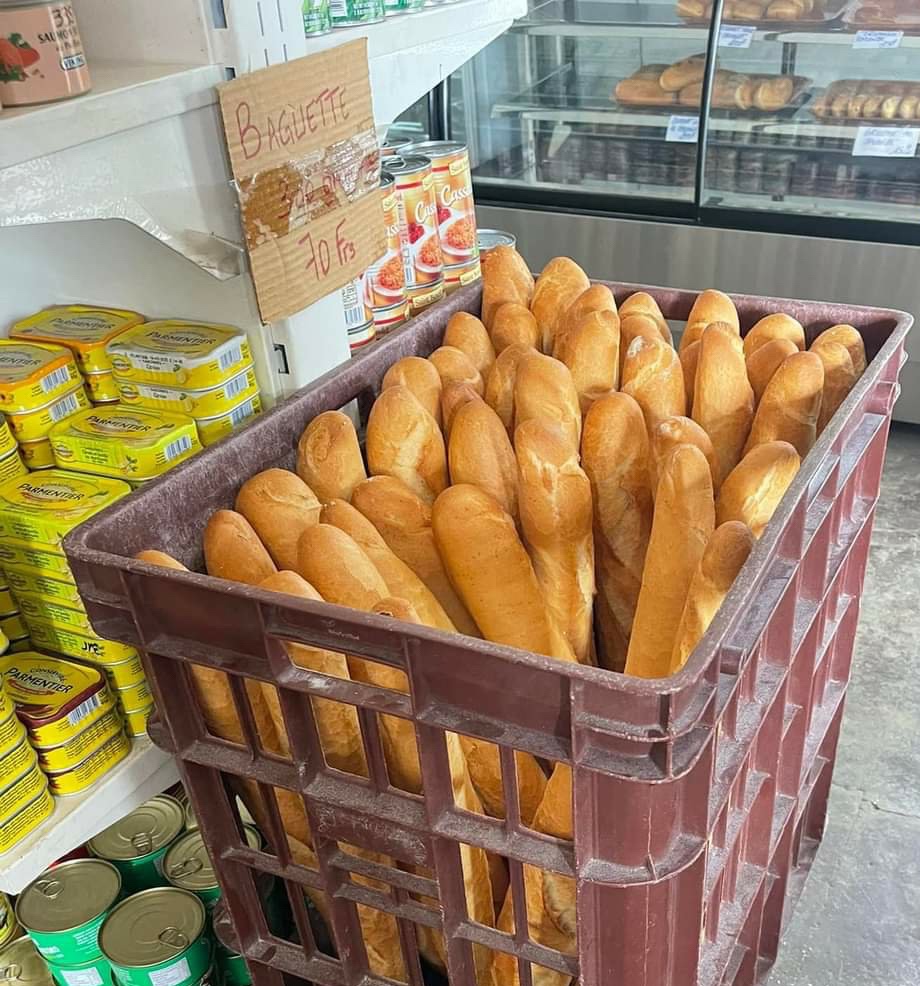
Sailing the French Polynesian waters of the Tuomotu Archepeligo is an amazing experience. Scott and I have spent most of the 6 month sailing season in and around about 8 Atolls. If you glance at a map, you will see these islands are all similar and mostly aligned with the SE trade winds, which makes for excellent travel in this direction. Our experienced was fabulous; the beauty of the pink sand beaches, reefs, sunsets, and sealife are remarkable. Most Atolls in the Tuomotus are very remote and only have a very small village with maybe a market or two. Shipments of foods and drinks come every week or two from Tahiti. Buying the French baguette or croissant is the excitement of the morning and a cruiser is lucky to find a few fresh vegetables or fruit. The people here are very friendly and helpful. It’s really a happy place. Although again, it’s very unusual to find fresh produce, so stocking up with canned or frozen is important.
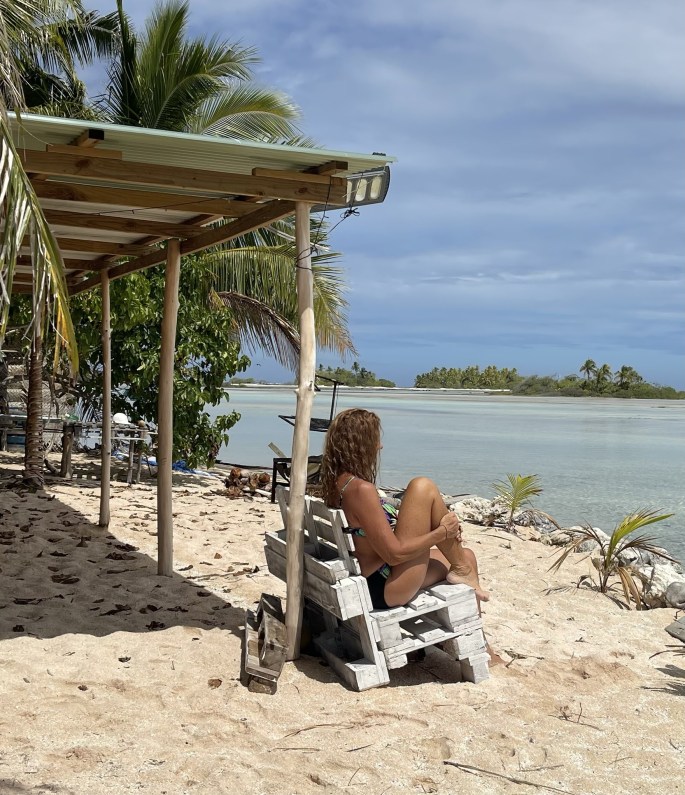
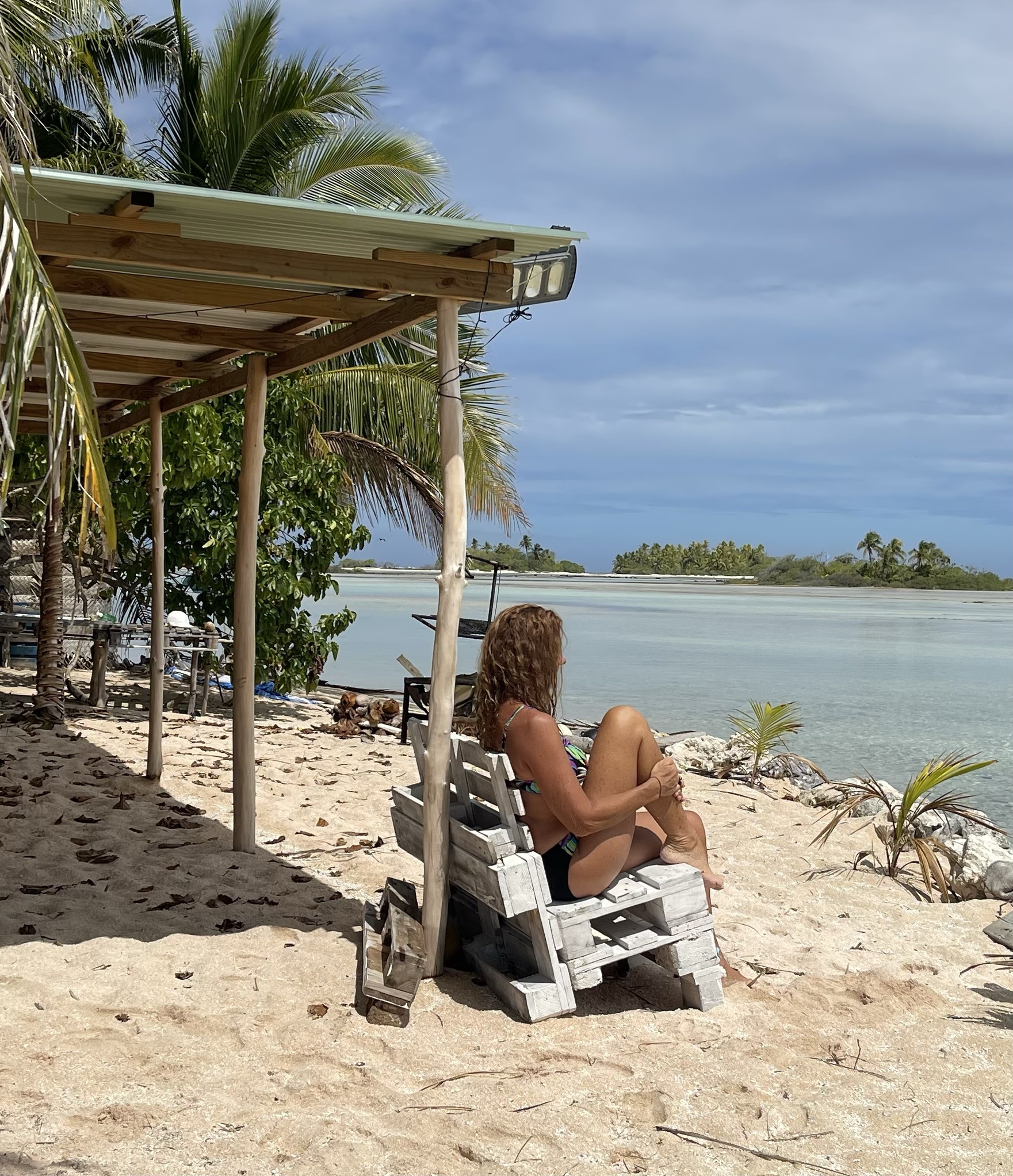
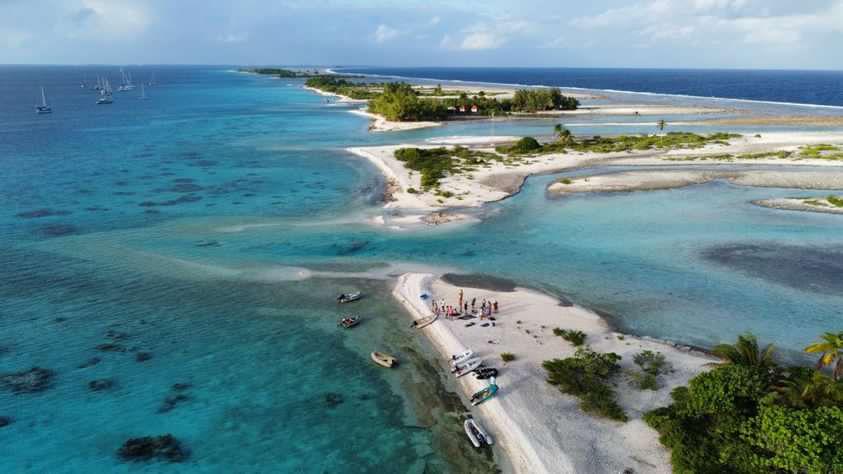
A very typical cruiser schedule in the Tuomotus is ‘early to bed early to rise’ as is with most remote cruising experiences. Mornings are usually lazily spent reading or on Starlink, researching the area, conditions, resources, or making a family call or one to a mechanic, but hopefully not. After the DIY boat projects and repairs are done, most sweaty sailors are ready to snorkel a reef, have fun with water sports, or explore the Motu, see below photograph. Most anchorages in the Tuomotus Archipelago are extremely remote, with out a village or house for 10 miles. And as for a marine services, there is only one area and that is in Tahiti 300-600 miles away. So, cruisers rely on each other. Most people want a sense of community, support, and friendship. It’s typical that cruisers end most days with a social time (boaters are from all around the world out here, so multi languages is common in the anchorages) people are ready to gather up for social hour, usually at a close beach, to meet new friends, share stories, drinks and snacks, discuss weather, sailing, projects, local news, travel ideas, and maybe play some games. These months in the Tuomotus I learned that every day is kind of the same, but by far, the people and beautiful places make it a unique cruising ground.
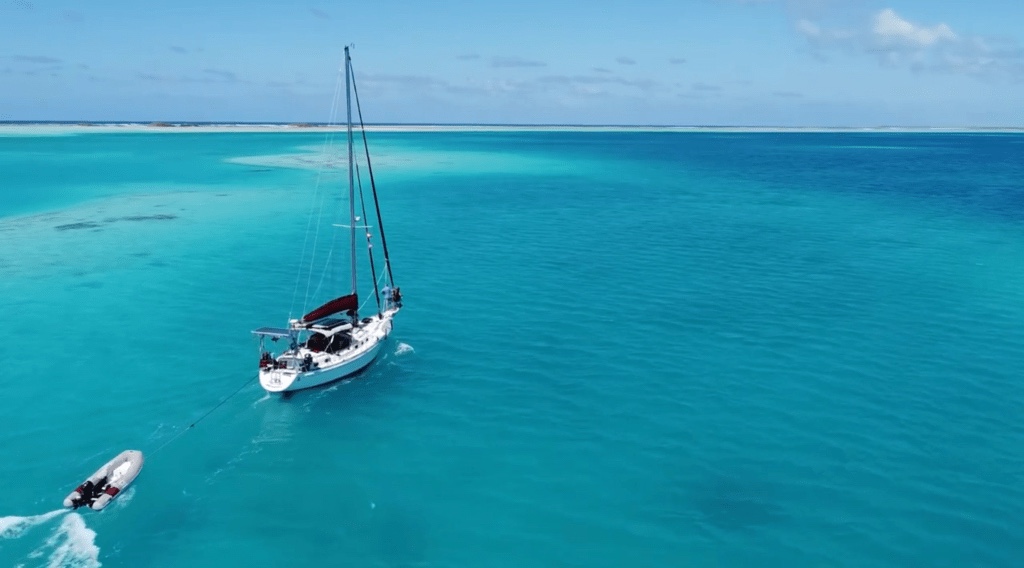
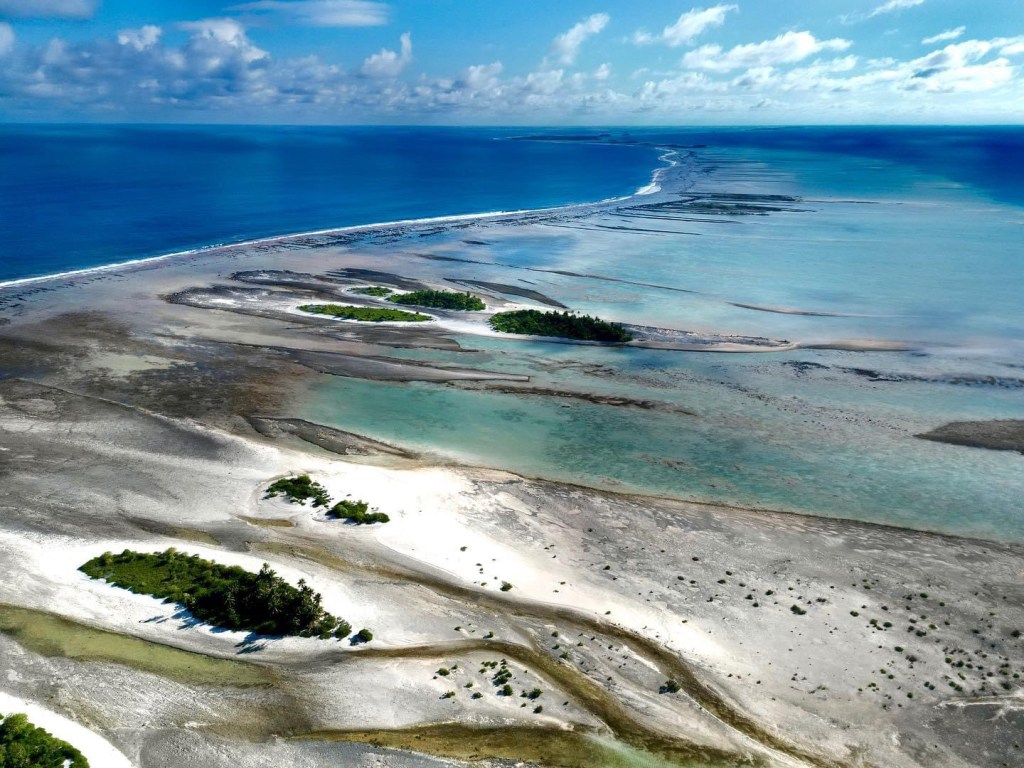
We had terrific sailing experience inside the largest and longest (50 miles) atoll of French Polynesia: Rangiroa. It has 415 sandbars and motus, which are mini islands. One highlight was hanging out in the inside South corner. Motu Faama is quite far from the village and extremely remote. Our good friends from Mexico; Joanne and Scott on SVFundango, took this fun drone vid when we dinghied to the outer reef.
Can you find us in the dingy?
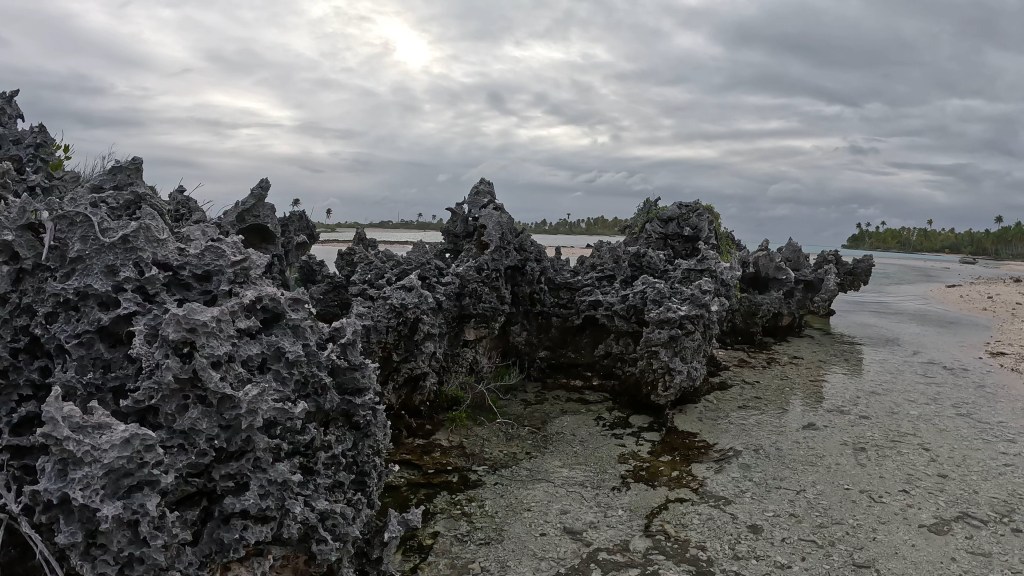
These above ground coral heads are thousands of years old, were once flourishing just underwater then were pushed up 10 or so feet. This atoll like all the tuomotus were formed from volcanoes 50 million years ago. Once exposed to the elements (heat, constant trade winds, cyclones and pounding surf) the outer coral reef left these strangely jagged natural wonders!! Kind of cool!
Now we are off, sailing 120 miles SE to the next atoll, Toau.
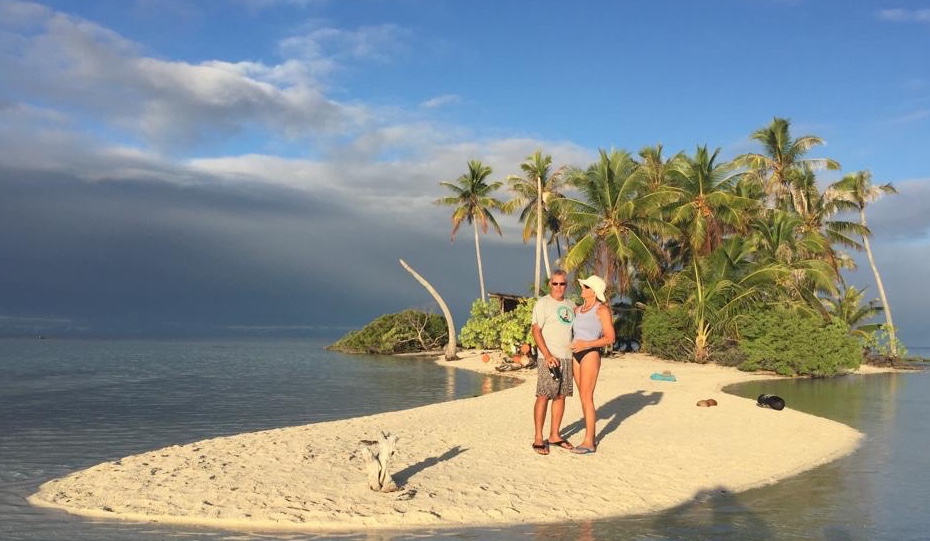
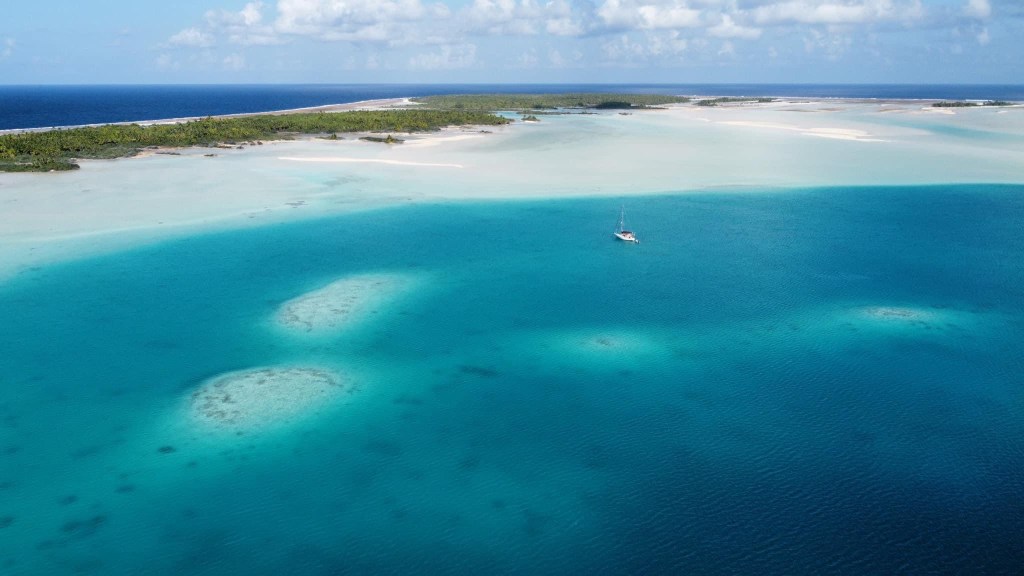
The sandy beaches and small islands near the blue lagoon are so addictive. If the weather is right, you could hang out here for a few weeks.




 Our World Adventure